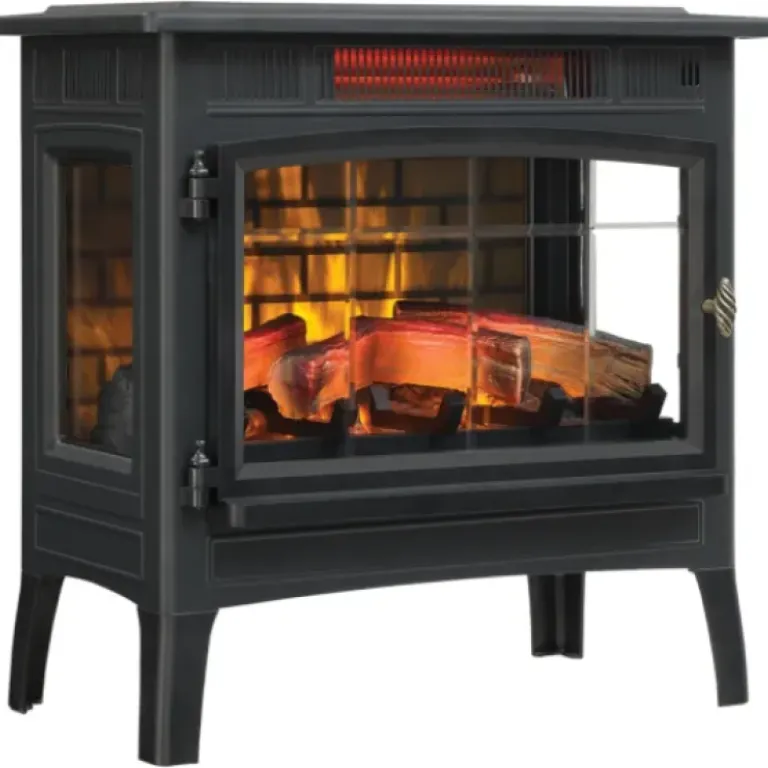

Summary
Editor's rating
Is it worth the money?
Design and realism: looks good, not cheesy
Build quality and safety feel
How it holds up over time
Heat output, noise, and real-life use
What you actually get out of the box
Pros
- Realistic enough 3D flame effect with adjustable brightness and year-round use without heat
- Good supplemental heat output for up to a medium/large room, with relatively quiet fan
- Top vent design and solid build reduce floor damage and feel safer than cheaper units
Cons
- Not suitable as a main heat source for an entire home, especially if insulation is poor
- Control panel is hidden behind the door and the remote is limited for adjustments

Specifications
View full product page →| Brand | Duraflame |
A fake fireplace that doesn’t feel fake
I’ve been using this Duraflame freestanding electric fireplace stove in a medium-sized living room, and I’ll be honest: I mainly bought it for the look, not the heat. I wanted that “fireplace vibe” without tearing up a wall or dealing with gas lines. After living with it through cold evenings, I can say it’s not perfect, but it does what it’s supposed to do: it makes the room feel warmer and a lot cozier, without much hassle.
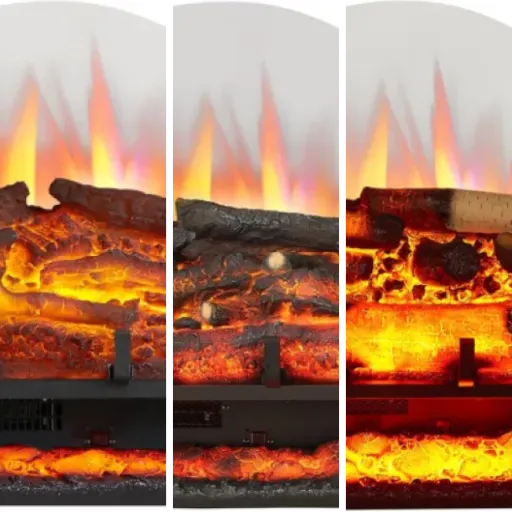
The first thing that stood out is the 3D flame effect. I was expecting something cheap-looking and flat, like an old screensaver. In reality, it looks pretty solid for the price. Is it going to fool someone into thinking it’s a real wood fire? No. But from a few feet away, especially in dim light, it does the job and gives that moving glow on the walls and furniture. That’s basically what I wanted.
On the heating side, it’s a supplemental heater, not a full replacement for a proper furnace or heat pump. In my case, it took the edge off in a drafty room and let me turn down the main thermostat a bit. If you’re expecting this thing to heat a whole poorly insulated house, you’ll be disappointed. But as an extra heat source in one room, it’s decent.
Overall, after using it regularly, my feeling is: it’s a good mood piece that also kicks out a fair amount of heat. Not some miracle device, not junk either. If you go in with realistic expectations—extra heat and a nice fake fire—you’ll probably be happy with it.
Is it worth the money?
In terms of value, I’d put this Duraflame stove in the “good purchase if you know what you’re buying” category. You’re paying more than for a bargain-bin space heater, but you’re getting more than just raw heat. You’re paying for the look, the 3D flame effect, and the fact that it can sit in a living room without looking like a random box from a hardware store. For people who care about how their space looks, that matters.
Compared to cheap electric stoves I’ve tried, the difference is mainly in safety feel and flame quality. The bottom-vented budget unit I had before actually started to damage the floor and had a very hot cord when running. This Duraflame, with its top vent and better construction, feels safer and more thought through. If spending a bit more means not worrying about melted flooring or sketchy wiring, that’s already a strong argument in its favor.
On the energy side, it’s still a 1,500W electric heater, so don’t expect miracles on your bill. That said, people have reported lowering their overall heating costs by using this as a targeted heater in the main living area and turning down the central thermostat. If you actually use it this way—zone heating instead of cranking the whole house—it can pay off over a couple of winters.
For what it costs, you’re getting: a decent-looking fake fireplace, reliable supplemental heat, and a unit that, based on long-term reviews, can last several years with regular seasonal use. If you just want the cheapest way to warm a room, a basic heater will be cheaper. If you want heat plus ambiance that doesn’t look cheap, this is pretty solid value for money.
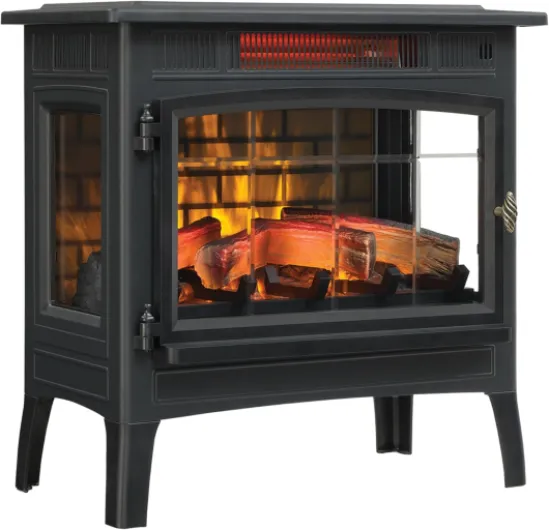
Design and realism: looks good, not cheesy
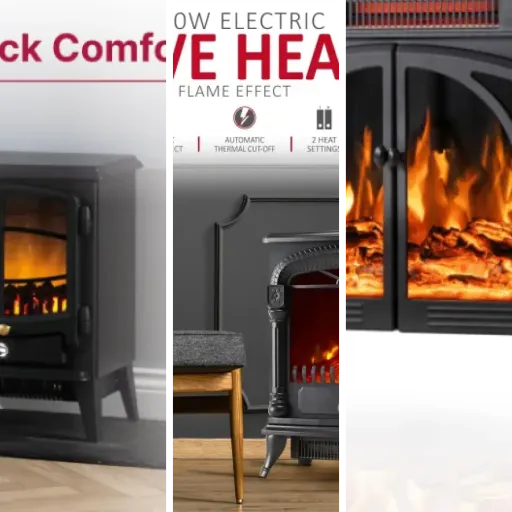
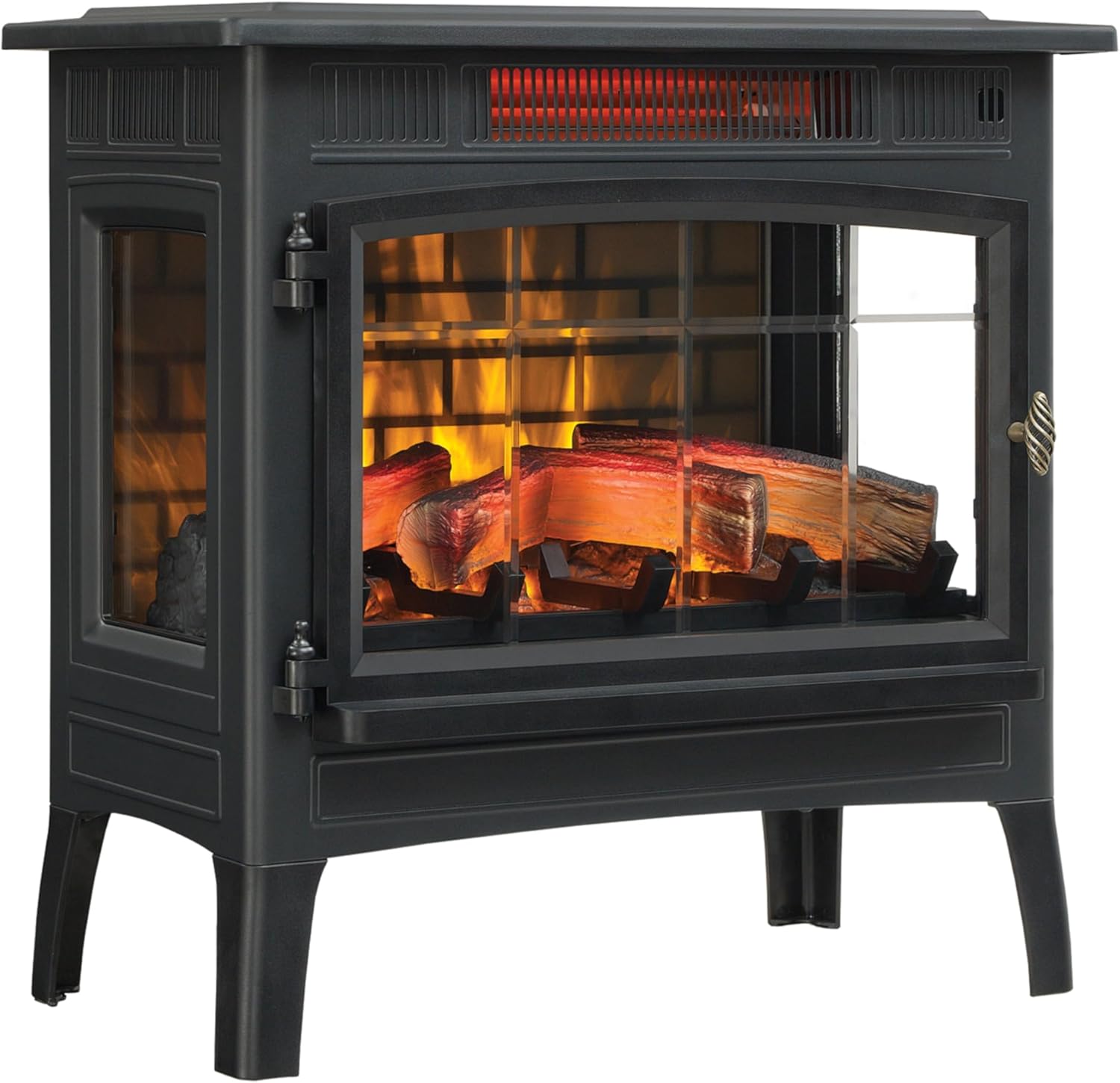
Design-wise, this thing leans toward traditional stove rather than modern glass panel. It’s black, rectangular, and has a little faux stove door in front with a handle that actually opens. Inside, you’ve got the fake logs and the 3D flame effect. There are also side glass windows and a brick-style back panel, which help a lot with the overall look. It doesn’t scream “cheap plastic heater” from across the room, which was one of my main concerns.
The 3D flames are better than I expected. They use LEDs and some internal reflections to create depth, so you don’t just get a flat orange panel. You can adjust the flame brightness, which is nice. On higher brightness, it looks more like an active fire; on lower settings, it works as a kind of nightlight or soft background glow. In a dim room, it genuinely adds to the atmosphere. In bright daylight, you obviously see more of the illusion, but it still looks decent.
One thing I like is the top vent design. The heat blows out from a vent at the top front and ends, not from the bottom. That matters if you have vinyl or laminate flooring, because bottom vents can blast hot air at the floor and damage it. I’ve had a cheaper heater do exactly that to laminate before, so I paid attention to that detail. With this one, the body stays only warm, not scorching, and the hot air comes out where it should—away from the floor.
If I had to nitpick the design, the control panel being behind the front door is a small annoyance. You have to open the door to adjust thermostat, flame level, or timer. In practice, I set it once and use the remote to turn it on/off, so it’s not a big deal, but it’s not the most user-friendly placement either. Overall, though, for the price, the design looks solid and not tacky, which is what most people are after with this kind of product.
Build quality and safety feel
The stove is a mix of metal and glass, with some plastic bits where it doesn’t really matter. The outer shell feels decent and doesn’t flex or creak when you move it. It’s not as heavy as a real cast iron stove, obviously, but it also doesn’t feel like a flimsy toy. At around 28.6 pounds, it hits that middle ground: solid enough to stay put, light enough to move if you want to rearrange furniture or clean underneath.
The glass panels on the front and sides are a nice touch. They help the flames look more convincing and give you different viewing angles, which adds to the fake “real stove” vibe. The door opens and closes cleanly, and the brick-style interior panel looks fine from normal viewing distance. You’re not getting luxury materials here, but for a mass-market electric heater, it’s pretty good.
On the safety side, the housing doesn’t get dangerously hot in normal use. The area around the vent does blow out hot air, obviously, but the body itself stays warm rather than scorching. That said, I wouldn’t put it right up against curtains or bedding, and I’d be careful with toddlers sticking their faces close to the front vent. A couple of users mentioned using a screen when small kids were around, which is just basic common sense with any heater.
Compared to cheaper units I’ve used, the wiring and venting feel more thought-out. The top vent is a big plus for avoiding floor damage. Still, I’d only ever plug this straight into a wall outlet, not a power strip. I also occasionally check the cord temperature when it’s been running for a while—mine has only ever been slightly warm, not hot. Overall, the materials and build feel good enough for long-term seasonal use, not premium, but definitely not junk.
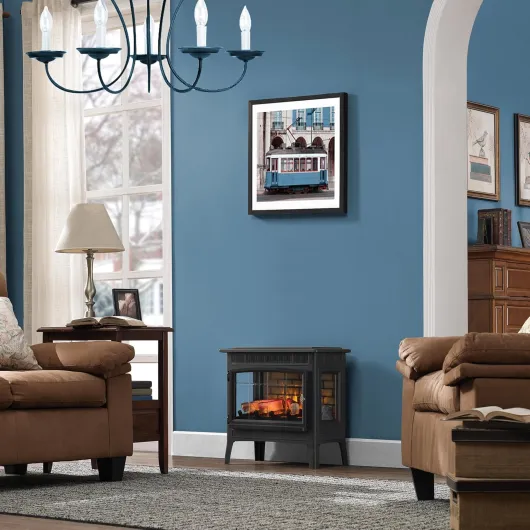
How it holds up over time
Durability is where this unit actually surprised me. You’ve got people reporting 5–6 years of use with the flames running most days all fall and winter, and the thing still working and looking basically new. That’s not something you see with the really cheap electric stoves, which often start rattling, losing LEDs, or having fan issues after a season or two. The LED flame system in this Duraflame seems to hold up well under regular use.
In my own use, plus reading long-term owner feedback, the common pattern is: if you treat it like a seasonal appliance (store it in summer, keep dust off, don’t abuse the cord), it just keeps going. One owner even stores it in a closet in the off-season, covers it, removes the remote battery, and pulls it out each October. After several years, the flames are still bright and the heater still works as expected. That’s about as good as you can ask for at this price level.
The weak points on these types of products are usually the fan motor, electronics, and remote. I’ve seen very few complaints about the fan dying on this specific model. The control panel and remote are basic but functional. The main gripe is not that they fail, but that the remote is limited and you need the panel inside the door for detailed adjustments. That’s more of a design annoyance than a durability flaw.
Of course, it has just a 1-year limited warranty, so officially you’re only covered for that period. But based on how many people are still using the same unit 4–6 years later, the real-world lifespan looks better than average for this category. If you’re expecting it to last a decade like a real cast iron wood stove, that’s unrealistic. If you want something that can reliably serve as your “winter fireplace” for several seasons in a row, this model seems up to it.
Heat output, noise, and real-life use
Performance-wise, this is a 1,500W, 5,200 BTU unit, so we’re talking typical strong space heater numbers. In my experience, it handles a medium to large room pretty well as long as your expectations are right. In a roughly 300–400 sq ft living room with average insulation, it noticeably warms the space and lets me drop the central thermostat a couple of degrees. In badly insulated areas (like converted porches or older double-wides), it still makes a difference, but it’s fighting more of a losing battle—think comfort boost, not full solution.
The thermostat is decent but not laser-accurate. It cycles on and off to maintain roughly the set temperature, and for normal home use that’s fine. Some people have mentioned it “stays pretty true” to the temperature, and I’d agree: it’s not perfect, but it doesn’t wildly overshoot. If you’re picky about exact room temps, you’ll probably still rely on a separate thermometer, but for everyday use, it’s good enough.
On noise, the fan is actually pretty reasonable. It’s not silent, but it’s more of a soft whoosh than a loud blower. I can watch TV with it on without turning the volume up, and I can work with it running in a home office without getting annoyed. If it had a loud, rattly fan, I’d have turned it off pretty fast. So on the noise front: completely acceptable for regular use.
One thing to keep in mind: this is meant as a supplemental heater. A few long-time users specifically said they would not use it as the only heat source, and I agree. It’s great for: boosting a cold room, cutting down on furnace use, or heating the area you actually sit in. It’s not great for: replacing your whole-house heating system or leaving it unattended in risky spots. Used for what it is, the performance is solid.
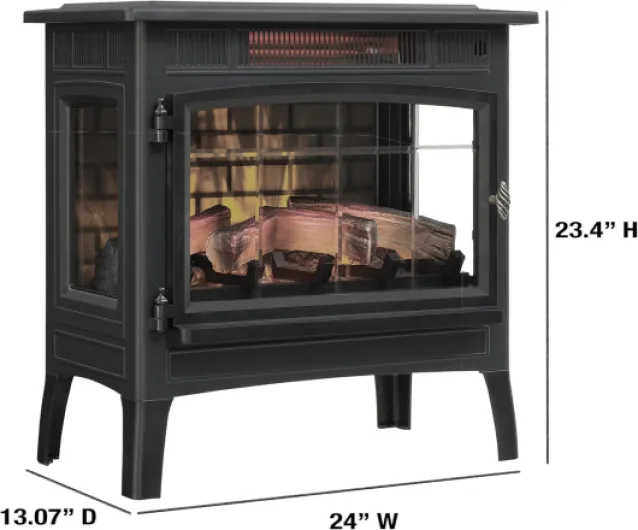
What you actually get out of the box
Out of the box, the Duraflame stove is pretty straightforward. You get the main unit, a small remote with two AAA batteries already included, and a manual. That’s it. The only “assembly” is attaching the four legs, which is simple and doesn’t require a toolbox full of stuff. It’s around 28–29 pounds, so you can move it by yourself without feeling like you’re dragging real cast iron across the floor.
The size is about 24" wide, 23.4" high, and 13" deep, so it’s more compact than a real wood stove but still big enough that it doesn’t look like a toy. In my case, it fit nicely against a blank wall and didn’t crowd the room. I’ve seen people stick these in converted porches, offices, and older mobile homes, and the footprint works for those tighter spaces too. It’s freestanding, so no installation beyond finding a free outlet.
It’s rated for up to 1,000 sq ft of supplemental heating and pulls 1,500 watts on high, which is standard space-heater territory. There’s an adjustable thermostat, a timer, and independent flame vs heat controls, so you can run the flames with no heat in warmer months. This is actually useful—I’ve run the flames alone just for background light at night.
Overall impression from the first setup: simple, plug-and-play heater with a decorative front end. If you’re expecting lots of complicated settings or smart-home features, this is not that product. If you just want something you plug in, set once, and forget, it fits that profile pretty well.
Pros
- Realistic enough 3D flame effect with adjustable brightness and year-round use without heat
- Good supplemental heat output for up to a medium/large room, with relatively quiet fan
- Top vent design and solid build reduce floor damage and feel safer than cheaper units
Cons
- Not suitable as a main heat source for an entire home, especially if insulation is poor
- Control panel is hidden behind the door and the remote is limited for adjustments
Conclusion
Editor's rating
Overall, the Duraflame freestanding electric fireplace stove is a solid choice if you want both looks and practical heat. The 3D flame effect is convincing enough to give your room that “fireplace” feel, especially in the evening, and the unit can genuinely warm up a medium-sized space. It’s not a replacement for a full heating system, but as a supplemental heater or main heat in a single well-used room, it does its job without feeling cheap or overly noisy.
Where it stands out is the combination of top vent design, decent build quality, and long-term reliability. You’re avoiding some of the usual issues with low-end heaters, like scorched floors and sketchy cords, and you’re getting a unit that many people have used for years without major problems. The main downsides are the slightly clunky control layout (panel behind the door) and a remote that’s basic rather than great. If you want smart features or super-precise thermostat control, this won’t impress you.
Who is it for? People in apartments, older homes, or converted spaces who want a cozy focal point and some extra heat in the room where they actually spend time. Who should skip it? Anyone expecting it to heat an entire large, poorly insulated house, or someone who only cares about raw BTUs and doesn’t care what the heater looks like. If you treat it as a good-looking space heater with a decent fake fire, it’s a good buy that gets the job done.