
Summary
Editor's rating
Value for money: solid upgrade without going custom
Design: basic look, but cleans up an old fireplace nicely
Materials and build: heavy, sturdy, and not especially delicate
Durability after some use: holding up well so far
Everyday performance: drafts, doors, and actual use
Installation: doable for DIY, but get a second pair of hands
What you actually get out of the box
Pros
- Sturdy steel frame and tempered glass give it a solid, durable feel
- Noticeable reduction in drafts and heat/cool air loss when doors are closed
- Simple black design that modernizes old brass fireplaces without clashing with most decor
Cons
- Heavy and awkward to install alone; realistically needs two people
- Very plain design with limited style options for those wanting a decorative look
- Basic damper controls and only a 1-year parts warranty

Specifications
View full product page →| Brand | Pleasant Hearth |
A simple way to stop staring at an ugly fireplace opening
I picked up the Pleasant Hearth AT-1002 Ascot Fireplace Glass Door in Large because my old brass doors were beat up, squeaky, and honestly kind of embarrassing. The goal was pretty basic: clean up the look of the living room, cut down on drafts from the chimney, and do it without spending custom-door money. I’ve had it installed on a masonry fireplace for a bit now, and I’ll walk you through what’s good, what’s annoying, and what I’d watch out for before buying.
First, this thing is not some lightweight decorative screen. It’s a proper steel frame with glass doors and a mesh screen, so you’re dealing with real weight and a fairly chunky piece of hardware. The manufacturer says it can help reduce heat or cool air loss up the chimney by up to 90% when the fireplace isn’t in use. I don’t have lab gear to confirm that, but I did notice the room feels less drafty with the doors closed compared to the old open setup.
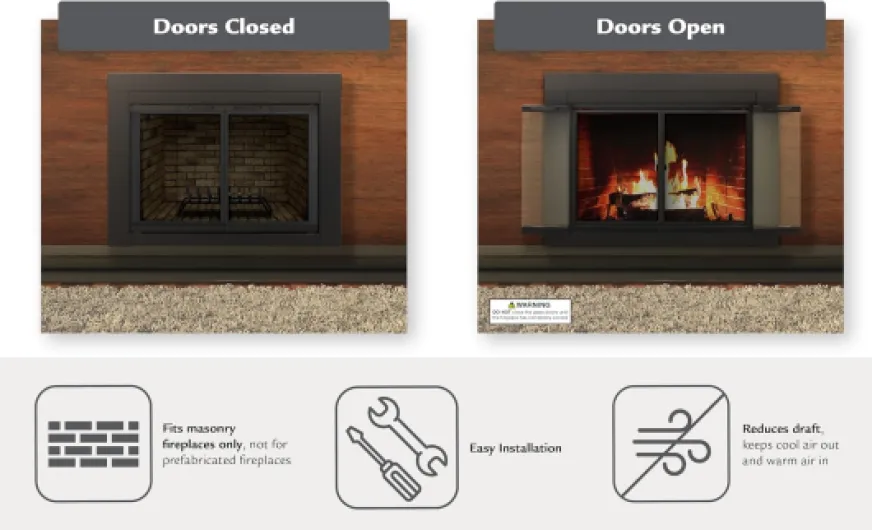
The install is sold as a surface-mount, one-piece frame that sits against the brick. In practice, that’s mostly true, but you still need to be comfortable with a drill, a tape measure, and some fiddling. I’d say it’s doable for a normal homeowner, but not something I’d hand to someone who hates tools. Also, it’s specifically for masonry fireplaces. If you’ve got a prefab box, this is the wrong product.
Overall, my experience is that it’s a pretty solid, straightforward way to modernize a fireplace without going into a full remodel. It’s not perfect: the weight, the alignment, and the damper knobs could be better thought out. But if you know what you’re getting into and your opening measurements fit the listed range, it does the job and looks decent once it’s in place.
Value for money: solid upgrade without going custom
In terms of value, the Pleasant Hearth Ascot Large sits in that middle ground: not bargain-basement cheap, but far from custom-door pricing. For what you pay, you’re getting a heavy steel frame, tempered glass, mesh curtains, insulation, and a fairly clean, modern look. Compared to some flimsy screens or ultra-cheap doors I’ve seen in big-box stores, this feels more substantial and better finished. It’s not luxury, but it doesn’t feel like a temporary fix either.
The main benefits that justify the price for me are: the improved appearance over old brass doors, the noticeable reduction in drafts when the fireplace is off, and the overall sturdiness. If you’re trying to cut your heating or cooling losses a bit and also stop staring at an ugly firebox, this checks both boxes. You’d spend a lot more to get a custom door with fancy trim or tinted glass, and for many people that’s overkill. This one is more of a “get the job done and look decent doing it” product.
On the flip side, you are trading off some things. The installation isn’t trivial, the design is very plain, and the damper controls are basic. If you expect high-end hardware feel and super precise airflow control, you’ll probably feel this is just okay. Also, the 1-year parts warranty is fairly minimal; if you want a product backed for a decade, you’ll be shopping in a higher price bracket.
Overall, I’d say the value is good, especially if you’re replacing an old, ugly set of doors on a masonry fireplace and you’re comfortable installing it yourself. You get a sturdy, decent-looking door that improves comfort in the room without spending custom money. There are cheaper options out there, but many of them look and feel cheaper too. For a practical homeowner who wants a straightforward upgrade, the price-to-performance ratio on this one makes sense.
Design: basic look, but cleans up an old fireplace nicely
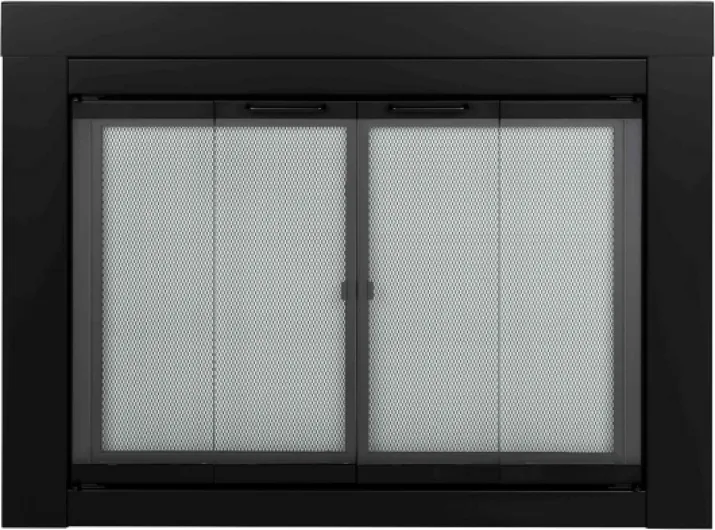
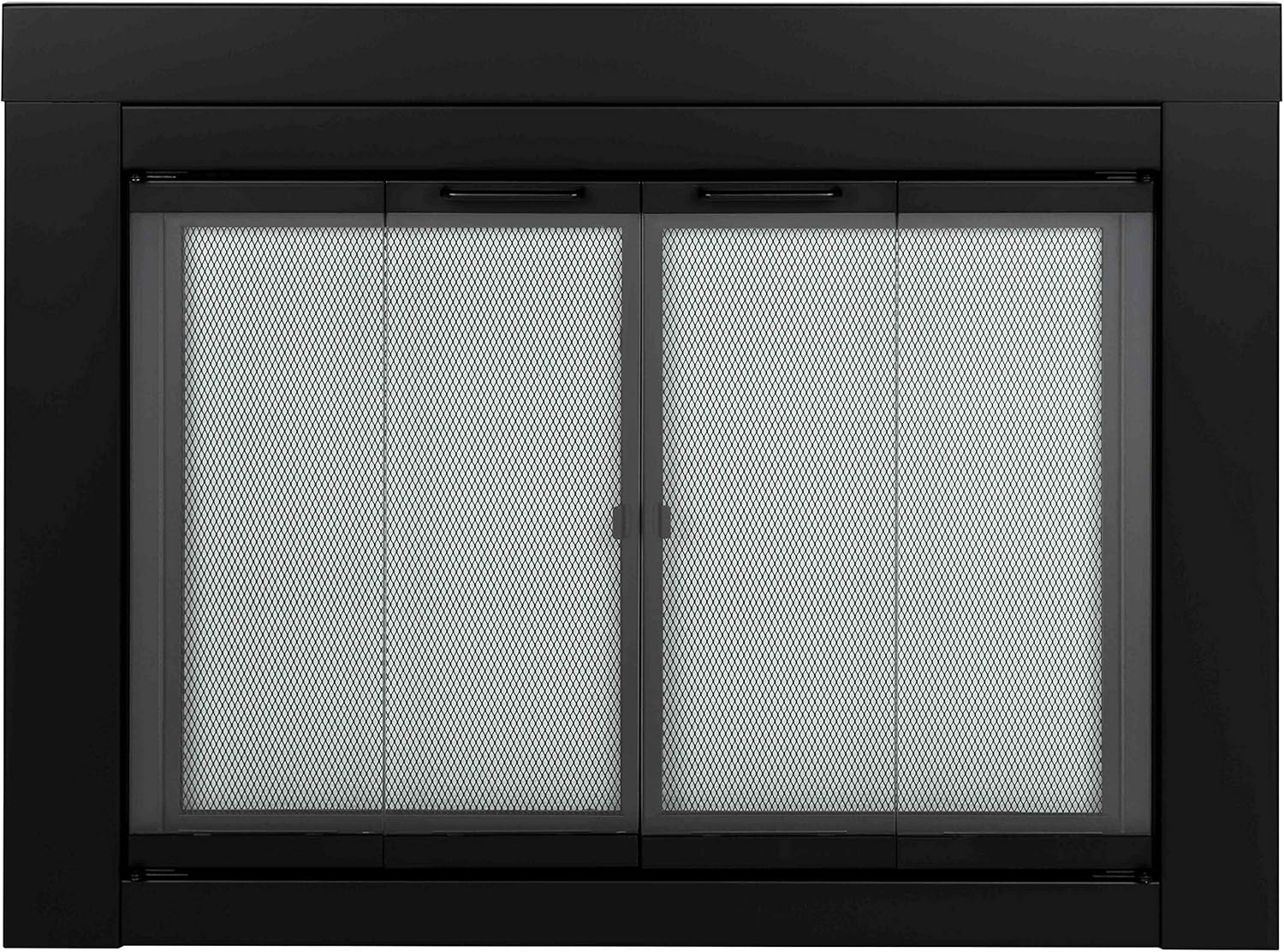
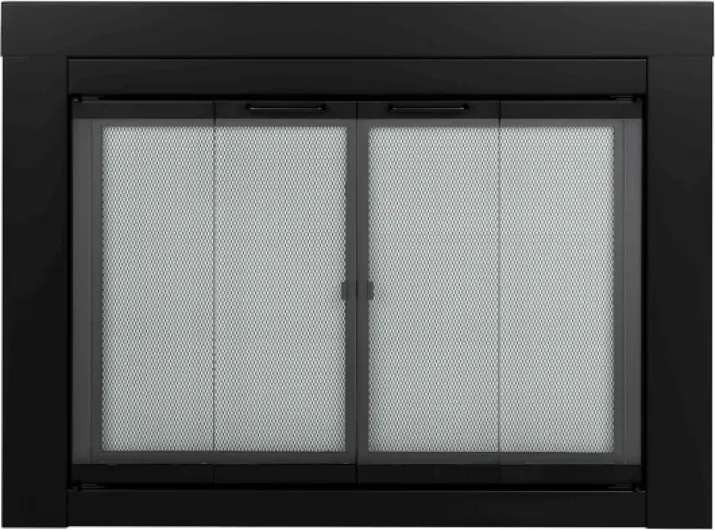
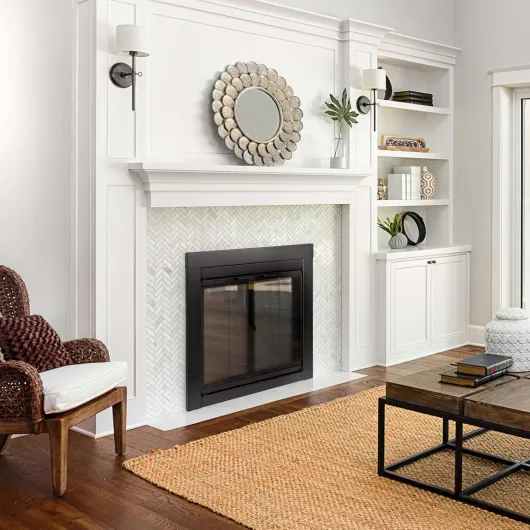
Design-wise, the Ascot is pretty straightforward: black powder-coated steel frame, clear 3/16" tempered glass, and bi-fold doors that open up 180 degrees. If you’re coming from shiny brass doors from the 80s or 90s, the visual upgrade is immediate. The black frame blends in with the firebox and brick, so your eye goes more to the fire or the mantle instead of the hardware. There are no fancy patterns or decorative trims; it’s very plain, in a good way. If your style is modern, transitional, or just “please hide the ugly opening,” this works.
The bi-fold doors are split in the middle, and each side has two panels that fold in. When you open them fully, they sit fairly flat against the frame, so you get a full view of the fireplace. I liked that they don’t stick out into the room too much when open. The handles are 4" and easy to grab, even with a fireplace glove. They’re not pretty, but they’re practical. The magnetic closure is simple: when you swing the doors shut, they snap into place and stay there. In my case, the magnets lined up fine, but if your frame is slightly out of square after mounting, you might have to tweak the bracket tension so the doors meet cleanly in the middle.
One design detail I appreciated is the hidden damper control knobs at the bottom. They let you adjust airflow when the fire is out and you’re just trying to manage drafts. They’re not super precise controls—it’s basically open or closed with a bit of in-between—but it’s better than nothing. Still, they’re small and a bit awkward to reach if your fireplace is low to the ground. I wouldn’t call that a dealbreaker, just slightly annoying in daily use.
The mesh curtains sit behind the glass doors and slide on a track. When you’re burning a fire, you’re supposed to keep the glass open and the mesh closed, which is standard safety practice. The mesh looks fine, not fancy, but it does its job of catching sparks. If you want a very decorative screen, this isn’t that. Overall, the design is more about function and cleaning up the look of the fireplace than making a big style statement. For me, that was exactly what I wanted: simple, dark, and not the center of attention.
Materials and build: heavy, sturdy, and not especially delicate
The first thing you notice when you try to move this thing is the weight. At around 50+ pounds, the Pleasant Hearth Ascot feels solid. The frame is alloy steel with a powder-coated black finish. It doesn’t flex or feel flimsy when you lift it, and once it’s mounted, it sits tight against the brick. The powder coat itself looks uniform with no obvious thin spots or drips on mine. I dragged it a bit across the hearth by accident during install, and it didn’t immediately chip, which gave me some confidence about how it’ll hold up to everyday knocks.
The glass is 3/16" clear tempered glass. That’s pretty standard for fireplace doors in this price range. It’s not super thick, but it doesn’t feel fragile either. When you close the doors, there’s a solid feel and you don’t get rattling. I didn’t see any warping or weird reflections in the glass, which you sometimes get with cheaper panels. Tempered glass is obviously important for heat resistance, but remember: you’re not supposed to burn with the glass closed. The glass is more for draft control and appearance when the fire is out.
The mesh screen is typical fireplace mesh—metal chains that slide on a rod. It’s not stylish, but it’s functional. I tugged on it a bit to see if it would pop off the track; it stayed put, and the sliding motion is smooth enough. The handles are metal bars, not plastic, and they’re attached firmly. I don’t feel any wobble when I pull the doors open. The magnets that hold the doors shut are embedded in the frame; on my unit they feel decently strong, not super strong, but enough to keep the doors closed without having to slam them.
Insulation is one of those unsexy details that actually matters. This comes with heat-resistant insulation strips that go between the frame and the brick, helping seal up gaps and cut down on drafts. The material isn’t fancy, but it compresses well and doesn’t crumble in your hands. Once installed, I noticed less cold air leaking around the edges compared to my old doors. Overall, the materials feel like they’re built for regular use, not for show. For the price and for a mass-market product, I’d call the build quality pretty solid, with no glaring cheap spots that jumped out during installation or early use.
Durability after some use: holding up well so far
After some weeks of use—opening and closing the doors daily, running a few fires on weekends, and cleaning the glass a couple of times—the Pleasant Hearth Ascot still looks basically new. The powder-coated black finish hasn’t chipped or scratched in any obvious spots, even where the doors meet the frame. I did bump it once with a log carrier and expected at least a scuff, but I only saw a light mark that wiped off. That gives me some confidence that normal family use (kids, pets, random bumps) won’t destroy the finish right away.
The glass has held up fine. No hairline cracks, no weird discoloration, and no warping. I clean it with a standard glass cleaner when it gets smudged; I avoid abrasive pads. The hinges on the bi-fold doors still move smoothly without squeaking. There’s no sagging on the doors, which is something I’ve seen on cheaper fireplace doors after a while. The magnets still catch the same as day one, so the doors close with the same feel as when I installed it.
The mesh curtain is usually the first thing to look tired on these setups, but so far it’s still gliding well on the track. No frayed links or bent sections. I’m not babying it either—I pull it open and closed pretty casually. I also checked the insulation seal behind the frame a couple of times. It’s still snug and hasn’t degraded or fallen out, which is important for keeping that draft barrier in place over time.
Long-term, I’d expect the powder coat to outlast any old brass-plated doors by a wide margin. The only part I could see wearing out over several years might be the magnets or the mesh track, but that’s speculation. With a 1-year parts warranty, it’s not a lifetime-guarantee product, but based on the materials and my early use, I don’t see any obvious weak links. For a mid-priced fireplace door, I’d say the durability feels solid and appropriate for the cost.
Everyday performance: drafts, doors, and actual use
In daily use, the big thing I noticed with the Ascot doors is the reduction in drafts when the fireplace is idle. Before installing this, I could feel cold air dropping into the room on windy days. After installation, with the glass doors shut and the damper knobs closed, that airflow is much weaker. I don’t have exact numbers, but the room holds temperature better, especially at night. That lines up with the “up to 90% heat/cool air loss reduction” claim in a general sense, even if I can’t prove the exact percentage.
Opening and closing the bi-fold doors is straightforward. The hinges feel smooth, and the panels fold without scraping. The magnets catch reliably, so the doors don’t drift open on their own. I did have to tweak the mounting brackets once after the first week because one side settled slightly and the doors weren’t lining up perfectly in the center. Once I loosened the screws, nudged the frame, and retightened, the alignment improved. So, performance-wise, it’s fine, but expect a bit of dialing in if your brick face is uneven.
When you’re actually burning a fire, the routine is: slide the mesh curtains closed, swing the glass doors open, and let it go. The mesh does its job catching small sparks. I sat a couple of feet away on a test burn and didn’t see sparks jumping out into the room. Heat flow into the room felt about the same as with my old doors open and a basic screen in place. This setup doesn’t magically make your fireplace more efficient while the fire is going; the real benefit is when the fire is out and you’re trying to keep your heated or cooled air inside.
One thing to be aware of: the hidden damper knobs are useful but not very “fine-tuned.” They’re either mostly open or mostly closed; you’re not dialing in precise airflow. I use them mainly as an extra layer of draft control when the fireplace is completely off. Also, because the unit is heavy, once it’s in and snug, it doesn’t creak or move when you use the doors, which is nice. In short, in practice it gets the job done: less draft, better look, doors that open and close without drama, and a mesh that keeps sparks where they belong.
Installation: doable for DIY, but get a second pair of hands
Let’s be honest: installing the Pleasant Hearth Ascot is not like hanging a picture frame. The unit weighs over 50 pounds, and while it’s technically a one-piece frame, maneuvering it into place around a raised hearth or tight mantle is awkward. I’d strongly recommend having two people. One person to hold the frame square in the opening, and the other to deal with screws, brackets, and checking level. I tried to do the first dry fit alone and quickly realized that was a dumb idea.
The basic process is: lay down the insulation where the frame will contact the brick, set the frame in place so it overlaps the opening evenly, attach the mounting brackets to the inside of the firebox, and tighten everything so the frame pulls snug against the masonry. On my fireplace, the brick face wasn’t perfectly flat, so I had to play with bracket tension to get the frame to sit flush without twisting. This is where installation goes from “easy” to “fairly easy but a bit fiddly.” The included instructions cover the general steps, but they don’t help much with dealing with uneven brick, so you’re on your own there.
In terms of tools, I used a drill with masonry bits, a level, a tape measure, and a socket wrench. If you don’t have those on hand or don’t like using them, you might want to budget for a handyman to put this in. The whole job took me about an hour and a half, including double-checking measurements and adjusting alignment so the doors met nicely in the middle. If your opening is more straightforward and your brick is flatter, you could probably finish in under an hour.
One important point: this is for masonry fireplaces only, not for prefab or metal fireboxes. The brackets and the way the frame mounts assume you’re anchoring into brick or similar material. If you ignore that and try to force it onto a prefab unit, you’re asking for safety and fit problems. Overall, I’d call installation manageable for a comfortable DIYer with one helper. It’s not plug-and-play, but it’s not a full weekend project either, as long as you plan for the weight and take your time with the measurements.
What you actually get out of the box
Out of the box, the Pleasant Hearth Ascot Large is basically one big assembled frame with the glass doors already attached, plus the mesh screen, mounting hardware, and some insulation. There’s no fancy unboxing experience here, just a heavy steel frame wrapped in foam and cardboard. Mine arrived without dents or scratches, which is honestly what matters most with something this bulky. The packaging is practical: thick Styrofoam blocks at the corners and enough padding so the glass doesn’t rattle around in transit.
The product dimensions listed are 43.5" x 33" for the overall frame, and it’s meant to fit openings 36"–43" wide and 25.5"–32.5" high. I measured my fireplace opening three times before ordering and I’d tell anyone to do the same. If you’re at the edge of those ranges, expect to spend extra time shimming and adjusting. The frame overlaps the brick around the opening, so even if your opening isn’t perfectly square, you can usually hide small imperfections behind the metal frame.
Inside the box you get the frame with bi-fold glass doors, standard mesh panels, insulation strips, and the mounting brackets/screws. The instructions are basic but readable. They’re not IKEA-level diagrams, but they’re enough for someone who’s done a couple of DIY projects. Don’t expect a step-by-step YouTube-style walkthrough in the manual though; you’ll probably double-check a video online if you’re unsure about how tight to set the brackets or how to seat the insulation.
In terms of first impression, my honest reaction was: “Okay, this looks like a decent, no-frills black fireplace door.” Nothing fancy, nothing cheap-looking either. The finish is a matte-ish black powder coat, the glass is clear, and the handles are simple 4" bars that you can actually grab. It feels more like a workhorse piece of hardware than a designer statement, which for the price point is pretty much what I expected and was fine with.
Pros
- Sturdy steel frame and tempered glass give it a solid, durable feel
- Noticeable reduction in drafts and heat/cool air loss when doors are closed
- Simple black design that modernizes old brass fireplaces without clashing with most decor
Cons
- Heavy and awkward to install alone; realistically needs two people
- Very plain design with limited style options for those wanting a decorative look
- Basic damper controls and only a 1-year parts warranty
Conclusion
Editor's rating
The Pleasant Hearth AT-1002 Ascot Fireplace Glass Door in Large is a practical, no-nonsense upgrade if you’ve got a masonry fireplace that looks dated or lets in too much draft. It’s heavy, built from decent materials, and once it’s installed, it feels solid and works the way it should. The black powder-coated frame and clear glass won’t win any design awards, but they clean up an old fireplace nicely and blend into most living rooms without drawing attention. Functionally, the bi-fold doors, mesh curtains, and insulation combine to reduce the cold air coming down the chimney when the fireplace is idle, which is where this product actually earns its keep.
This is best for homeowners with a masonry fireplace who want a sturdy, mid-priced door, are okay with a plain black look, and don’t mind a bit of DIY work or hiring someone for an hour or two. If you’re replacing old brass doors or an open screen, you’ll likely be satisfied with the visual upgrade and the draft reduction. On the other hand, if you have a prefabricated fireplace, want a very decorative design, or hate dealing with heavy installs, this isn’t the right choice. It’s also not for anyone expecting high-end hardware or long, premium warranties. Overall, I’d rate it as a pretty solid, functional product that does what it promises without being fancy.