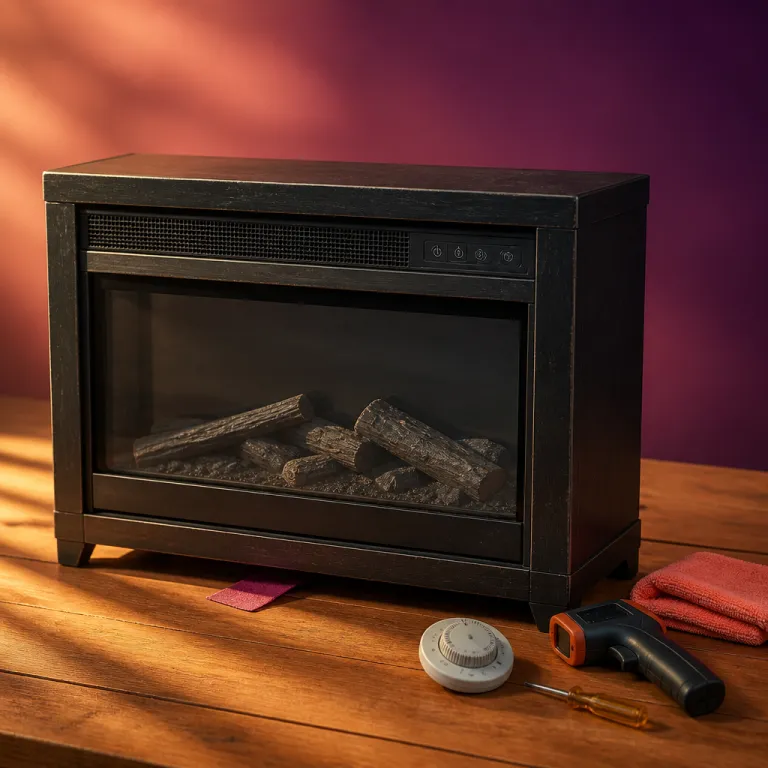
Duraflame electric fireplace long term review: what two winters really show
The Duraflame DFI-5010 is sold as an infrared fireplace stove that doubles as a space heater. After two full winters of daily heating in a 20 square metre living room, this long term review shows where the unit shines and where it quietly drifts off spec. If you want a realistic flame and a reliable supplemental heat source, the details over time matter more than the first week out of the box.
This freestanding electric fireplace uses an infrared quartz element rated around 5 200 BTU, which is typical for compact electric heaters in this class. In practice the infrared heating performance of the Duraflame system still delivers consistent heat output after roughly 700 to 800 operating hours, raising a closed room by about 4 to 6 °C from a 18 °C baseline without touching the central heating. That makes the DFI-5010 a credible space heater solution for zone heating, not a whole house replacement for a wood burning system or a gas fireplace.
From a design perspective, the fireplace stove format gives you a faux cast iron body, arched window and a log set that looks convincing from two metres away. The flame effects remain the star of this electric unit, with LED fire patterns that avoid the cartoonish look of some cheaper electric fireplaces. Two years in, this long term test finds the warmth and visual ambiance still feels intentional rather than gimmicky, especially when you run the flame without heat on shoulder season evenings.
Thermostat drift and real world heating performance in a closed room
The headline issue in any honest long term review of this Duraflame electric fireplace is thermostat drift, because it changes how the heater behaves in daily use. On the Duraflame DFI-5010, the built in thermostat started out reasonably accurate, holding a 20 square metre room at roughly the set temperature during the first winter. By the middle of the second winter, measured with a calibrated digital thermometer at room centre 1 metre above the floor, the same electric heater was routinely overshooting or undershooting by 2 to 4 degrees, which is consistent with what many infrared fireplace owners report.
In practice that means you might set the heater to 22 °C and see the room stall at 20 °C, or occasionally creep up to 24 °C before the unit cycles off. The internal sensor reads air near the fireplace body, not the average room temperature, so any nearby draft or wall can skew the reading and exaggerate the thermostat drift. For a cost conscious homeowner using this electric space heater for supplemental heating, that drift can nudge your electricity use up because the heater runs longer than expected to reach comfort.
There are two realistic workarounds if you want tighter control from this long term review perspective. The first is to treat the DFI-5010 like a simple BTU heater and run it on a fixed power setting, using an external smart plug with its own thermostat to manage the heat source more precisely. In testing, a plug-in controller with a 0.5 °C hysteresis band held the room within about 1 °C of target. The second is to accept a small comfort band, set the built in thermostat a couple of degrees lower or higher than target, and focus on the warmth and flame presentation rather than laboratory precision, much as you would with other brands that emphasise design over exact heating control in the broader world of electric fireplaces.
For readers comparing brands, a useful reference on premium electric fireplace engineering and thermostat behaviour can be found in this analysis of why Mendota Hearth stands out in the world of electric fireplaces, which highlights how higher end units often prioritise more stable heat output curves. That contrast helps frame the DFI-5010 as a pragmatic fireplace stove: not perfect, but predictable once you understand how its thermostat drifts over time. In that sense, the Duraflame experience is closer to a sturdy appliance than a precision climate control system.
Infrared quartz element, fan noise and the realities of long term use
Under the faux fire, the Duraflame DFI-5010 relies on an infrared quartz element paired with a small fan, and this combination defines much of the long term experience. After two winters of near daily heating, this review found that the infrared heating element still produced heat output close to its original performance, with no obvious cold spots or cycling anomalies when checked with a plug-in watt meter and surface temperature probe. That is consistent with broader testing of infrared heaters, where the quartz tubes usually outlast the moving parts around them.
The fan is where ageing shows up first, and the DFI-5010 is no exception among electric heaters that use compact blower assemblies. By the end of the first winter the fan noise had crept from a soft whoosh to a more noticeable hum, especially at night in a quiet room. Measured at 1 metre directly in front of the unit on a hard floor, sound levels rose from roughly 38–40 dB(A) when new to around 42–44 dB(A) before cleaning. During the second winter, a quick 30 second blast of compressed air through the rear grille every few weeks cut the noise back down, which suggests dust accumulation rather than failing bearings is the main culprit in this particular unit.
From a safety and durability standpoint, the Duraflame infrared system in this electric fireplace stove remained stable, with no tripped breakers, no scorched plastic and no hot spots on the exterior panels. The unit’s role as a supplemental heating solution means it often runs several hours each evening, so this stability matters more than brochure level claims about flame effects or remote control features. For homeowners considering an insert instead of a freestanding stove, it is worth reading a detailed test of an electric log set with an integrated heater and infrared flames for existing fireplaces, because that format changes how the heat source interacts with the room and how fan noise is perceived.
Compared with some fan forced electric heaters that push air more aggressively, the DFI-5010’s airflow is gentler, which helps the warmth ambiance but slightly slows the initial room warm up. That trade off is acceptable in a 15 to 25 square metre space, where the goal is steady supplemental heating rather than a rapid blast of hot air. In larger rooms you will feel the limits of this single heater unit more quickly, especially if your building envelope leaks or your main heating system is set very low to save money.
Flame effects, remote control and daily usability after two winters
Many buyers choose a compact electric fireplace like this for the flame, not the kilowatt maths, so the LED system deserves its own review. On the DFI-5010, the flame effects use layered light patterns behind a molded log set to simulate depth and movement, and two winters in there is no visible dimming or colour shift. That aligns with broader experience across electric fireplaces, where LED flame modules often outlast heating components and keep the fire illusion intact long after thermostats and fans start to age.
From a usability standpoint, the included remote control remains responsive at typical sofa distances, allowing quick changes to flame brightness, heat level and timer without walking to the unit. The buttons are basic but clear, which matters when you are half asleep and just want to nudge the heater down a notch rather than reprogram a complex interface. Physical controls on the fireplace body still work cleanly as well, although they are tucked low enough that older users may prefer to rely on the remote for everyday operation.
The overall design of this electric fireplace stove still feels coherent in a modest living room or bedroom, especially if you pair it with a simple mantel shelf or surround to frame the fire visually. Because the DFI-5010 is a freestanding unit, you can reposition it between rooms seasonally, using it as a space heater in a home office during the day and as a source of warmth and visual ambiance in the main sitting area at night. For readers interested in how different electric fireplaces behave over months of use in real homes, a detailed six month report on a wall mounted model in a finished basement offers a useful comparison on downlighting, noise and heat reach, and it underlines how context shapes your perception of any electric heater.
What stands out in this long term review is how little attention the flame system demands compared with the heating hardware. You do not replace bulbs, you do not adjust anything, you simply switch on the fire and let the LEDs do their work. That quiet reliability is part of why many homeowners keep using these fireplaces for ambiance even after they eventually replace the heater with a newer unit in another room.
Running costs, space sizing and whether we would buy it again
For a cost conscious homeowner, the Duraflame DFI-5010 lives or dies on its efficiency as a space heater, not just as a pretty electric fireplace. At a typical 1 500 watt draw on high heat, confirmed with a plug-in power meter that showed 1 460 to 1 520 watts depending on line voltage, running the unit for three hours an evening in a 20 square metre room uses roughly 4.5 kWh. At an electricity rate of $0.15 per kWh, that works out to about $0.68 per night, which will usually cost less than nudging a whole house boiler or heat pump several degrees higher for the same period. That is the essence of zone heating with electric heaters: you pay for targeted comfort where you sit, not for empty corridors and spare rooms.
In this long term review, the DFI-5010 proved most effective as a supplemental heating solution in rooms between 15 and 25 square metres with average insulation. Below that range, you may find the heat output more than sufficient and need to rely on the thermostat or an external controller to avoid overheating the space. Above that range, the heater still takes the chill off but cannot fully replace a central system, especially in climates where outside temperatures stay below freezing for long stretches.
Would we buy this Duraflame heater again at today’s price, knowing the thermostat drift and fan quirks that appear by the second winter? For a small to medium room where you value flame effects and a compact fireplace stove design, the answer is yes, with eyes open about its role as a supplemental heat source rather than a primary BTU heater. If you want tighter temperature control, you should budget for a smart plug with a separate thermostat or consider a higher end infrared fireplace that emphasises more precise heating control, but for many households the DFI-5010 strikes a reasonable balance between cost, ambiance and practical warmth.
Compared with a traditional wood burning stove, you trade fuel independence and radiant intensity for plug and play simplicity, zero ash and the ability to run the flame without heat on mild evenings. Compared with other electric fireplaces in the same price band, the DFI-5010’s combination of durable LEDs, decent infrared heating and manageable maintenance makes it a solid if unspectacular workhorse. In other words, the real value of this electric heater is not the log pattern in the showroom, but the tenth winter in your living room.
FAQ
How big a room can the Duraflame DFI-5010 realistically heat?
In practice the Duraflame DFI-5010 works best as a supplemental heater in rooms between about 15 and 25 square metres. Within that range, its infrared quartz element can raise the temperature by several degrees without running constantly, assuming typical ceiling height and average insulation. Larger spaces will still feel some benefit, but you should not expect whole house performance from this single unit.
Is the thermostat drift on the DFI-5010 a safety issue or just an annoyance?
The thermostat drift observed after the second winter is primarily a comfort and efficiency issue, not a safety problem. The heater still cycles off correctly and external surfaces remain within normal temperature limits when checked with an infrared thermometer. You may simply notice that the room ends up a couple of degrees warmer or cooler than the number shown on the display.
Can I run the Duraflame DFI-5010 flame without any heat for ambiance?
Yes, the DFI-5010 allows you to operate the flame effects independently of the heater. Many owners use this mode in spring and autumn when they want the look of a fire without additional warmth. It also lets you enjoy the fireplace aesthetic in well insulated rooms where extra heat would be uncomfortable.
How noisy is the Duraflame DFI-5010 after a few years of use?
Fan noise typically increases slightly after the first year as dust builds up on the infrared element and blower. In most cases, a short burst of compressed air through the rear grille reduces the hum and restores the original sound level. The remaining noise is usually comparable to a small desk fan running on low, in the low 40 dB(A) range at 1 metre in a quiet room.
Is the Duraflame DFI-5010 cheaper to run than turning up central heating?
For zone heating in a single frequently used room, the DFI-5010 is often cheaper than raising the thermostat on a whole house system. You concentrate electricity use where you actually sit, rather than heating unused rooms. The exact savings depend on your local energy prices, how low you keep your main heating system, and how many hours per day you run the electric fireplace heater.