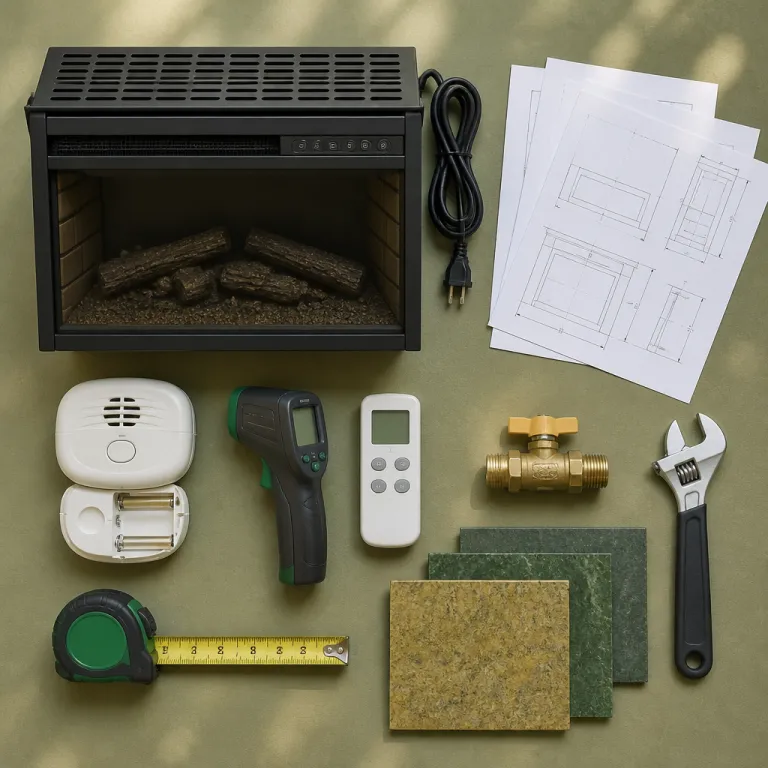
How fireplace non vented systems work in real homes
Fireplace non vented systems promise real flames or flame effects without a chimney, but they manage heat, emissions, and safety in very different ways. Understanding how ventless gas fireplaces and non vented electric fireplaces operate in real homes helps you balance ambience, indoor air quality, and long term running costs before you commit to an installation.
A fireplace non vented gas system burns fuel inside the room and keeps almost all heat indoors. This vent free configuration eliminates any traditional chimney or exterior vent, which simplifies installation but also raises serious indoor air quality questions. Many people compare ventless gas models with sealed gas fireplaces that use a direct vent, yet the combustion process, emissions profile, and safety requirements differ significantly.
With a ventless gas fireplace, the burner is engineered to burn natural gas or propane as completely as possible, so the unit releases mainly water vapour and carbon dioxide into the room air. Laboratory tests cited by the United States Consumer Product Safety Commission (CPSC staff briefing on unvented gas heaters, 2012) show that even compliant units can emit nitrogen dioxide in the range of 0.3–0.7 ppm and carbon monoxide peaks around 5–15 ppm in small test rooms when operated for several hours. These vent free fireplaces still produce small amounts of carbon monoxide and nitrogen dioxide, which is why manufacturers insist on room size limits, oxygen depletion sensors, and regular maintenance.
Typical manufacturer instructions for unvented room heaters require a minimum room volume of about 50–85 m³ (roughly 1,800–3,000 ft³) for a 20,000–30,000 BTU/h ventless gas fireplace, with additional open space or adjoining rooms for higher inputs. Anyone considering ventless fireplaces should read the technical details on oxygen sensors, flame failure devices, and clearance requirements before planning a purchase or scheduling installation, and should verify that the appliance is certified to ANSI Z21.11.2 or an equivalent standard.
Electric fireplaces operate very differently because they create flame effects without combustion, so they avoid the indoor emissions that every gas fireplace produces. An electric fireplace non vented insert simply uses resistive heating elements and a fan, which means no flue, no vent, and no need for a gas line or outdoor gas connection. For apartments or tight modern homes where adding a vent or handling free gas supply lines is impossible, an electric unit can provide the visual appeal of fireplaces without the same air quality compromises or moisture load.
Comparing ventless gas fireplaces and electric built in units
When people compare a ventless gas fireplace with an electric built in, they usually focus on realism, running costs, and safety. A gas fireplace with a yellow flame can look closer to a wood fire, yet an electric linear model with high resolution ember beds and adjustable colour often suits contemporary interiors better. For many households, the choice between gas fireplaces and electric fireplaces comes down to whether they already have natural gas on site and how much they value a completely vent free and emission free solution.
Operating costs vary by region, because natural gas tariffs and electricity rates differ widely between cities and countries. In some markets, a ventless gas unit running on natural gas can be cheaper per hour than an electric fireplace, while in others the opposite is true once you factor in seasonal tariffs and efficiency. As a simple example, a 1.5 kW electric fireplace drawing 1.5 kWh for each hour of full heat will cost about $0.23 per hour at an electricity rate of $0.15 per kWh, while a 20,000 BTU/h ventless gas fireplace using roughly 0.2 therms per hour will cost about $0.30 per hour at a gas price of $1.50 per therm; reversing those tariffs can flip the result.
Readers planning a fireplace sale purchase should ask their energy supplier for current unit price data per kilowatt hour or per therm, then compare that with the appliance’s stated consumption to estimate a realistic regular price to run the heater each winter. Design flexibility is another major factor, especially for built in and zero clearance installations. A recessed electric linear fireplace can slide into a shallow stud wall without any vent, while a ventless gas unit still needs a gas line, combustion air volume, and strict clearances around combustibles.
Before committing to a sleek hotel lobby style wall, it is worth reading guidance on when the zero clearance linear craze goes too far, such as the analysis in a dedicated zero clearance linear fireplace design guide, which explains where safety and practicality should override pure aesthetics. The quick comparison table below summarises the main differences between typical ventless gas fireplaces and non vented electric built in units for easy scanning.
| Feature | Ventless gas fireplace | Electric built in fireplace |
|---|---|---|
| Heat output (typical) | 10,000–30,000 BTU/h | 1–2 kW (≈3,400–6,800 BTU/h) |
| Indoor emissions | CO, NO₂, water vapour | No combustion emissions |
| Efficiency rating | ≈80–99 % (manufacturer data) | ≈100 % room heat from input |
| Fuel connection | Natural gas or propane line | Standard electrical circuit |
| Typical room limits | Minimum volume and ventilation required | Primarily electrical and clearance limits |
Insert and built in electric fireplaces for non vented projects
Homeowners planning a fireplace non vented renovation often start by looking at insert and built in electric models because they avoid combustion altogether. An electric fireplace insert can slide into an existing masonry opening, while a fully built in electric unit can be framed into a new stud wall or media wall. Both options provide flame effects and supplemental heat without any vent, which simplifies permits and reduces the need for specialist gas contractors.
Modern electric fireplaces now include linear designs up to 1.8 m wide, with multi colour LED flames, ember beds, and realistic logs or crystals. These large electric fireplaces for modern homes can visually anchor an open plan living room, and many models allow you to run the flame effect without heat for year round ambience. For readers exploring bigger statement pieces, a detailed overview of large electric fireplaces for spacious rooms can help narrow down suitable options and clarify which features justify a higher price.
Installation requirements for built in electric fireplaces are usually lighter than for ventless gas fireplaces, yet they still demand careful planning. You must respect the manufacturer’s clearances around the unit, provide a dedicated electrical circuit for higher wattage heaters, and consider cable routing for remote controls or smart home integration. Because these fireplaces are non vented, you also gain flexibility to place them on interior walls where a traditional vent or chimney would be impossible, which is particularly valuable in apartments and multi storey buildings.
Understanding brands, models, and pricing language
Anyone browsing fireplace non vented products online quickly encounters a confusing mix of pricing terms such as regular price, sale price, price regular, unit price, and price unit. Retailers often highlight a lower sale price during seasonal promotions, while the higher regular price or price regular figure shows the standard cost outside a fireplace sale period. When comparing electric fireplaces and ventless gas units, always check whether free shipping is included or whether shipping charges are added later, because that can change the effective unit price significantly.
Brand names also appear frequently in the ventless gas segment, especially for traditional gas fireplaces. The Empire brand, for example, offers the Empire Vail series of ventless fireplaces and the Empire Boulevard range of contemporary linear gas fireplaces, both designed for vent free installation in suitable rooms. Another established manufacturer, Monessen, sells compact ventless gas fireplace units that target smaller spaces, and some retailers promote these as a dedicated sale Monessen event or a seasonal sale Empire campaign with bundled accessories.
When you view details on retailer pages, pay attention to fuel type, room size rating, and whether the unit is configured for natural gas or propane. A gas fireplace that ships as a natural gas model may require a conversion kit for propane, and that kit might not be included in the advertised sale price. Always click through to view details on warranty terms, installation requirements, and safety certifications, rather than relying only on the first marketing view or headline options list.
Safety, indoor air quality, and where ventless fits
Safety is the most debated aspect of any fireplace non vented installation, especially when combustion is involved. Ventless gas fireplaces release combustion products directly into the room, so building codes in some regions restrict their use in bedrooms, small bathrooms, or tightly sealed modern homes. For example, the International Residential Code (IRC 2018, Section G2445) prohibits unvented room heaters in bathrooms and bedrooms, and states such as California and Massachusetts ban unvented gas space heaters in most residential applications, while other jurisdictions allow them only in larger rooms with specific ventilation rules.
Even where vent free gas fireplaces are legal, many experts recommend installing carbon monoxide alarms, maintaining adequate ventilation, and scheduling regular inspections to verify that the burner and oxygen depletion sensor are working correctly. Electric fireplaces avoid these combustion risks because they do not burn gas or any other fuel, which makes them attractive for families with children, older adults, or respiratory conditions. An electric linear unit produces heat through electric resistance and moves air with a fan, so the main safety considerations are electrical load, surface temperatures, and keeping soft furnishings away from the front grille.
For households that want the ambience of fireplaces without adding indoor emissions, a non vented electric fireplace offers a clear safety advantage over ventless gas models, especially in smaller rooms. Outdoor spaces introduce a different set of questions, because outdoor gas fireplaces and outdoor gas fire pits disperse combustion products into open air. A ventless gas fireplace rated for outdoor use can work well on a covered terrace, yet it still needs clearance from combustible materials and protection from wind that might disturb the flame.
Whether you choose outdoor gas fireplaces or electric outdoor style heaters, always read the installation details carefully and follow the manufacturer’s guidance on mounting height, clearances, and weather protection. Checking that the appliance is listed for outdoor or damp locations and that any gas connections or electrical components are protected from rain and corrosion is essential for long term safety.
Buying checklist, viewing options, and long term value
Before committing to any fireplace non vented purchase, it helps to follow a structured checklist that balances aesthetics, safety, and cost. Start by defining whether you prefer an electric fireplace or a ventless gas fireplace, then measure your room to confirm that the chosen unit meets the minimum volume and clearance requirements. Once you have a shortlist, compare the regular price and any temporary sale price, and check whether the retailer offers free shipping or charges a separate shipping fee that changes the overall budget.
Many specialist retailers allow you to view options side by side using comparison tools, which can clarify differences in flame technology, heater output, and control features. When you view details for each model, look for information on thermostat control, timer functions, remote operation, and whether the fireplace can run flame effects without heat for summer evenings. Some online stores also provide 3D room planners or augmented reality tools that let you preview how electric linear fireplaces or compact inserts will look on your wall, which is more reliable than judging from a single static view.
Long term value depends not only on the initial unit price but also on running costs, maintenance, and flexibility. Electric fireplaces usually require minimal servicing beyond occasional dusting, while ventless gas fireplaces need periodic burner cleaning and safety checks, especially in dusty or high use environments. For readers interested in a feature rich wall mounted electric fireplace with panoramic flame effects, a detailed product test of a 70 inch wall mounted electric fireplace can illustrate how real world performance, noise levels, and user controls compare with the marketing claims.
Key statistics on non vented and electric fireplaces
- According to the Hearth, Patio & Barbecue Association (HPBA industry shipment report, 2022), electric fireplaces account for roughly one third of all hearth product shipments in North America, reflecting strong demand for non vented and low maintenance heating options.
- Field tests referenced by the United States Consumer Product Safety Commission (CPSC staff briefing on unvented gas heaters, 2012) have shown that improperly installed or poorly maintained ventless gas fireplaces can raise indoor nitrogen dioxide levels above 0.5 ppm and carbon monoxide above 15 ppm, exceeding several health based guidelines in small or tightly sealed rooms.
- Energy efficiency ratings for electric fireplaces typically reach close to 100 % for converting electricity into room heat, while ventless gas fireplaces usually operate in the 80–99 % range depending on burner design and control systems, as reported in manufacturer specification sheets and independent lab tests for unvented room heaters.
- Market surveys from major retailers indicate that models advertised with free shipping and clear view details on operating costs tend to achieve higher customer satisfaction scores than similar units with hidden delivery charges or vague specifications, a trend echoed in published customer review summaries and internal analytics.
FAQ about fireplace non vented systems
Are ventless gas fireplaces safe to use in bedrooms ?
Most building codes either prohibit ventless gas fireplaces in bedrooms or impose strict room size and ventilation requirements. For instance, the International Residential Code bans unvented room heaters in sleeping rooms, and several states adopt even tighter rules. Even where they are allowed, many safety experts advise against bedroom installation because combustion products and moisture accumulate while windows remain closed. An electric fireplace is usually a safer non vented alternative for sleeping areas, provided the unit meets local electrical standards and clearance guidelines.
Do electric fireplaces really heat a room effectively ?
Electric fireplaces are designed as supplemental heaters and typically provide between 1 and 2 kW of output, which can comfortably warm a small to medium room of about 10–25 m² depending on insulation and climate. They are not intended to replace a central heating system, but they can reduce the load on your main boiler or heat pump during shoulder seasons. Because they are non vented and nearly all input energy becomes heat, they are efficient at delivering warmth to the occupied space.
What maintenance do ventless gas fireplaces require ?
Ventless gas fireplaces need annual inspections by a qualified technician to clean burners, check gas connections, and verify that safety devices such as oxygen depletion sensors function correctly. Dust, pet hair, and household contaminants can affect flame quality and emissions over time, so regular servicing is essential. Owners should also follow the manufacturer’s instructions for cleaning logs and glass, and never modify the burner or orifices.
Can I install a non vented fireplace in an apartment ?
Many apartments allow electric fireplaces because they do not require a vent or gas line and produce no combustion emissions. Ventless gas fireplaces are often restricted by building management or local codes due to ventilation and safety concerns, especially in smaller units. Always check your lease, condominium rules, and local regulations before planning any fireplace installation.
Is an outdoor gas fireplace considered ventless ?
Most outdoor gas fireplaces are effectively ventless because they release combustion products directly into the open air rather than through a dedicated flue. However, they are tested and certified for outdoor use, which means they assume much higher natural ventilation than an indoor room. Never install an indoor rated ventless gas fireplace in a semi enclosed outdoor space unless the manufacturer explicitly approves that application.