
Summary
Editor's rating
Is it worth the money?
Looks: cosy fake stove without trying too hard
Build quality and materials: decent, not premium
How it holds up over time
Heat output, noise and daily use
Assembly and setup: easy surround, slightly confusing extras
What you actually get in the box
Pros
- Good balance of looks and heating performance for a mid-range price
- Freestanding and flat-to-wall installation with no recess or chimney needed
- Realistic-enough flame effect with 13-colour downlights and remote control
Cons
- Instructions for the brick panel and downlights are unclear or incomplete
- Brick-effect panel is lightweight polystyrene and feels cheap during assembly

Specifications
View full product page →| Brand | endeavour fires and fireplaces |
A fake log burner that actually feels homely
I’ve been using the Endeavour Fires Farlington electric fireplace (the grey top with traditional brick version) in my living room for a little while now, and I’ll be honest: I bought it mainly for the look, not the heat. I wanted that log-burner vibe without dealing with real wood, soot, or a chimney. So I went into this seeing it more as furniture plus mood lighting than as a serious heater.
After setting it up and living with it, I’d say it’s pretty solid at both jobs: it looks the part and it heats a small to medium room reasonably well. It’s not perfect, and there are a few annoying bits, especially around the assembly and the downlights wiring, but once it’s in place, you mostly stop thinking about that and just use it like a normal fire.
The general feel is: you’re getting a decent-sized, freestanding fireplace surround with a fake stove inside, realistic enough flames for everyday use, and a remote that actually gets used instead of being left in a drawer. It feels more like a proper feature in the room rather than a random heater shoved in a corner.
If you’re expecting it to heat a huge open-plan space or to feel like a real wood burner, you’ll probably be a bit underwhelmed. But if you want an easy plug-and-play focal point that looks good, gives off a fair bit of heat, and doesn’t sound like a jet engine, it does the job quite well for the price.
Is it worth the money?
In terms of value for money, I’d say this fireplace lands in the “good, not mind-blowing” category. You’re paying for three things at once: a decent-sized surround, a fake stove with realistic enough flames, and the extra visual boost from the brick effect and downlights. If you tried to buy a separate surround and separate electric stove of similar quality, you’d probably end up around the same price or higher.
The heat output is standard for a 2kW electric fire, so you’re not getting some ultra-efficient miracle heater here, but that’s normal. What you are paying for is the overall look and the convenience. It fits flat to the wall, it’s freestanding, and you can set it up in an afternoon without an installer. For people who want to upgrade a plain wall into something that feels more like a proper fireplace, it makes sense financially compared to getting a builder involved.
The Amazon rating of 4.5/5 over 150+ reviews lines up with how I feel: most people will be happy, a few will be annoyed by the instructions or small cosmetic issues. The inclusion of things like the touch-up pen and responsive customer service (replacing a chipped mantle quickly for some buyers) adds a bit of extra value, because you’re not just stuck if something minor goes wrong.
Could you get a cheaper electric fire? Sure, but most of the cheaper ones either look tacky or don’t come with a full surround. Could you get something more premium? Also yes, but you’ll be paying a lot more for slightly better materials and maybe more realistic flames. For a mid-range budget, this hits a decent balance: good visual impact, solid functionality, and reasonable build for the price. Not a bargain of the century, but fair value if you actually like the look and plan to use it often.
Looks: cosy fake stove without trying too hard
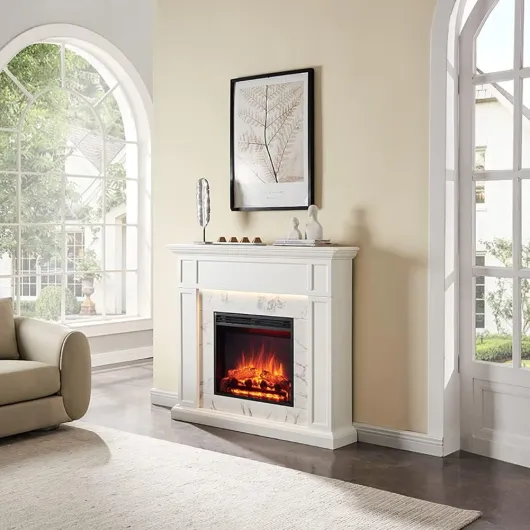
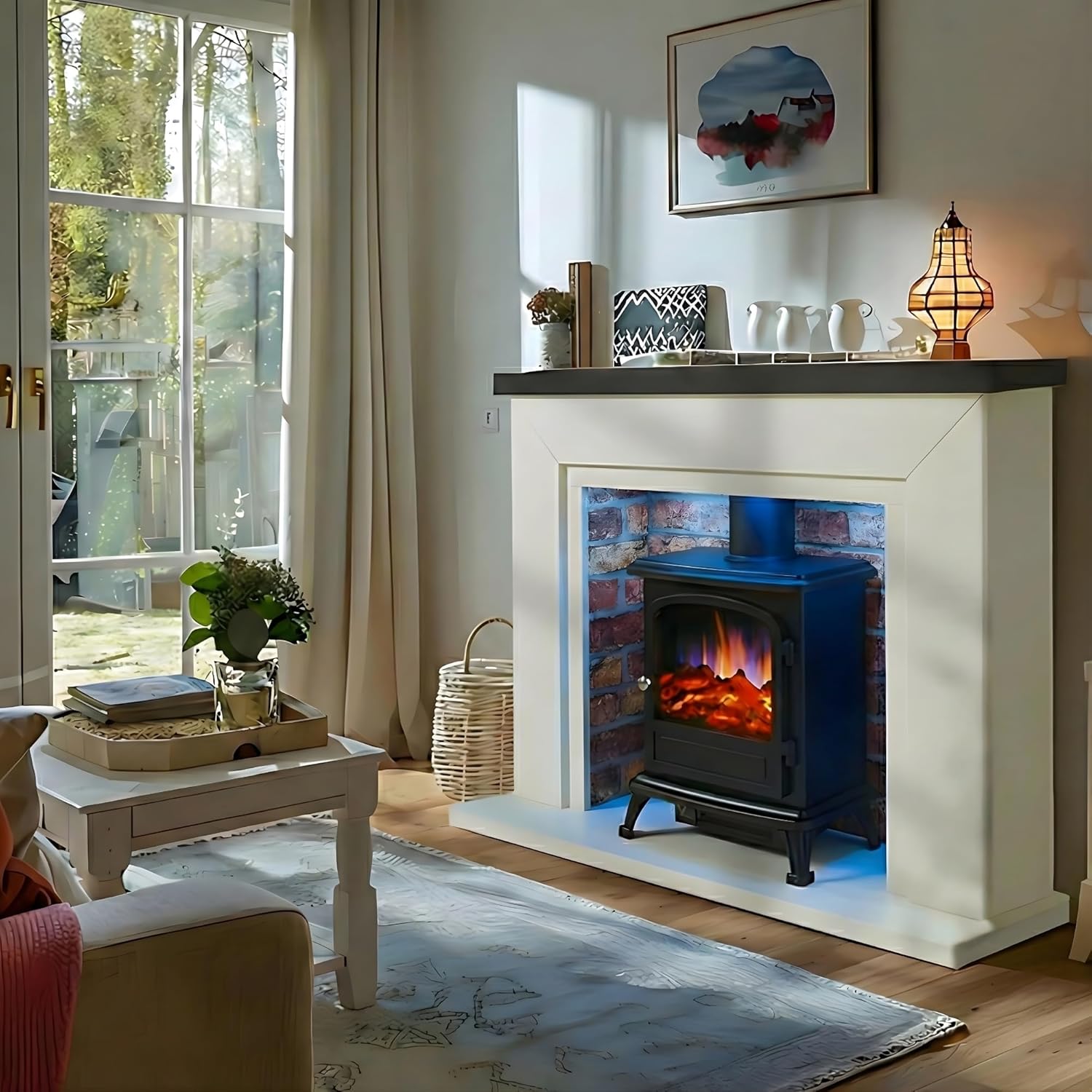
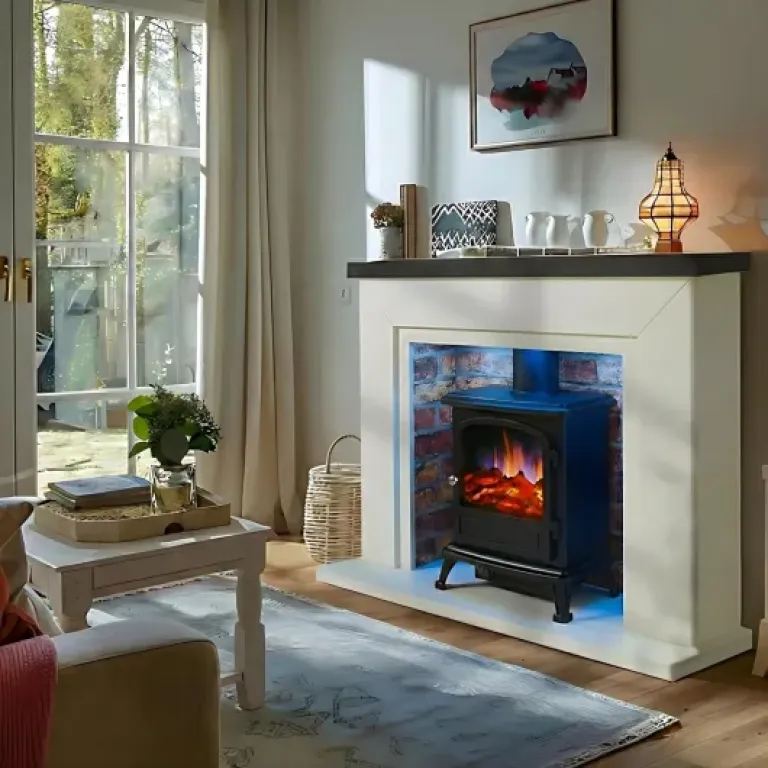
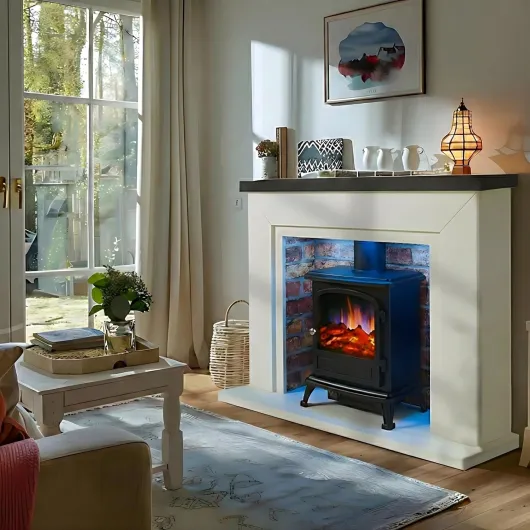
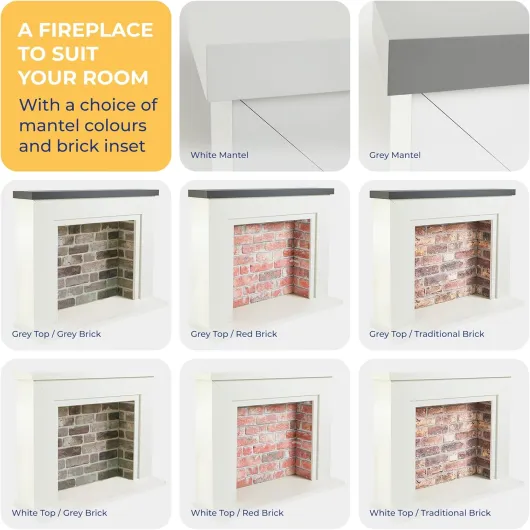
Design-wise, the grey top with traditional brick combo looks good in real life. The off-white/cream surround with the grey mantle works well if you’ve got neutral walls and modern-ish furniture. It doesn’t scream “cheap plastic heater” like some freestanding electric fires do. The 48" width is a decent size: big enough to feel like a real fireplace, but not so huge that it dominates a normal UK living room.
The fake log burner stove in the middle looks convincing enough from a normal sitting distance. The black metal body and short flue pipe give it that stove look, and the brick-effect insert behind it helps sell the idea that it’s sitting in a proper fireplace opening. The brick effect is obviously not real brick when you’re up close, but once you’re sitting on the sofa with the fire on, it just looks like a tidy, modern surround with a faux stove inside.
The LED flame effect is one of the better ones I’ve seen in this price range. It’s not ultra-realistic like some very high-end units, but it’s more than good enough for everyday use. The logs and embers glow nicely, and the flames move in a way that doesn’t look too fake or repetitive. You can run the flame effect and the downlights without heat, which is useful if you just want the look in the evening without turning the room into a sauna.
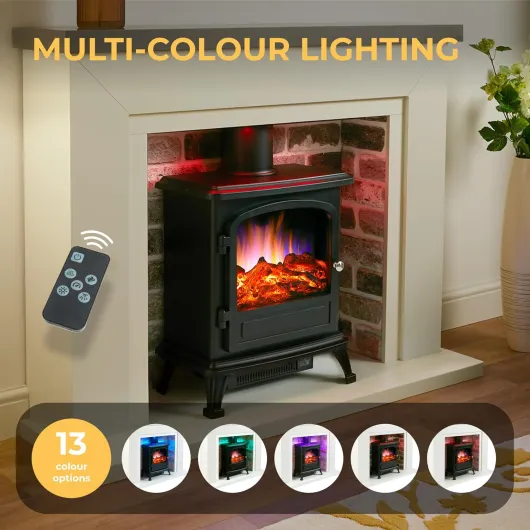
The 13-colour downlights shining onto the brick back are a nice touch. Some colours look a bit tacky (bright blue or green), but the warmer tones (amber, warm white, soft orange) give a cosy look. If you like playing with lighting, you’ll enjoy it; if not, you’ll probably just pick one warm colour and forget the rest. Overall, the design is clean and modern, with a slight traditional twist from the stove and brick. It blends in well rather than trying to be some over-designed centrepiece.
Build quality and materials: decent, not premium
The surround is made from engineered wood (MDF) with a painted finish. That means it’s not some heavy solid wood piece, but that’s normal at this price. The panels feel reasonably thick and, once assembled, the whole unit feels pretty solid. You don’t get creaks or wobble when you move it slightly, and it sits flat against the wall. The painted finish looks clean, but it’s still MDF, so you’ll want to avoid knocks and dragging things across the top.
The stove unit itself is metal and feels sturdier than the surround. The door area and the flue pipe don’t feel fragile, and the switches and thermostat knob on the front don’t feel like they’ll fall off after a few uses. It’s not high-end cast iron or anything like that, but for an electric heater it feels robust enough. The log bed and flame window are obviously plastic and glass, but they do the job visually and don’t feel like they’ll crack easily under normal use.
The 3D brick-effect back panel is where you really notice cost-cutting. It’s basically shaped polystyrene with a printed or painted brick finish. When you handle it during assembly, it feels very light and a bit cheap. That said, once it’s screwed in and hidden behind the stove, you just see the brick pattern and not the material. Visually it’s fine; physically it’s clearly not real brick or even heavy resin. If you’re rough during fitting, you could dent it, so it needs a bit of care.
Overall, the materials match the price point. It’s not luxury furniture, but it doesn’t feel like a toy either. It’s the kind of build where you don’t want to be moving it every week or bashing it with hoovers and furniture, but for normal living room use, it holds up. The inclusion of a touch-up pen for the surround on some units is a nice practical touch, because small chips can happen, and being able to hide them quickly is handy.
How it holds up over time
Durability-wise, you have to remember this is a mix of MDF, metal, and polystyrene, not a cast-iron stove built to survive decades of abuse. Used normally in a living room, it holds up fine. The painted MDF surround doesn’t magically chip on its own; you only really risk damage if you knock it with something hard or drag objects across the top. The touch-up pen helps hide small marks, but if you’re very rough with furniture, you might see wear sooner.
The metal stove body feels like it will last longer than the surround. There’s not a lot to go wrong mechanically: it’s basically a fan heater with LED lights. As long as you don’t block the vents and you keep dust out reasonably, it should keep going for years. The thermal cut-out is there to stop overheating, which is reassuring, especially if it’s going in a room used by kids or an elderly relative who might forget it’s on.
The brick-effect back panel is the weak point in terms of physical toughness. Being polystyrene, it’s easy to dent or mark if you lean tools or heavy objects against it during assembly. Once it’s installed behind the fire, it’s mostly protected, so it shouldn’t be an issue in day-to-day use. Just be careful during the build and don’t poke it too hard. Visually, it doesn’t fade or peel quickly, at least not in the short to medium term.
Overall, I’d rate durability as good enough for normal home use. It’s not something you’re going to move around every few months, so once it’s in place and treated like regular furniture, it should last a fair while. The limited warranty is there as a basic safety net, though I’d still treat it as a mid-range piece: solid, but not something you want to abuse or expose to constant knocks and scrapes.
Heat output, noise and daily use
In terms of heat, the Farlington is rated at 2000W with two settings: 1000W and 2000W. In a normal UK living room, the 1000W setting takes the chill off quite nicely after 10–15 minutes. On 2000W, it warms a mid-sized room fairly quickly, especially if your insulation isn’t terrible. It’s not going to heat a big open-plan space on its own in winter, but as a top-up or main heater in a small to medium room, it’s decent. The built-in thermostat knob lets you roughly control the temperature so it’s not blasting constantly.
The fan noise is there, but it’s not ridiculous. You can hear it when the heat is on, obviously, but once you’ve got the TV at a normal volume, it fades into the background. A couple of reviewers said they didn’t find it too noisy, and I’d agree. If you’re expecting silence while pumping out 2000W of heat, that’s just not how fan heaters work. As a fan heater, this one is on the quieter side of normal, not whisper-quiet but not annoying either.
The flame effect and downlights work independently of the heater, which is useful. You can have just flames and brick lighting on for atmosphere without burning electricity on heat. The flames look realistic enough to give a cosy feel, and the 13-colour downlights give you some flexibility. In reality, I use maybe 2–3 colours and ignore the rest. The remote is handy: you can switch between heat settings, turn the flames on and off, and change the downlight colour from the sofa. The signal seems reliable; you don’t have to stand right next to it.
Over time, the performance has been consistent. No random cut-outs apart from the thermal cut-out safety feature if things get too hot, which is reassuring. The unit heats up quickly and cools down fairly fast once turned off. If you’re using it as a daily heater in winter, your electricity bill will notice the 2kW draw, but that’s the same for any similar electric fire. As a mix of decorative feature and practical heater, it does the job well enough for everyday use.
Assembly and setup: easy surround, slightly confusing extras
Assembly is mostly straightforward, but there are a couple of fiddly bits. The surround itself is classic flat-pack: panels, screws, clear diagrams. If you’re used to putting together IKEA furniture, this is no worse. The brand says it’s a two-person job, and that’s fair if you don’t want to scratch anything or if you’re not used to DIY. That said, some buyers managed it solo in under an hour, and I’m in the same boat: about 45–60 minutes at a normal pace.
Where things get annoying is the back panel and downlights. The official instructions focus on building the basic surround but don’t really explain how to fix the polystyrene brick panel, position the downlight unit, and connect the cables. The brick panel just screws into the back of the surround (you’ll want short screws so they don’t poke through the front), and the light box basically rests on top of that panel. It’s not actually fixed down, which feels a bit DIY, but once everything is in place and the fire is pushed back, it doesn’t move.
Cable-wise, there’s a small hole in the back of the brickwork to feed the lighting cable through, plus a recess at the bottom for the main power cord. Some earlier reviewers thought you had to rewire the plug, but you don’t. You just feed the cable through the gap and plug it in normally. There are a couple of loose cables and connectors that need joining: one coming from the fire and one from the light box. They only fit one way, so you can’t really mess it up, but it would be nice if the manual actually showed this step clearly.
Once assembled, you just push the whole thing against the wall and plug it in. No drilling into the wall, no brackets, no chimney. For renters or anyone who doesn’t want to do major work, that’s a big plus. The only real downside is the poor instructions for the downlights and back panel, which can easily add 20–30 minutes of head-scratching if you’re not used to figuring things out yourself.
What you actually get in the box
Out of the box, you’re basically dealing with two main parts: the flat-pack surround and the electric stove unit with the flue and brick-effect insert. It comes in two boxes, so don’t panic if the courier only drags one to your door first. Inside you get the surround panels, screws and fittings, the stove, a short flue pipe, the 3D brick-effect back panel, the LED downlight unit, the remote, and a battery already included. Some units also come with a little touch-up pen for the cream/off-white bits, which is handy if you chip something during assembly.
The surround is made of engineered wood with a painted finish, and the fire itself is metal. Nothing feels luxury, but it doesn’t feel cheap or flimsy either. Once it’s built and pushed against the wall, it feels stable and solid enough that you’re not worried it’ll wobble every time someone walks past. The whole thing is freestanding and just needs a normal plug socket, so no recess, no chimney, no builder required.
The stove has two heat settings (1000W and 2000W), a thermostat dial on the front, and the usual fake log bed with LED flame effect. On top of that, you’ve got 13 colour downlights that shine down onto the brick-effect back panel, which is what makes this unit look a bit more interesting than a lot of the cheaper electric fires. The remote lets you control the flame effect, heat, and the downlight colours, so once it’s in place you don’t have to keep bending down to fiddle with buttons.
In practice, the package is fairly straightforward: you’re buying a piece of furniture plus a heater. No hidden extras, no “oh by the way you need to buy X separately” surprises. Just be aware the instructions for the surround are clear, but the bit about wiring and positioning the downlights and brick panel is either barely covered or missing, so you’ll probably end up figuring that out yourself.
Pros
- Good balance of looks and heating performance for a mid-range price
- Freestanding and flat-to-wall installation with no recess or chimney needed
- Realistic-enough flame effect with 13-colour downlights and remote control
Cons
- Instructions for the brick panel and downlights are unclear or incomplete
- Brick-effect panel is lightweight polystyrene and feels cheap during assembly
Conclusion
Editor's rating
The Endeavour Fires Farlington electric fireplace is a solid choice if you want the look of a log burner without the hassle, and you’re happy with a plug-in solution. It gives you a decent 2kW heater, a realistic-enough flame effect, and a surround that actually looks like a proper fireplace once it’s in place. The grey top with traditional brick combo works well in most modern or semi-traditional living rooms, and the 13-colour downlights are a nice extra, even if you’ll probably stick to just a couple of warmer tones.
Where it falls short is mainly around the assembly instructions for the brick panel and downlighting, and the fact that some materials (like the polystyrene bricks) clearly show where costs were trimmed. It’s not a premium piece, and if you’re expecting heavy, solid-wood furniture and ultra-realistic flames, you’ll be underwhelmed. But if you just want something that looks good, heats the room reasonably, and doesn’t sound like an aircraft when the fan kicks in, it gets the job done without much drama.
I’d recommend this to people who: live in a flat or house without a chimney, want a simple freestanding fireplace that feels like part of the room, and care more about overall look and practicality than high-end materials. If you’re very fussy about build quality or want to properly heat a large open-plan area, you might want to look higher up the price range or at a different type of heating altogether.