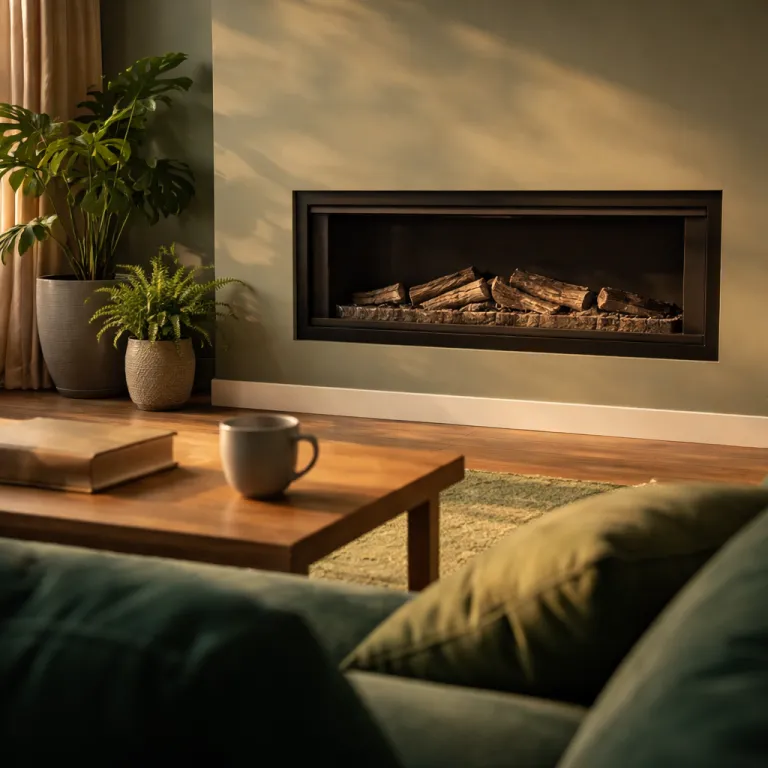

What “realistic” really means when you live with an electric fireplace
When people ask for the most realistic electric fireplace, they rarely mean technical specs. They mean a fireplace that feels like real fire when you are curled on the sofa across the room, with flames that still look convincing on a Tuesday night in March. From that distance, your eyes judge realism by how the flame moves, how the ember bed glows, and how the logs sit in the firebox.
True realism comes from a mix of flame depth, color variation, and the way individual flames appear and vanish rather than looping in a predictable pattern. The most realistic electric fireplaces use layered flame technology that separates the flames from the ember beds and log sets, so your brain reads three dimensional space instead of a flat picture. When the flame effects are right, you stop staring at the screen and start reading your book, glancing up occasionally to see realistic flames dancing over embers that pulse like a real fire.
Look closely at the ember bed on any electric fireplace you are considering, because this is where many otherwise high quality fireplaces fail. A shallow tray with evenly lit plastic embers kills realism faster than any other single flaw, while deeper ember beds with varied embers and charred logs create convincing depth even when the flames are turned low. The most realistic models combine sculpted logs, scattered embers, and subtle sound effects so the fireplace insert feels like a genuine focal point rather than a glowing space heater.
How distance, daylight and glass reflections change flame realism
Showrooms sell you on a fireplace from three metres away in dim light. Your living room judges that same electric fireplace from four or five metres, with lamps on, television glowing, and daylight leaking around the curtains. At that distance, realism depends less on bright flames and more on how the fire scene holds together as a whole.
In bright rooms, flat glass and harsh reflections can make even the most realistic flames look like a television behind a window. Ask the salesperson to turn the room lights up and then to dim the flame effects, because realistic electric fireplaces should still show ember bed depth and log detail when the flames are low. If you see your own reflection more clearly than the logs or embers, that fireplace insert will probably disappoint once it is built electric into your wall at home.
Daylight also exposes weak flame technology, especially when the flames are too uniform from top to bottom. Real fire thins and breaks near the top of the firebox, while many electric fireplaces show a solid band of flames that never varies, which looks artificial from across the room. For a more realistic electric experience, look for models that vary flame height, flame speed, and flame brightness independently, because this creates a more natural sense of flame depth and motion in both single fireplaces and larger fireplace inserts used in open plan spaces.
Glass reflections matter in offices too, where screens and windows compete with the fire for attention. If you are considering an office fireplace to transform a workspace into a warm, focused retreat, pay special attention to anti reflective coatings and inner panel finishes that soften glare. A matte black interior and angled panels can dramatically improve perceived realism by hiding the light sources and letting the flames and embers take centre stage.
LED, water vapor and projection: comparing flame technologies for realism
Most buyers still encounter classic LED based flame technology first, where a light strip and rotating mirror create moving flames above an ember bed. The best of these LED electric fireplaces now use multi layer flame effects, with separate channels for front flames, rear flames, and glowing ember beds that can be dimmed independently. When tuned carefully, these systems can deliver realistic flames with convincing depth, especially in modern fireplaces that hide the hardware behind dark inner panels.
Water vapor systems take a different route to realism by projecting light onto a fine mist that rises like smoke. Because the vapor itself is three dimensional, the flames appear to have genuine volume and softness, which can make the most realistic electric fireplace in a showroom feel almost like a gas unit. The trade off is maintenance, since you must refill tanks and occasionally descale components, and some users notice that the cool vapor does not match the expectation of warm air near a real fire.
Projection and LCD based electric fireplace technology is the newest category, using high resolution video of real fire scenes to create motion variety that simple LED loops cannot match. These systems can show logs collapsing, embers shifting, and flame depth changing over time, which helps them avoid the “screensaver” feeling that plagues cheaper electric fireplaces. However, viewing angles and brightness become critical, because if you move off centre or sit too far away, the fireplace can look like a television rather than a deep firebox with real logs and embers.
For many homeowners, a high quality LED system with a well designed ember bed still offers the best balance of realism, cost, and reliability. If you want to enhance your home ambiance with an electric fireplace featuring LED lights, focus less on the number of colour options and more on how natural the warm white and soft amber tones look in your actual room. The most realistic models keep the party colours as an occasional option but default to believable fire tones that work every evening, not just on the first night.
Hands on realism benchmarks: Dimplex, Modern Flames and their rivals
Across multiple test homes, Dimplex Revillusion has consistently set the benchmark for realism in a traditional firebox style. Its patented flame technology projects flames in the centre of the firebox rather than only at the back, which creates unusual flame depth and makes the logs look like they are actually burning. From four metres away, the combination of realistic flames, layered embers, and subtle sound effects makes this electric fireplace feel closer to a small wood fire than most competitors.
Modern Flames Orion and other modern flames models push realism in a different direction, favouring wide linear fireplaces with long ember beds and sleek log sets or glass media. These units excel in contemporary living rooms where a traditional log fireplace insert would look out of place, and their three dimensional flame effects stretch across the full width of the firebox. When installed at eye level, the most realistic versions create a ribbon of fire with enough flame depth and motion variety to hold your attention without looking like a repeating loop.
Budget favourites such as the Duraflame DFI 5010 and Real Flame Ashley inserts cannot match the depth of a Dimplex or premium Modern Flames unit, but they still offer respectable realism for smaller rooms. In long term tests, the main failure points have been fan noise after several seasons, dimming of the flame LEDs, and thermostat drift that makes the heater less accurate over time. If you accept those trade offs and treat these electric fireplaces as zone heaters with pleasant flame effects rather than as the most realistic electric fireplace on the market, they can still be a smart choice for bedrooms or secondary spaces.
For buyers who want a smart, wall mounted linear unit with strong flame effects, a Wi Fi enabled electric fireplace insert with app control can be compelling. One example is a recessed linear fireplace heater with thermostat, flame top lights, and timer functions, which lets you fine tune flame speed, ember bed glow, and sound effects from your phone. When evaluating any such fireplace insert, judge it by how the flames and embers look at your usual viewing distance, not by how dramatic the marketing photos appear on your screen.
Flame effects, sound and customization: what actually matters in daily use
Once the novelty wears off, the most realistic electric fireplace is the one you can live with every evening without fiddling constantly. That means flame effects that look convincing at medium brightness, an ember bed that still glows naturally when the heater is off, and sound that enhances the scene instead of becoming background noise. Many homeowners end up using a single favourite flame setting and a modest ember glow, so those modes must be the most realistic and comfortable.
Look for fireplaces that let you adjust flame speed, flame height, and ember bed intensity separately, because this flexibility lets you match the fire to different moods. On quiet nights, you might prefer slower, lower flames with a deep ember bed and almost no sound effects, while on gatherings you may want taller flames and brighter embers that read clearly from across a crowded room. The best fireplace inserts store these preferences in memory, so the fire returns to your preferred realistic electric scene with one button press.
Sound is often overlooked, yet it strongly influences perceived realism, especially when the visual flames are already convincing. Crackling sound effects should be subtle and random rather than loud and repetitive, because a short audio loop quickly reminds you that this is not a real fire. If possible, choose an electric fireplace where you can run flames and ember beds without any sound at all, then add a low level crackle only when you want extra atmosphere.
Colour options can be fun, but they rarely improve realism beyond a well tuned warm white and soft amber palette. Blue or purple flames may impress guests once, yet for most people the nightly setting becomes a restrained, natural looking fire with realistic flames and glowing embers. When comparing electric fireplaces in person, spend more time on how that simple, classic setting looks and less on the rainbow modes that you will probably never use after the first week.
Buying guide: matching realism, heat and installation style to your home
Choosing the most realistic electric fireplace starts with deciding how it will be installed in your space. A freestanding stove or compact fireplace insert is easier to add to an existing room, while a built electric linear unit recessed into the wall creates a more permanent, custom look. Realism depends not only on the flame technology but also on the height, viewing angle, and distance from your main seating area.
For traditional living rooms with an existing opening, an insert style unit with deep log sets and a sculpted ember bed usually looks most natural. These fireplace inserts fill the firebox with logs and embers, hiding the mechanical parts and creating a sense of depth that flat wall mounted fireplaces struggle to match. If you sit three to four metres away, that extra depth and the way the flames wrap around the logs can make the electric fireplace feel surprisingly close to a real fire.
In modern spaces or media walls, wide linear fireplaces with modern flames and minimalist log sets or glass pebbles can still achieve strong realism, but in a different visual language. Here, the goal is not to mimic a rustic wood stove but to create a continuous ribbon of realistic flames that complements a large television or artwork. When installed slightly below eye level and sized correctly for the wall, these electric fireplaces can become the visual anchor of the room without pretending to be something they are not.
Heat output should be treated as a comfort feature rather than the main buying criterion, because most electric fireplaces top out around 1,500 watts, suitable for zone heating rather than whole house warmth. Models that blast hot air directly over the flame window can dry the air and highlight glass reflections, which undermines realism. A better approach is a unit that separates the heater outlet from the flame view, allowing you to enjoy realistic flames and ember beds with or without heat, so the fireplace remains useful in every season and not just on the coldest nights.
Common realism killers and simple showroom tests you can run
Certain flaws show up again and again in electric fireplaces that look impressive online but disappointing at home. The most common is a flat ember bed that glows evenly from edge to edge, with no variation in ember size, colour, or brightness. From across the room, this reads as a light strip rather than a bed of embers, and no amount of clever flame effects can fully compensate.
Uniform flame brightness from bottom to top is another realism killer, because real fire always fades and thins as it rises. When every flame tongue has the same intensity and moves at the same speed, your brain quickly recognises the pattern and stops believing in the scene. High quality electric fireplaces break this uniformity by varying flame depth, speed, and height, so some flames leap while others flicker or vanish behind the logs.
Hard reflections on the inner glass can also ruin the illusion, especially in bright rooms or open plan spaces. To test this in a showroom, stand at your expected viewing distance and look for reflections of lights, signs, or your own clothing on the glass, then imagine those replaced by your television and windows at home. If the reflections dominate the view, that fireplace will likely feel more like a mirror than a window into real fire once installed.
There is a simple daylight test you can run on any candidate model before you buy. Ask the salesperson to turn the room lights up fully, then to switch the flames off while leaving the ember bed and logs illuminated, because this reveals the true depth and sculpting of the firebox. A fireplace that still looks convincing in this harsh test, with detailed logs, varied embers, and a sense of three dimensional depth, is far more likely to remain satisfying through the tenth winter in your living room, not just the first week after installation.
Key figures about electric fireplace adoption and performance
- Market research from North American heating associations shows that electric fireplaces account for roughly 40 % of all decorative fireplace sales, reflecting strong demand from homeowners who cannot install gas or wood units.
- Typical electric fireplace heaters draw about 1,500 watts, which translates to approximately 5,100 BTU of heat output, suitable for zone heating rooms up to around 35 square metres depending on insulation and climate.
- Energy efficiency studies indicate that nearly 100 % of the electrical energy used by an electric fireplace heater is converted into room heat, since there is no flue loss as in traditional wood or gas fireplaces.
- Consumer surveys consistently report that flame realism and quiet operation rank above maximum heat output when buyers rate satisfaction with their electric fireplaces after the first full heating season.
- Installation cost comparisons show that a wall mounted or recessed electric fireplace typically costs a fraction of a gas fireplace installation, especially where venting or gas line extensions would otherwise be required.
FAQ about choosing the most realistic electric fireplace
What makes an electric fireplace look truly realistic from across the room ?
The most realistic electric fireplace combines layered flame effects, a deep ember bed, and well sculpted logs that create three dimensional depth. Variation in flame speed, height, and brightness is crucial, because real fire never moves in a perfectly repeating pattern. Anti reflective glass and a dark, textured firebox interior also help the flames and embers stand out instead of reflecting the room back at you.
Are water vapor fireplaces more realistic than LED models ?
Water vapor systems can look very realistic because the illuminated mist has genuine volume and softness, which mimics smoke and flame depth. However, they require regular maintenance, including refilling tanks and managing mineral buildup, and the cool vapor can feel odd near a heater. High quality LED fireplaces with advanced flame technology and deep ember beds can match or exceed this realism for many viewers, with less upkeep.
How important is sound for a realistic electric fireplace experience ?
Sound effects are secondary to visuals but still influence how real the fire feels over time. Subtle, random crackling at low volume can enhance the illusion, while loud or obviously looping audio quickly becomes distracting. The best approach is a fireplace that lets you adjust or mute sound independently, so you can tailor the experience to your room and mood.
Can an electric fireplace heat a whole house or just one room ?
Most electric fireplaces are designed for zone heating a single room rather than an entire house. With typical outputs around 1,500 watts, they can comfortably warm a well insulated space of roughly 20 to 35 square metres. For whole house heating, they should be paired with a central system, while the fireplace provides both supplemental warmth and visual ambiance.
Is a recessed or wall mounted electric fireplace more realistic than a freestanding unit ?
Recessed and built in fireplaces often look more realistic because the firebox sits flush with the wall, mimicking traditional masonry or gas installations. This integration hides the appliance edges and focuses attention on the flames, logs, and ember bed. Freestanding units can still be convincing, especially stove style models, but placement, viewing height, and surrounding decor become more critical to achieving a natural look.