
Summary
Editor's rating
Value for money: cool effect, unknown brand tax
Design: looks good if you build around it, ugly if you don’t
Everyday comfort: living with it is a mix of cool and slightly annoying
Materials and build: solid metal, slightly rough around the edges
Durability and maintenance: built to last, if you actually take care of it
Performance: nice flames, a bit of fuss to keep them that way
What this thing actually does (and doesn’t do)
Pros
- Convincing 3D flame effect in a dim room with multiple colors and brightness levels
- Sturdy stainless steel construction and thin top plate suitable for built-in setups
- Low power consumption and safe operation (no real fire, uses only water and LEDs)
Cons
- No heating function at all, purely decorative despite fireplace look
- Requires regular maintenance with purified water and cleaning to keep performance
- Unknown brand with uncertain long-term support and app quality

Specifications
View full product page →| Brand | YOIUTRGDK |
A 1.5m fake fireplace that runs on water… worth the hassle?
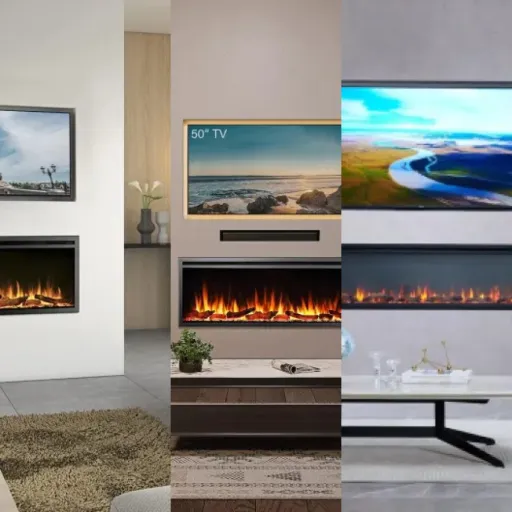
I’ve been using this 150 cm 3D water vapor fireplace from YOIUTRGDK (yeah, not exactly a famous brand) for a bit, mainly in a living room setup under a wall-mounted TV. I went in knowing it’s purely decorative, no heat, just lights and water vapor. So my expectations were more “nice visual gadget” than “real fireplace replacement”. If you expect actual warmth, this is the wrong product from the start.
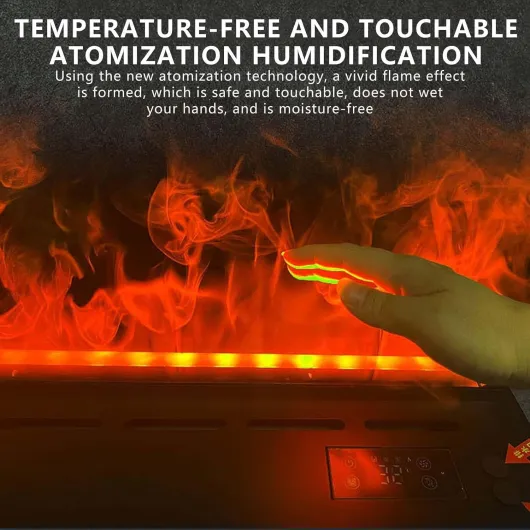
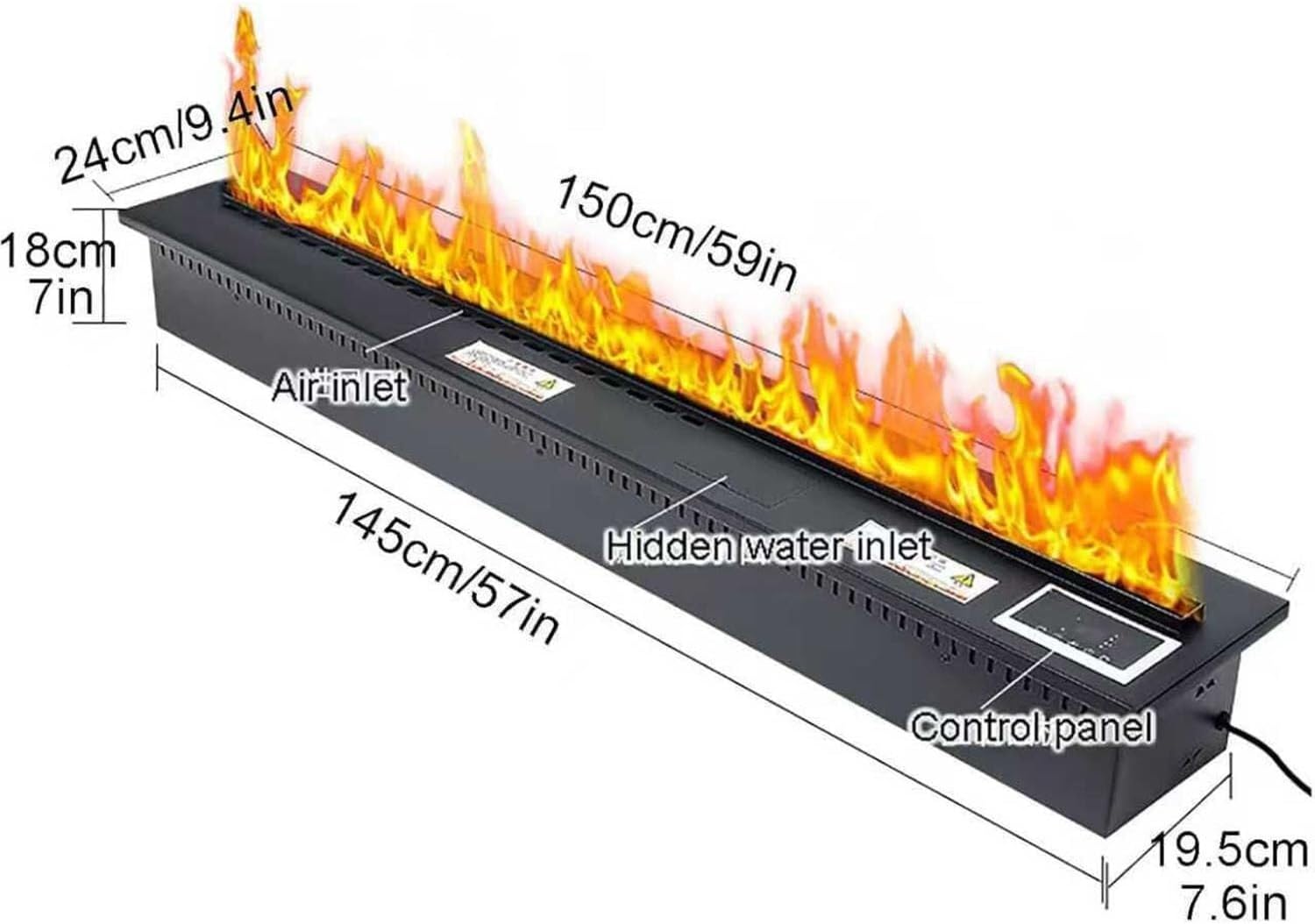
The basic idea is simple: it uses LED lights + atomized water to create the illusion of flames and smoke. You pour in purified water, it turns it into fog, the LEDs color it, and you get a fake flame line across 1.5 meters. There’s remote control, touch controls, and supposedly app control, plus multi-color flames and brightness levels. On paper, it sounds like a fun centerpiece for a modern living room or a bar-like corner at home.
In practice, it’s more of a DIY project than a ready-to-go decorative piece. You have to embed it properly into a countertop, TV unit, or custom niche to make it look good and safe. Just plonking it on a table looks a bit odd and you see all the metal edges. Also, it’s long and heavy, so you need to plan where it goes before it even arrives. If you’re not into measuring and cutting furniture, this might annoy you.
Overall, my first impression was: “okay, this is pretty cool to look at, but it asks for some effort”. It’s not a toy you unbox and forget about. It needs water, maintenance, and a bit of setup work. If you’re fine with that and just want an ambient light/humidifier that looks like a fireplace, then it starts to make sense. If you want simple and low-effort, it’s probably not the best match.
Value for money: cool effect, unknown brand tax
Talking about value, it really depends what you compare it to. If you put it next to real electric fireplaces with heating from known brands, this one can feel a bit pricey for something that doesn’t warm the room. You’re basically paying for the visual effect and some humidity, not for actual heating. On the other hand, compared to smaller decorative vapour fireplaces or tabletop units, the 150 cm length and metal build give you a much bigger visual impact, so you do get more presence for your money.
Where it loses some points is the unknown brand factor. YOIUTRGDK isn’t exactly a household name, and that shows in little things: the documentation isn’t super polished, the app situation is not very reassuring, and you have no clear idea how easy it will be to get support or spare parts in a couple of years. When I buy something this big to embed in furniture, I’d like to know the brand will still exist in a while. Here, it’s a bit of a bet.
In terms of running costs, it’s actually pretty cheap. Power use around 100–110 W is low, and water is cheap, especially if you have a home filter. The main “cost” is your time: refilling, cleaning, and occasionally fiddling with it. If you’re okay with that and just want a visual centerpiece for a modern living room, the value is not bad. It gives a more dramatic look than LED strips or candles, that’s for sure.
For me, I’d call the value reasonable but not crazy good. If you can find it discounted, it starts to make more sense. At full price, I’d at least compare it directly with other steam fireplaces from slightly more established manufacturers. If the price gap is small, I’d probably lean toward a known brand. If this one is significantly cheaper and you’re handy enough to install and maintain it, then it becomes a fair deal.
Design: looks good if you build around it, ugly if you don’t
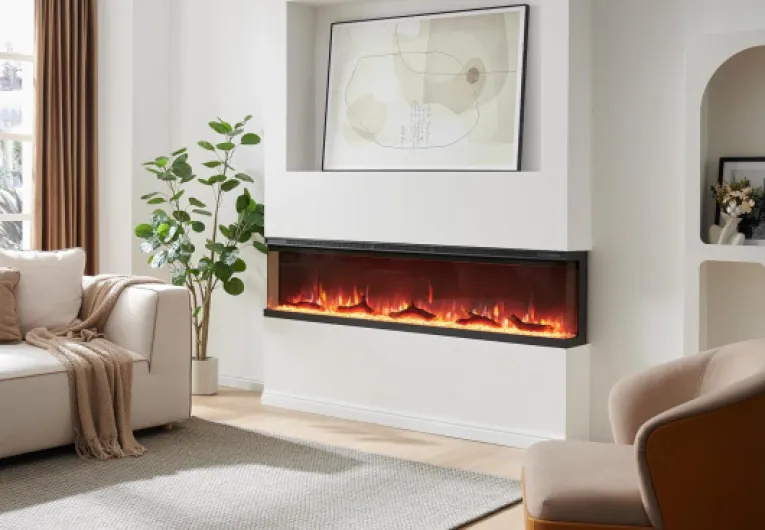
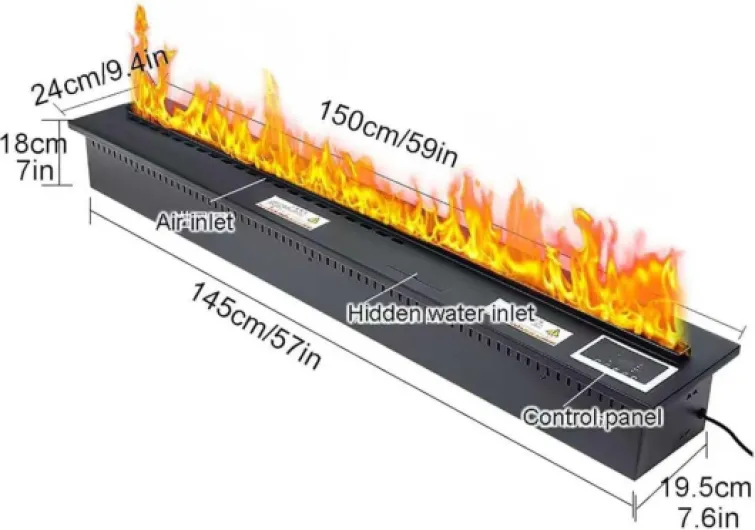
Design-wise, this thing is very linear and minimal. It’s basically a long rectangular metal trough in brushed or matte black steel (depending on the part), with a very thin 3 mm top plate. The idea is that you drop it into a cut-out in your countertop, TV cabinet, or custom furniture, and only that thin top edge is visible. When it’s installed properly, it does look fairly clean and modern. It doesn’t scream “cheap gadget” from a distance, which I appreciated.
The problem is: if you don’t embed it, it looks like a long industrial metal box sitting on your furniture. The sides and body are pretty utilitarian. It’s not something you’d want to display fully exposed in the middle of a room. After a couple of days, I realized that to make it look right, you basically need to design your TV wall or cabinet around it. That means cutting a precise slot, making sure there’s ventilation underneath, and planning cable management. If you’re renting, or not into drilling/cutting, that’s a pain.
In terms of visual effect, the flame line is actually decent when the room is dim. At full brightness and with warmer colors (orange/yellow), it does give a believable fake-fire vibe. When you go into blue, purple, or green, it starts to look more like a nightclub fog machine, which can be fun but not exactly cozy. The 1.5 m length is nice; it fills a whole TV wall and doesn’t feel tiny like those 60–80 cm units.
My main gripe is that the design is very dependent on good installation. If you’re handy or have a carpenter, you can make it look like a built-in feature. If you just want to unpack and place it somewhere, it’s underwhelming. Also, there’s no real decorative frame or glass front included, so you don’t get that “fireplace insert” look; you just have an open slot with steam coming out. Some people will like the minimalist approach, but others might find it too barebones without extra work.
Everyday comfort: living with it is a mix of cool and slightly annoying
Day to day, the comfort of using this fireplace comes down to two things: how often you’re willing to deal with water, and how sensitive you are to humidity. The tank capacity (they mention 4–5 liters on smaller sizes; the 150 cm version is in that ballpark or a bit more) is enough for a few hours of use, but if you run it a lot, you’ll be refilling regularly. The automatic water suction helps, but it doesn’t magically refill itself – you still need to top up the reservoir. If you’re the kind of person who already hates refilling a humidifier, this will feel similar, just bigger.
In terms of room comfort, it does add noticeable humidity, especially in smaller rooms. In a medium living room, it actually felt nice in winter when the heating dried everything out. In a smaller office, after a few hours the air felt a bit too damp, and windows started to fog slightly. So placement and duration matter. If you live in a very humid climate already, I’d be careful; you might end up with a clammy room if you overuse it.
Control-wise, the remote and touch buttons are straightforward. The remote worked okay from the sofa, no need to point super precisely. The touch panel is fine but not super responsive; you sometimes need a firm press. The app control is a nice idea, but with products from smaller brands like this, the app experience can be hit or miss – expect a generic interface, possibly some translation issues, and don’t be shocked if updates are rare. Personally, I ended up just using the remote 90% of the time.
From a comfort perspective, I’d say it’s nice to have on occasionally, but not something I’d run constantly. It’s a bit of a ritual: check water, turn it on, enjoy the look for a few hours, then turn it off and maybe wipe nearby surfaces once in a while. If you like small routines and don’t mind maintenance, it’s fine. If you want a purely passive decorative object that needs nothing from you, this isn’t it.

Materials and build: solid metal, slightly rough around the edges
The manufacturer mentions 304 stainless steel for the tank and a galvanized steel top plate with black powder coating. In hand, it does feel fairly robust and heavy. At around 15 kg for the shorter versions and more for the 150 cm, it’s not flimsy. The metal doesn’t flex much when you lift it, and the top plate is indeed thin but doesn’t feel like it will bend easily under normal use. For something that handles water and heat from LEDs, stainless steel is a sensible choice.
That said, the finish is more “industrial” than premium. Up close, some edges and joints don’t look super refined. Nothing dangerous, but you can tell it’s not made by a big European or US fireplace brand. The brushed stainless steel looks fine from a distance, but if you’re picky, you’ll notice small imperfections and slightly uneven lines. The black powder coat on the top is okay, but I wouldn’t test it with heavy abrasion or sharp objects.
On the positive side, stainless steel for the water tank is good for corrosion resistance. After repeated fills and some time running, I didn’t see rust or staining. Compared to cheap humidifiers with plastic tanks that discolor fast, this feels more durable. The internal components (water intake, atomizer, LEDs) are not really visible unless you open the unit, but from what I could see, they’re fairly standard parts, nothing fancy, nothing too cheap-looking either.
Overall, I’d call the build quality pretty solid but not premium. It’s good enough to trust it embedded in furniture without feeling it will fall apart, but don’t expect luxury-level fit and finish. For the price these things usually go for, I would have liked slightly cleaner assembly and more attention to details around the edges and connections. Still, functionally, the materials choice makes sense: metal where it matters, reasonable coating, and components that should survive regular home use if you maintain it a bit.
Durability and maintenance: built to last, if you actually take care of it
From what I’ve seen so far, the durability looks decent, but heavily tied to how you maintain it. The 304 stainless steel tank is a good sign: it’s less likely to rust or warp, even with constant contact with water. After a period of use and several refills, I didn’t see any obvious corrosion or leaks. The metal frame feels strong enough to handle being embedded in furniture without bending or rattling. So structurally, it seems okay for long-term use.
The weak points are the atomizer and water system. Like any humidifier or vaporizer, mineral buildup and dirt will slowly reduce performance if you ignore cleaning. With filtered or distilled water, you can stretch cleaning intervals, but you’ll still need to open it up now and then, wipe things down, and maybe descale certain parts. There’s no magic here – if you treat it like a regular humidifier and clean it regularly, it should last. If you forget about it and keep using hard tap water, don’t be surprised if the mist gets weaker or parts start looking crusty.
The electronics (LEDs, control board, sensors) didn’t show any issues while testing, and the LED tech itself usually lasts a long time. There’s no high-heat source, so it’s not under massive thermal stress like a real fireplace heater. That’s a plus for longevity. The automatic power-off when the water level is low is also important – it prevents the unit from running dry and damaging the atomizer.
Overall, I’d say this is built to survive several years if you’re not careless. But if you’re the type who never cleans appliances and uses whatever water is nearby, expect problems sooner. There’s also the usual risk with lesser-known brands: getting spare parts or service might be tricky. So durability of the hardware looks okay, but long-term support is a question mark. If that bothers you, you might prefer a more established brand, even if it costs more.
Performance: nice flames, a bit of fuss to keep them that way
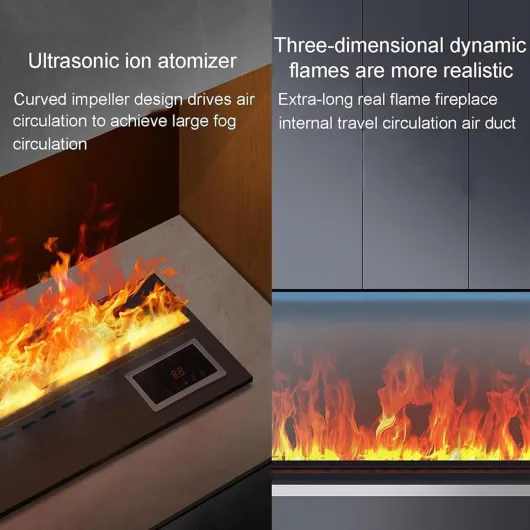
In terms of pure visual effect, the performance is decent to good. The atomization is strong enough to create a continuous line of vapor over the 150 cm length, as long as the water level is okay and the nozzles are clean. At medium brightness with warm colors, it looks quite convincing in a dim room – not like a real wood fire, but close enough to scratch the “fake fireplace” itch. At low brightness, the effect becomes softer and can work as a night light. At max brightness, it’s a bit harsh but more visible in brighter rooms.
The 7 adjustable colors are fun, but in reality I mostly stuck to 2–3: the classic orange/yellow for a fire look, and sometimes a soft blue for a more “spa” vibe. The more extreme colors (green, purple) feel a bit gimmicky, at least for a living room. The 5 brightness levels are useful though; you can tune it depending on whether you’ve got other lights on. The LEDs respond quickly to changes from the remote or touch panel, no big lag.
On the downside, the atomization performance depends a lot on the water quality. With proper purified or filtered water, the fog is fine and consistent. When I got lazy and used regular tap water, after a few days I could see some mineral buildup and the vapor output seemed less uniform. So if you want it to look good long term, you basically sign up for always having distilled or filtered water around. Also, you do get a small film of moisture on nearby surfaces over time if the room is not well ventilated, especially if you run it for hours.
Noise-wise, it’s not totally silent, but it’s quiet enough. You can hear a soft humming and occasional water movement if the room is very quiet, but during TV watching or with music on, it fades into the background. Compared to a standard humidifier, it’s about the same or slightly quieter. Overall, performance is good when you treat it right, but it’s not a “set and forget” device. It wants clean water, occasional cleaning, and a bit of attention if you want that strong, even flame effect all the time.
What this thing actually does (and doesn’t do)
On a basic level, this is a decorative steam fireplace: it creates a long line of fake flames using water vapor and LEDs. No real fire, no gas, no ethanol, no electrical heating. It’s basically a humidifier stretched out to 150 cm with a metal frame and a light show on top. You fill the tank with purified or filtered water, it sucks it up automatically, and then it spits out fog that looks like smoke/flame when lit from below.
Function-wise, you get 7 flame colors (RGB style) and 5 brightness levels, plus control options via touch panel, remote, and supposedly an app. There’s also an automatic water filling system mentioned, but in practice you still need to make sure the tank has water and the intake is clean. It’s sold as suitable for living rooms, offices, yoga studios, etc., but at the end of the day it’s a decorative strip that needs a proper cut-out to actually look integrated.
Important point: there is no heating element. Compared to an electric fireplace from Dimplex or similar that actually blows warm air, this one is just for looks and a bit of humidity. So if you’re thinking “this will warm my living room in winter”, forget it. It also means energy use is pretty low – around 100–110 W depending on length – which is more or less like running a bright lamp or a couple of LED strips plus a small humidifier.
In real use, I treated it as a mood light + humidifier combo. I’d turn it on in the evenings when watching TV or having people over. The flames do catch the eye, people always ask what it is, but once you explain it’s steam and LEDs, the wow factor drops a bit. For someone who just wants a modern, fake-fire look without dealing with gas or ethanol, it gets the job done. Just be clear in your head: it’s a visual gadget, not a functional heater.
Pros
- Convincing 3D flame effect in a dim room with multiple colors and brightness levels
- Sturdy stainless steel construction and thin top plate suitable for built-in setups
- Low power consumption and safe operation (no real fire, uses only water and LEDs)
Cons
- No heating function at all, purely decorative despite fireplace look
- Requires regular maintenance with purified water and cleaning to keep performance
- Unknown brand with uncertain long-term support and app quality
Conclusion
Editor's rating
Overall, this 150 cm 3D water vapor fireplace is a pretty solid decorative gadget if you know exactly what you’re getting into. The fake flame effect looks good in a dim room, the multi-color LEDs and brightness levels give you some flexibility, and the stainless steel build feels sturdy enough for a built-in installation. As a visual centerpiece under a TV or in a custom cabinet, it does its job and definitely catches attention when people walk in.
On the flip side, it’s not plug-and-play. To make it look good, you basically need to design furniture around it, and you have to accept the usual humidifier chores: refilling with purified water, cleaning to avoid mineral buildup, and dealing with some added humidity in the room. Add to that the unknown brand, so long-term support and parts are a question mark. If you want a low-effort decorative piece or an actual heater, this isn’t the right product. But if you’re comfortable with some DIY, don’t mind maintenance, and just want a long, modern-looking fake fire line for ambiance, it’s a decent option.