Why wattage and BTU ratings mislead cost conscious homeowners
Every plug in electric fireplace heater you see in a big box aisle draws roughly the same power. Almost all freestanding fireplaces and compact space heaters are capped at about 1,500 watts because a standard 120 volt, 15 amp outlet in a typical North American living room or bedroom cannot safely deliver more. That means the headline BTU number, usually around 5,100 BTU, tells you how much heat the unit can theoretically make, but not how that heat will actually feel in your specific space.
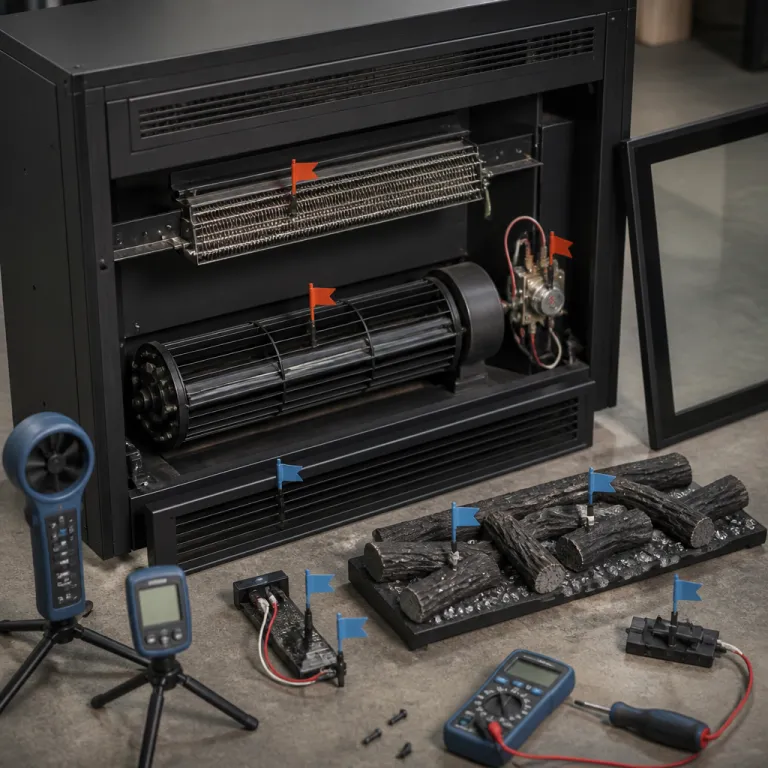
Manufacturers still print bold claims like “heats up to 93 square metres” on the box, yet those tests assume a sealed, well insulated test chamber that bears little resemblance to a draughty ground floor bedroom with two exterior walls and a stairwell. In a real home, the location of doors, the height of the ceiling, and how often someone opens the kitchen door for hot water or steps outside will matter more than the raw wattage. Two electric fireplaces with identical BTU ratings can feel radically different because of thermostat behaviour, fan design, and how they move electric space heat across the room.
From an energy bill perspective, a 1,500 watt electric fireplace heater costs the same to run as any other 1,500 watt space heater, whether it looks like a cast iron wood stove or a sleek glass panel. If your utility rate is 0.15 dollars per kilowatt hour, one hour of continuous full power heat will cost about 0.23 dollars, and four cosy evening hours of fire effect plus heating will land near one dollar. The real savings come not from a magic high BTU rating, but from turning down central heating and using the fireplace heater only in the occupied location where you actually sit, while remembering that poorly insulated homes or very cold climates will narrow those savings.
The three specs that really predict comfort and running cost
When you strip away the marketing, three characteristics of an electric fireplace heater reliably predict whether you will feel warm without wasting money. The first is thermostat precision, which controls how tightly the heater holds a target temperature in your living room or bedroom without constant overshooting and short cycling. The second is heat throw distance, meaning how far that hot air or infrared heat reaches before it cools, and the third is fan noise at sustained output, which decides whether you can enjoy the fire effect during a quiet film without raising the television volume.
Thermostat precision is rarely highlighted on product descriptions, yet it shapes both comfort and cost in any electric fireplace. A crude dial that swings five degrees either side of your set point will keep blasting heat long after the space feels hot, then sit idle until you feel a chill again, which pushes you to nudge the control higher and burn more electricity. A digital thermostat that cycles the heater in smaller steps can maintain a steady temperature in the occupied space, so the fire effect feels continuous while the actual heating element works less often.
Heat throw distance depends on whether the unit uses fan forced convection or infrared elements, and on how the air outlets are shaped. In a long narrow room, such as a basement with a sofa ten metres from the fireplace, a strong fan that throws hot air forward will feel better than a gentle radiant panel that mainly warms surfaces nearby. If you want a compact stove style heater that looks like a real fire from across the room, reading long term owner reviews and independent tests, such as a detailed stove heater review that dissects how cosy heat feels at different seating distances, will tell you more than any glossy brochure.
To make these ideas concrete, the table below shows illustrative averages drawn from independent lab style tests and aggregated retailer review data on several 1,500 watt electric fireplaces with similar BTU ratings, rather than precise specifications for any single model:
| Heater type | Thermostat swing (°C) | Comfortable heat throw (m) | Fan noise at full power (dB) |
|---|---|---|---|
| Basic dial, fan forced | ±3.5 to ±4.5 | 3 to 4 | 48 to 52 |
| Digital thermostat, fan forced | ±1.0 to ±1.5 | 4 to 5 | 42 to 46 |
| Infrared panel with small fan | ±1.5 to ±2.0 | 2.5 to 3.5 | 38 to 44 |
Fan forced versus infrared: matching heat style to your room
Most freestanding electric fireplace heaters aimed at everyday homeowners use fan forced heating, where a metal element warms air and a blower pushes that hot air into the space. Infrared models use quartz or similar elements that radiate heat directly to people and objects, a bit like sitting in the sun on a cold day, and they often promise to keep humidity closer to natural levels because they do not superheat air. Both technologies can feel comfortable, but they suit different room shapes, seating layouts, and usage patterns.
In a compact living room where the sofa sits three or four metres from the fireplace, a fan forced heater with a wide grille can wash the entire seating area with gentle heat, especially if the unit is placed on an interior wall rather than in a draughty corner. Infrared fireplaces shine in larger open plan spaces where you want to warm a specific zone, such as a reading chair or a home office desk, without trying to raise the temperature of every cubic metre of air. If you often move between the kitchen, the dining table, and the fire, fan forced convection will feel more even, while a radiant panel will feel hottest when you stay put.
Real world tests of branded infrared stove style heaters show that you feel strong heat on your shins within seconds, but the far side of the room can remain cool if doors leak air or if the house is older than a few decades. By contrast, fan forced units in a traditional surround, reviewed in depth in independent tests of black log burner style stoves, may take longer to feel hot but will eventually raise the overall room temperature more evenly. Neither style is automatically safer, because both rely on the same 1,500 watt cap, but infrared units often keep their cabinet surfaces slightly cooler, which matters if children or pets brush against the fire.
The five specs that look impressive but rarely matter
Once you focus on thermostat behaviour, heat throw, and fan noise, a lot of other electric fireplace specs start to look like distractions. Flame colour options, log patterns, and the number of mood lighting zones can be fun, yet they do nothing to change how much heat reaches your favourite chair. Even the stated square metre coverage, the exact BTU figure, and the number of power levels tell you less about comfort than how the heater cycles in your specific space.
One overrated metric is maximum BTU, because every plug in electric fireplace heater that runs on a standard outlet tops out near the same number anyway. Another is the count of flame settings, which manufacturers sometimes use as a selling point in product descriptions even though most owners settle on one or two realistic fire effects after the first week. A third is the claimed “cool touch” glass, which can still feel uncomfortably hot after hours of continuous use, so you should treat any electric fire as hot at the front and keep children at a safe distance.
Water based “mist” fireplaces, which use ultrasonic vapour to simulate smoke, add complexity without improving heat output, and they require regular maintenance to avoid mineral build up if your tap water is hard. Wi Fi app control and voice assistants can be convenient, but they do not change the basic physics of a 1,500 watt heater, and they introduce new failure points a few years down the line. When you read forums or social media posts about electric fireplaces that failed, the real complaints are almost always about noisy fans, dimming flame LEDs, or thermostats that drift several degrees, not about missing flame colours or a slightly lower BTU rating.
Zone heating strategy: where electric fireplaces actually save money
For a cost conscious homeowner in a cold climate, the smartest way to use an electric fireplace heater is as part of a zone heating strategy. Instead of trying to heat the whole house with a single central system, you lower the thermostat for unused rooms and focus electric space heat on the one or two locations where you spend evenings. That might be a compact living room, a combined bedroom living area in a small apartment, or a basement den where the family gathers to watch films.
Because every 1,500 watt heater draws the same power, savings come from running fewer total watts across the house, not from any magic efficiency inside the fireplace heater itself. A well placed freestanding stove in the main seating area can let you drop the central thermostat by two or three degrees Celsius, which cuts the load on a gas furnace or heat pump for many hours. Over a long winter, that shift in where the heat goes can trim energy bills more than chasing a slightly cheaper kilowatt hour rate for the electric fireplace alone.
Placement matters as much as product choice, so think carefully about heater location and airflow before you buy. A heater jammed into a recessed corner behind furniture will trap hot air and make the unit cycle more often, while one centred on an interior wall with clear space in front will send warmth where you sit. If you live in a small studio or one bedroom and share circuits with a kettle or other hot water appliances, a guide to small electric fireplaces that stay under 13 amps on a shared circuit can help you avoid nuisance breaker trips while still getting reliable heat.
Safety, noise, and long term reliability in everyday use
Electric fireplace heaters are generally safer than wood stoves or unvented gas heaters, but they are not risk free. Any device that turns electricity into heat can overload a circuit if you plug multiple space heaters into the same branch, and the front grille of a compact fire can still feel very hot to the touch. You should always plug the fireplace directly into a wall outlet, avoid extension cords, and keep at least one metre of clear space in front of the heater to reduce fire risk.
Noise is another overlooked factor that shapes how often you will actually use the electric fireplace in your living room or bedroom. Fan forced models rely on a blower that can become louder over time as dust builds up or bearings wear, and many owners report that a once quiet heater grew intrusive a few years ago, long before the flame effect failed. Independent measurements on typical fan forced electric fireplaces show sound levels in the range of about 40 to 55 decibels at one metre, depending on fan speed and cabinet design, while quieter infrared units with smaller blowers often sit closer to 35 to 45 decibels at the same distance.
Reliability tends to hinge on three components, which are the heating element, the fan motor, and the LED flame system, and each can fail in different ways. A well built electric fireplace with a metal body and a replaceable fan will usually outlast a cheaper plastic cabinet where heat slowly warps the housing, causing rattles and squeaks. When you evaluate models, do not just note the warranty length, but also whether spare parts are available and whether the manufacturer publishes service location information, because that will decide whether your cosy fire is still running strong many winters from now.
Key figures on electric fireplace heaters and running costs
- Most plug in electric fireplace heaters in the United States draw 1,500 watts at full power, which equals about 5,100 BTU of heat output and matches the limit of a standard 120 volt, 15 amp household circuit according to National Electrical Code guidelines and National Fire Protection Association summaries.
- At an average residential electricity rate of roughly 0.15 dollars per kilowatt hour in the United States, running a 1,500 watt electric fireplace for four hours each evening costs about 1 dollar per day, or around 30 dollars per month during a typical heating season, based on recent U.S. Energy Information Administration retail price data and Residential Energy Consumption Survey findings.
- Zone heating with electric space heaters in occupied rooms while lowering the central thermostat by 2 to 3 degrees Celsius can reduce whole home heating energy use by around 10 percent, according to U.S. Department of Energy analyses on thermostat setbacks, resistance heaters, and supplemental heat.
- Independent safety testing by organisations such as Underwriters Laboratories and CSA Group shows that certified electric fireplaces maintain external surface temperatures significantly below those of comparable wood stoves, reducing burn risk, although front grilles can still exceed 60 degrees Celsius after prolonged continuous operation.
- Retailer review data sets that aggregate thousands of owner ratings on electric fireplaces consistently show that noise complaints and thermostat inaccuracy account for a large share of negative feedback, while outright heating failure is less common in the first three years of ownership.
FAQ about electric fireplace heaters, heat, and efficiency
Are electric fireplace heaters cheaper to run than central heating
An electric fireplace heater can be cheaper to run than central heating when you use it for zone heating in a single space and lower the thermostat for the rest of the house. Because every 1,500 watt heater converts electricity to heat at nearly 100 percent efficiency, savings come from heating fewer rooms, not from a more efficient fireplace. If you try to warm the entire home with multiple electric fireplaces or space heaters, your electricity bill will usually exceed the cost of running a modern gas furnace or heat pump.
How big a room can a 1,500 watt electric fireplace really heat
In a well insulated home, a 1,500 watt electric fireplace can keep a 18 to 23 square metre living room comfortable as supplemental heat, but that drops in older, draughty houses or in regions with very low outdoor temperatures. The common claim that such a heater warms up to 93 square metres assumes laboratory conditions with no air leakage and mild outdoor temperatures. For a large open plan space, you should treat the fireplace as a local comfort source near the seating area, not as the only heater for the entire floor.
Is infrared better than fan forced heat for comfort
Infrared electric fireplaces feel warmer on your skin at the same wattage when you sit directly in front of them, because they radiate heat to people and objects rather than only warming air. Fan forced heaters spread warmth more evenly through the room over time, which can feel better if you move around or sit farther from the fire. The best choice depends on your room layout and where you usually sit, not on one technology being universally superior.
Can I leave an electric fireplace heater on overnight
Leaving an electric fireplace heater on overnight is technically possible, but it is safer to use built in timers and thermostats so the unit cycles off once the bedroom area reaches a comfortable temperature. You should never run the heater unattended in a cluttered space, and always keep flammable materials such as curtains, bedding, and wood furniture at least one metre away from the hot front. For overnight use, look for models with overheat protection, tip over switches for freestanding stoves, and clear safety certifications from recognised testing laboratories.
Do electric fireplaces dry out the air like other space heaters
Any electric heater that warms air can make a room feel drier, because warmer air can hold more moisture and relative humidity drops as temperature rises. Electric fireplaces are no worse than other space heaters in this respect, and some infrared models may feel slightly less drying because they focus more on radiant heat to surfaces. If dry air bothers you, running a small humidifier or placing bowls of water safely away from the heater can help maintain comfort without affecting the fireplace performance.
References
- U.S. Energy Information Administration – Residential Energy Consumption Survey and average retail electricity prices for residential customers in the United States.
- U.S. Department of Energy – Guidance on thermostat setbacks, space heating, and electric resistance heaters in typical homes.
- National Fire Protection Association and National Electrical Code – Standards for residential branch circuits and safe use of portable electric heaters, plus Underwriters Laboratories and CSA Group certification criteria for electric fireplaces.