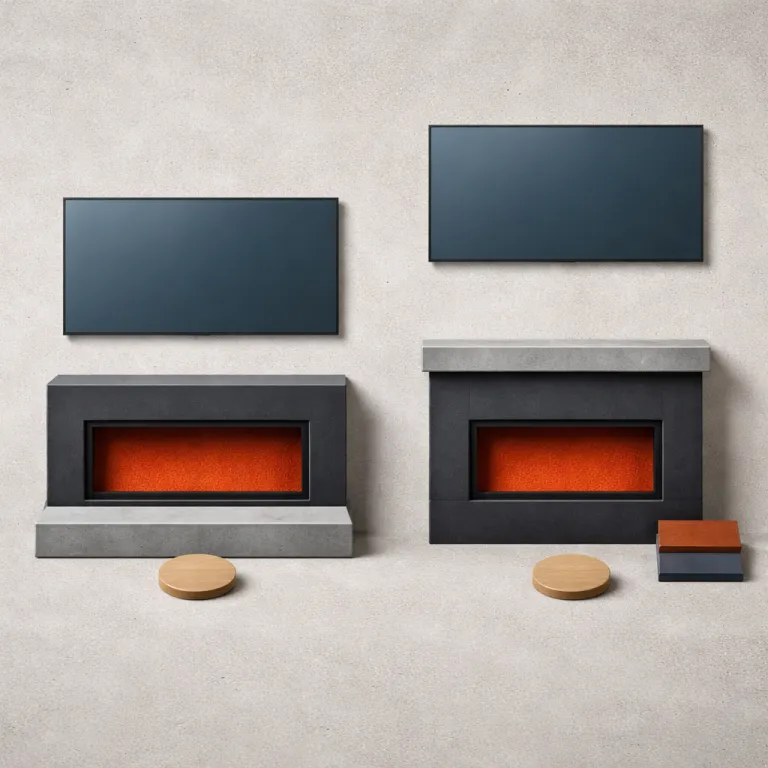

When a tv above an electric fireplace actually works
A tv above an electric fireplace can look effortless in a styled photo. In a real living room the success of this layout depends on two hard facts, the direction of the heat and the height of the screen center. If you ignore those, the fireplace design will fight your neck and your electronics instead of supporting relaxed entertainment.
Start by checking how the electric fireplaces you are considering move heat into the room. Most fireplace electric models, like the Touchstone Sideline or Dimplex Revillusion, push heat from a front slot just above the flame effect, while a few electric fireplace inserts vent from the bottom or the side to protect anything mounted above. When the hot air exits at the front, you must treat the wall above the fire as a protected zone and use a mantel or shelf as a baffle, otherwise the tv above electric fireplace stack will age your screen prematurely.
Viewing height is the second non negotiable factor in any fireplace wall plan. For comfortable long sessions, the center of the screen should sit roughly at seated eye level, usually between 95 and 110 centimetres from the floor depending on sofa height and size room. If the electric fireplace is built too tall, or the wall mounted above layout forces the tv higher than about 115 centimetres, you will feel it in your neck by the end of a two hour film.
Think about the room as a whole rather than just the wall with the fire. In a narrow living room, a tv above fireplace can actually save space because it stacks two focal points vertically instead of competing across the space. In a larger room you often have more flexibility, so a side fireplace with the television on a separate entertainment wall can keep both the flames and the picture at their ideal heights.
Design trends now favour clean planes of tile or plaster, which makes the fireplace built into the wall feel like architecture rather than furniture. That minimalist look is tempting, but it leaves nowhere to hide cables, power outlets or a proper mantel depth between the fire and the screen. Before you commit to a frameless slab, sketch the entire fireplace cabinet or built cabinets layout, including where the tv, soundbar and any side cabinets will actually sit.
Heat, vents and mantels: protecting the tv above electric fireplace
Every electric fireplace produces less heat at the wall surface above than a wood burning or gas fireplace, but that does not mean you can ignore clearances. Manufacturers of the best electric models still specify minimum distances between the top of the unit and any tv mounted above, and those numbers matter more than the marketing photos. When you see a tv squeezed just a few inches above electric flames in a catalogue, assume there is hidden steel or masonry acting as a heat shield behind the pretty finish.
Look closely at the vent design on any fireplace electric unit you shortlist. Front vented electric fireplaces, such as many Duraflame and Real Flame Ashley models, blow warm air straight into the room from a grille near the top front edge, which means the air stream can wash the lower bezel of a tv if the mantel is too shallow. Bottom or side vented fireplaces send heat across the floor or along the fireplace side instead, which usually makes a tv above fireplace safer but can create warm spots near rugs or cabinets.
A properly sized mantel works like a visor between the fire and the electronics. As a rule of thumb, a mantel that projects at least 200 to 250 millimetres from the fireplace wall will deflect most of the rising heat away from a screen mounted 300 to 400 millimetres above it. If you prefer a slim accent shelf, accept that you may need to mount the tv higher or choose a lower output electric fireplace to keep surface temperatures in check.
Do not forget the cumulative effect of long winter evenings with the fires running. Even if the wall above feels only warm to the touch, plastics and adhesives inside a tv cabinet can slowly degrade when exposed to elevated temperatures for hundreds of hours. Use a simple infrared thermometer during a test run of your chosen fireplace built into the wall, and if the area where the tv will sit regularly exceeds about 37 to 40 degrees Celsius, rethink the layout. These temperature limits are consistent with typical manufacturer guidance for consumer electronics and with independent testing of safe operating ranges.
Electrical safety is the other half of this equation, especially when you are tempted by a diy fireplace project. Running a high draw electric fireplace and a large television on the same circuit can overload older wiring, so have an electrician confirm capacity and compliance with local code before you close the wall. For more detail on safe wiring routes and breaker sizing, look for wiring code summaries based on the National Electrical Code or your local equivalent, and cross check them against the installation manual supplied with your specific electric fireplace.
Getting the height and size right for your room
The most common failure point in a tv above an electric fireplace layout is simple, the screen ends up too high for comfortable viewing. Designers love a perfectly centered rectangle over a tall firebox, but your neck will not thank them after a ninety minute film. Aim to balance the visual symmetry of the fireplace wall with the ergonomics of how you actually sit in the room.
Start by measuring your seating and the distance to the wall where the fire and tv will live. In many living rooms the ideal tv center height is roughly one third of the way up from the floor to your eye line when seated, which often lands between 95 and 110 centimetres for most adults. If your electric fireplace opening is already 60 centimetres tall and you want a 20 centimetre mantel above it, you can see how quickly the available space for a tv shrinks.
Screen size also interacts with height in ways that renderings rarely show. A 165 centimetre diagonal television mounted above fireplace level will feel more imposing and more fatiguing to watch than a 125 centimetre screen at the same height, especially in a modest size room. When in doubt, choose a slightly smaller tv and keep the center lower rather than chasing the biggest panel that fits between two cabinets or side walls.
Electric fireplaces give you more flexibility than gas fires or wood burning stoves because they do not require a chimney, but they still need depth for the chassis and safe clearances. If you are planning a diy fireplace wall, build a shallow stud bump out that can house both the firebox and recessed conduits for power and data cables, then hang the tv on that new plane. Articles that explain whether to hardwire or plug in a built in fireplace under the National Electrical Code can help you decide how deep that bump out needs to be.
Think about future upgrades as well as today’s devices. Leaving a few extra centimetres of width in the fireplace cabinet or between built cabinets on either side of the fire allows you to swap to a larger screen later without tearing into finished plaster. A flexible design now is cheaper than redoing a carefully tiled fireplace side because a new console will not quite fit between the pin straight verticals.
Layouts that solve the neck strain problem
If the numbers say your tv above electric fireplace will sit too high, you still have options that keep both elements in the same visual story. One of the most effective is to offset the tv slightly to the side of the fire while keeping them on the same wall, which lowers the screen and turns the flames into an accent rather than a strict centerline. This side fireplace arrangement often works best in a long living room where seating can angle toward both focal points.
Another strategy is to exaggerate the mantel depth and treat it as a true shelf rather than a thin ledge. A deep timber or stone slab, sometimes supported by subtle brackets or built cabinets below, can project 300 millimetres or more from the fireplace wall, which lets you mount the tv just a few inches above the mantel without cooking its lower edge. In this configuration the mantel becomes part of the entertainment unit, holding a soundbar, small speakers or even a row of framed photos that visually soften the stack.
For design led renovators, combining storage with heat management can be especially satisfying. Flanking the electric fireplace with tall cabinets on both sides creates a built in entertainment wall that hides media gear, while the central fire and tv share a clean vertical axis. Just be sure to keep a small gap between the fireplace side and any doors or drawers so that warm air can escape freely into the room rather than baking the furniture.
Floating shelves are another powerful tool in this layout puzzle. A pair of thick timber shelves mounted above electric fireplaces but below the tv can act as both heat baffles and display space, especially when they are aligned with the top of nearby cabinets for a continuous line. If you want inspiration on how custom floating shelves can frame an electric fireplace with style, specialist design galleries show many real world examples that balance proportion, storage and safety.
Finally, remember that you do not have to force every screen into the main fireplace wall. In some homes the best electric layout is a statement fire on one wall and a more modest tv on a perpendicular wall or in a recessed niche, which keeps the flames as a pure focal point. This separation can be especially effective when the fire is a sculptural linear model and the television is just one more piece of entertainment hardware rather than the star of the room.
Choosing the right fireplace for a tv above layout
Once you understand your wall, your seating and your clearances, the choice of fireplace type becomes much clearer. Electric fireplaces are usually the easiest partners for a tv above layout because their heat output is modest and controllable, and many models let you run the flame effect without any heat at all. Gas fireplace units and traditional gas fires, by contrast, can throw intense radiant heat that makes the wall above unsuitable for sensitive electronics unless you invest heavily in masonry and ventilation.
Within the electric category, pay attention to vent placement, thermostat accuracy and fan noise rather than just flame realism. A Dimplex Revillusion insert with a bottom vent and a quiet fan can sit comfortably in a fireplace built into a stud wall below a television, while a cheaper unit with a loud top vent fan might drive you mad during quiet dialogue. Remember that the glossy flame pattern in the showroom matters less than how the unit behaves in your living room after hundreds of hours of use.
Think about how you will actually use the fires day to day. If you mostly want ambiance with occasional heat, a lower wattage fireplace electric unit with a wide flame bed can give you the look without overheating the space or the tv, especially in smaller rooms. If you rely on the fire for serious heat in a large open plan room, consider separating the tv to a different wall so that you can run the heater at full power without worrying about what sits above.
Storage and styling should be part of the specification, not an afterthought. A fireplace cabinet or a pair of built cabinets on either side of the fire can hide consoles, routers and cable boxes, keeping the wall above electric flames clean and uncluttered. When you plan these cabinets, leave ventilation gaps and avoid running power strips directly behind the firebox, because concentrated heat and tangled cords are a poor combination.
Finally, be honest about your diy skills and appetite for disruption. A diy fireplace wall with integrated tv, side cabinets and a carefully calculated mantel can absolutely work, but mistakes in framing, wiring or clearances are expensive to fix once the tile is up. Sometimes the most elegant tv above an electric fireplace is the one installed by a professional who understands both the building envelope and the way you actually live in the room.
FAQ
Is it safe to mount a tv above an electric fireplace?
It can be safe to mount a tv above an electric fireplace if you respect the manufacturer’s clearance guidelines and control surface temperatures. Check where the unit vents heat, add a sufficiently deep mantel to deflect warm air and test the wall temperature after running the heater for at least an hour. If the area where the tv will sit stays below roughly 37 to 40 degrees Celsius, the layout is generally acceptable, and this range aligns with typical operating limits published in many television user manuals.
How high should a tv be above an electric fireplace?
For comfortable viewing, aim for the center of the tv to sit close to seated eye level, usually between 95 and 110 centimetres from the floor for most adults. Work backwards from your electric fireplace opening height and planned mantel thickness to see whether that is possible on your wall. If the calculated center ends up much higher than 115 centimetres, consider lowering the fire, deepening the mantel or moving the tv to a different position.
Do electric fireplaces damage televisions over time?
Electric fireplaces are less likely to damage televisions than gas or wood burning units because their heat output is lower and more directional. Damage risk comes from prolonged exposure to elevated temperatures at the tv’s lower edge, which can dry out plastics and adhesives inside the cabinet. Using a mantel as a heat shield and verifying wall temperatures with an infrared thermometer greatly reduces that risk, and many manufacturers explicitly recommend similar precautions in their installation literature.
Which is better under a tv, an electric fireplace or a gas fireplace?
For most homes an electric fireplace is the better partner under a tv because it produces controllable convective heat and often allows flame only operation. Gas fireplace models and open gas fires emit stronger radiant heat that can make the wall above too hot for electronics unless you build substantial masonry and ventilation. If you already have a gas unit, it is usually safer to place the television on a different wall or in a side niche.
Can I build a diy fireplace wall with a tv on a stud wall?
A diy fireplace wall on a stud frame can work well with a tv if you plan the structure, wiring and clearances carefully. You need enough depth to recess the electric fireplace chassis, safe routing for dedicated power circuits and solid blocking for the tv mount. When in doubt, consult an electrician and follow detailed guides on wiring and mounting rather than relying on guesswork, and always cross reference those guides with the safety instructions in both your fireplace and television manuals.