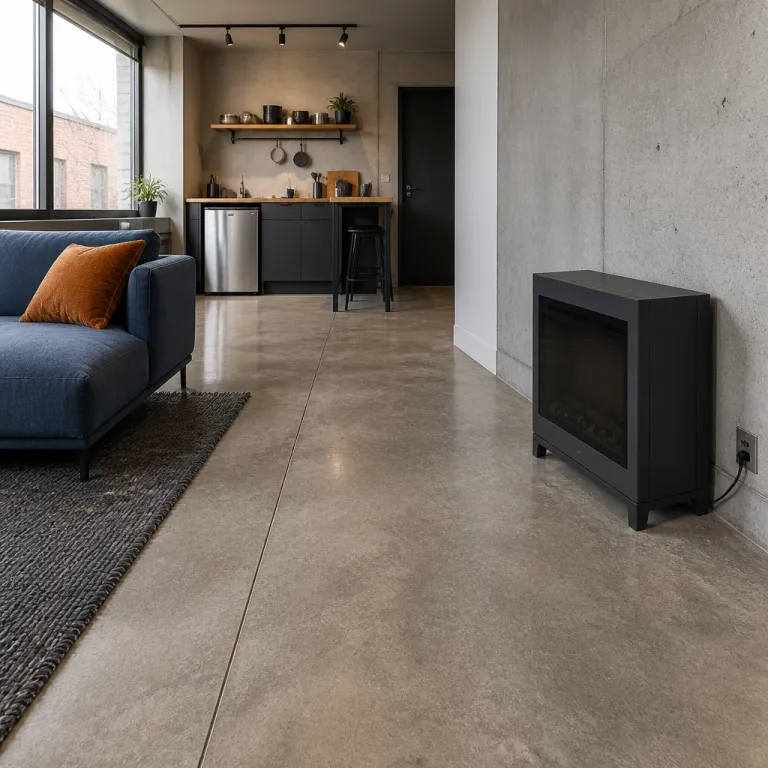
Why a small electric fireplace can trip your studio’s power
A small electric fireplace for an apartment studio looks harmless at first. Once you plug a 1500 watt unit into a shared living room circuit, it quietly pulls about 12.5 amps on a 120 volt supply and leaves almost no margin when your fridge or microwave starts. That is why many renters in small apartments experience random breaker trips the first cold week, then blame the friendly fireplace instead of the wiring limits.
Most studio apartment layouts have one 15 amp breaker feeding every outlet in the main room, so a powerful space heater or room fireplace competes directly with your television, router, and sometimes the kitchen fridge. On paper a 15 amp circuit can handle 1800 watts, but electricians and safety codes recommend staying under about 80 percent of that load for continuous use. Eighty percent of 15 amps is 12 amps, which translates to roughly 1440 watts, so keeping your total draw below about 12 amps is the conservative everyday target. When an electric fireplace or other electric heaters run at full power in a small living area, even a hair dryer in the bedroom or a vacuum in the hallway can push the circuit over the edge.
Thinking in amps rather than only in watts changes how you shop for the best electric heater for a fireplace apartment or fireplace rental situation. A compact wall mounted unit with a 750 watt low mode draws about 6.25 amps, which leaves enough headroom for lights, a laptop, and a fridge on the same breaker in most apartments. A simple plug-in power meter or clamp-on ammeter will usually confirm these figures within a few tenths of an amp in real-world tests, which helps you see exactly how close you are to the breaker rating. That is why the smartest fireplace renter treats every plug in the living room as part of one shared electrical budget, not as isolated sockets waiting for another modern gadget.
How to map your living room circuit before you buy
Before choosing any electric fireplace for a studio apartment, you need to know what else lives on that breaker. The simplest diy test is to turn off one breaker at a time, then walk your living room, bedroom, and hallway to see which plugs and ceiling lights went dead in that room. If your future fireplace wall outlet also kills the fridge or a built in space heater in the bathroom, you know that circuit is already busy.
Label each breaker with the actual room it serves, not the vague builder notes, because a rental friendly panel often hides surprises between the living room and kitchen. Many small apartments share one 15 amp line between the main living room, a corner bedroom, and sometimes a balcony plug, which means your electric fireplaces must coexist with outdoor string lights or a portable grill. When you later slide a fireplace stand or mantel against that wall, you will know exactly which other appliances must stay off while the unit provides heat.
Once your circuits are mapped, you can match a small electric fireplace apartment studio model to the safest outlet. A compact fireplace insert or wall mounted panel under 24 centimetres (about 9.5 inches) high and about 60 centimetres (roughly 24 inches) wide can usually fit beneath a window without blocking airflow or cluttering small living zones. If you are considering a full suite such as the Endeavour Fires Duggleby 48 electric fireplace suite, look for a detailed hands on review of this realistic flame and mantel package in a dedicated test report or long term owner feedback, because depth and plug placement matter as much as flame effect in tight apartments.
The 13 amp rule and why low wattage modes matter
For a renter friendly setup, the 13 amp rule is the single most useful guideline. On a 15 amp circuit in a fireplace apartment, staying under roughly 13 amps total keeps enough safety margin for the fridge compressor, a phone charger, and a few LED ceiling lights, while still respecting the more conservative 12 amp continuous load recommendation from common electrical practice and standards such as the NEC 80 percent rule. A typical 1500 watt electric fireplace on high already uses about 12.5 amps, so one extra appliance can nudge the breaker into darkness.
Models with a genuine low setting around 750 watts cut that draw in half, which makes them far more friendly for renters who cannot add a dedicated circuit in a studio apartment. At 750 watts, your room fireplace or wall mounted panel heater pulls about 6.25 amps, leaving another 6 to 7 amps for a television, router, and laptop in the same living room. That low mode still provides meaningful heat for a 14 to 20 square metre (roughly 150 to 215 square foot) room, especially when you close doors and use a thick rug to reduce drafts.
When comparing wall mounted electric fireplaces, ignore marketing phrases about the best electric flame and instead read the spec sheet for wattage options. A modern unit that offers 500, 750, and 1500 watt steps lets you tune heat to your apartment rather than your ego, and that flexibility matters more than a taller flame against the fireplace wall. For a deeper breakdown of how comparative testing sometimes misses these real world rental friendly details, a guide on choosing a wall mounted electric fireplace by the wall and not only by the spec sheet can help you focus on what actually affects your breaker panel.
Safe plugs, cords, and where to place a friendly fireplace
Once you pick a small electric fireplace for an apartment studio, the next risk is how you plug it in. A 1500 watt heater on a thin 16 gauge extension cord under a rug is not just a bad diy idea, it is a genuine fire hazard in a cramped living room. Heat builds up in the cord, the insulation softens, and the first sign of trouble might be a scorched plug behind your fireplace stand.
The safest setup is a direct plug into a wall outlet, with no power strip and no extension, ideally on a circuit wired with 12 gauge conductors in newer apartments. If your rental friendly lease allows, you can ask an electrician to replace an old outlet with a tamper resistant model and confirm the wire gauge behind the fireplace wall, which improves both safety and long term reliability. For most renters, the practical compromise is to choose a small modern unit under 24 inches (about 60 centimetres) wide that can sit close to an existing outlet without stretching the cord across the room.
Placement also affects how well the heat spreads through your fireplace living area. Mounting a wall mounted unit about 30 to 40 centimetres (12 to 16 inches) above the floor keeps the hot air from rising straight to the ceiling before it warms your body in the living room. In a bedroom or studio apartment, avoid placing the electric fireplace directly under a wall mounted television, because long term heat can dry out cables and shorten the life of your electronics even when the flames look gentle.
Choosing formats: mantel, insert, wall mount, or freestanding
In a small living space, the format of your electric fireplace matters as much as the brand name. A compact mantel package creates a traditional fireplace living focal point, but it eats floor area and can crowd a narrow living room in many apartments. A slim wall mounted panel or shallow fireplace insert, by contrast, keeps the floor clear and often suits a studio apartment where every square metre counts.
Freestanding stoves such as the Duraflame DFI-5010 behave more like a space heater dressed as a friendly fireplace, which makes them flexible for renters who may move between different apartments. You can slide a freestanding unit from the bedroom to the living room as seasons change, but you must still respect the 13 amp rule and avoid sharing that plug with other heavy loads. Mantel packages like the Real Flame Ashley give you a full fireplace stand look with storage on top, yet they work best when you can dedicate one wall and one outlet to that single appliance.
Wall inserts and slim electric fireplaces such as the Touchstone Sideline series are popular in modern small living layouts, but they often assume a stud wall you are allowed to cut into, which many fireplace rental agreements forbid. In those cases, a surface mounted wall unit that hangs like a television can deliver the same flame effect without violating renter friendly rules. Whatever style you choose, measure twice and leave at least several centimetres (about an inch) of clearance around vents so the heat can escape and the room fireplace can actually warm the space instead of baking the wall.
Real world performance: noise, thermostats, and long term use
Marketing photos never show what a small electric fireplace for an apartment studio feels like after three winters. Fan forced units such as many budget wall mounted fireplaces often grow noisier by the third year, as dust builds up and bearings wear, which can be irritating in a quiet bedroom. Some owners of Dimplex Revillusion inserts report that the flame remains convincing while the fan hum becomes the loudest sound in the living room at night in long term user reviews and independent product surveys.
Thermostat accuracy also matters more in a studio apartment than in a large house, because a one or two degree drift can swing the room from cosy to stuffy very quickly. Cheaper electric fireplaces sometimes use simple mechanical thermostats that cycle the heat too widely, while better models use digital controls that hold a steadier temperature in a fireplace apartment. When you read comparative testing such as what consumer style lab tests reveal and what their methodology still misses, pay attention to long term checks on fan noise, thermostat behaviour, and LED brightness rather than only first day flame impressions.
LED flame systems in modern electric fireplaces usually last many years, but some owners notice dimming or colour shift over time, especially in units that run as daily ambience in a studio apartment. That is why it helps to choose a model with replaceable LED modules rather than a sealed system, even if the upfront cost is slightly higher for the best electric options. The real test of a friendly fireplace is not the log pattern in the showroom, but the tenth winter in your living room when the plug, the fan, and the heat still behave exactly as you expect.
Key figures for small electric fireplaces in studios
- A typical 1500 watt electric fireplace draws about 12.5 amps on a 120 volt circuit, leaving only 2.5 amps of headroom on a 15 amp breaker for other devices in the same room.
- Running the same unit on a 750 watt low mode cuts the draw to roughly 6.25 amps, which allows most studio apartment renters to keep a fridge, router, and television on the circuit without tripping the breaker.
- Zone heating with an electric fireplace in a 15 to 20 square metre (approximately 160 to 215 square foot) living room can reduce whole apartment heating needs by up to 10 to 15 percent, according to utility efficiency studies and residential energy audits that compare targeted and central heating in similar dwellings.
- Many compact wall mounted fireplaces measure under 60 centimetres (about 24 inches) wide and 15 centimetres (around 6 inches) deep, which makes them suitable for small living layouts where a traditional mantel would block walking paths.
- Safety data from electrical fire investigations and home safety reports consistently show that high wattage heaters on undersized extension cords are a leading factor, which is why plugging a 1500 watt space heater directly into a wall outlet is strongly recommended.
- Newer apartments may use 20 amp branch circuits with AFCI or GFCI protection in living areas; these offer additional safety but still require you to respect the total wattage and follow local electrical codes.
FAQ: small electric fireplaces on shared circuits
Can I run a small electric fireplace and a TV on the same outlet ?
Yes, you can usually run a small electric fireplace and a television on the same outlet in a studio apartment, as long as the total draw on that 15 amp circuit stays under about 13 amps. A typical television uses well under 1 amp, while a 750 watt low mode on the fireplace uses about 6.25 amps. The real risk comes when you add other heavy loads such as a microwave or hair dryer to the same room circuit.
Is a wall mounted electric fireplace safe for renters ?
A wall mounted electric fireplace can be safe and renter friendly if you follow both the manufacturer’s mounting instructions and your landlord’s rules. Surface mounted models that hang on brackets like a television usually avoid structural changes, while recessed inserts often require cutting into the fireplace wall, which many leases forbid. Always use the supplied hardware, keep clearances around vents, and plug directly into a wall outlet without a power strip.
How big a room can a 750 watt electric fireplace heat ?
A 750 watt electric fireplace is best suited for a well insulated room of about 14 to 20 square metres (roughly 150 to 215 square feet), such as a compact living room or large bedroom in many apartments. In a drafty studio apartment with single glazing, it will still take the chill off but may not fully replace central heat. Closing doors, using thick curtains, and placing a rug on bare floors all help the heat feel more effective.
Do I need a special outlet for an electric fireplace in a rental ?
Most plug in electric fireplaces are designed for standard 120 volt outlets and do not require a special receptacle in a rental friendly setting. What matters is that the outlet is in good condition, not shared with too many other heavy appliances, and wired correctly on a 15 or 20 amp breaker. If you notice warm outlet plates, frequent breaker trips, or loose plugs, stop using that socket and ask your landlord to have an electrician inspect it.
Are mantel style electric fireplaces practical in small living spaces ?
Mantel style electric fireplaces can work in small living spaces, but they demand careful measuring and thoughtful furniture layout. They create a strong visual focal point in the living room, yet they also occupy floor area that might otherwise hold storage or seating in a studio apartment. Many renters prefer slim wall mounted units or compact fireplace inserts because they keep the floor clear while still providing heat and ambience.
Sample specs for popular small electric fireplaces
| Model | Wattage modes | Approx. amps at 120 V | Typical outlet / wire gauge guidance |
|---|---|---|---|
| Duraflame DFI-5010 (freestanding stove) | 750 W / 1500 W | 6.25 A / 12.5 A | Standard 15 A or 20 A wall outlet, 14 or 12 gauge branch wiring, per manufacturer rating label |
| Real Flame Ashley (mantel package) | 750 W / 1500 W | 6.25 A / 12.5 A | Dedicated 15 A circuit recommended, 14 or 12 gauge wiring, based on published product specifications |
| Touchstone Sideline 36 (wall mounted insert) | 750 W / 1500 W | 6.25 A / 12.5 A | Standard 15 A outlet, avoid extension cords; 14 or 12 gauge wiring, following installation manual guidance |
| Endeavour Fires Duggleby 48 (suite) | 750 W / 1500 W | 6.25 A / 12.5 A | One wall outlet on a 15 or 20 A circuit, 14 or 12 gauge wiring, as indicated in the manufacturer documentation |
These figures are based on manufacturer specifications and standard electrical calculations at 120 volts; always confirm the exact ratings on the product label and follow local electrical codes and safety standards.