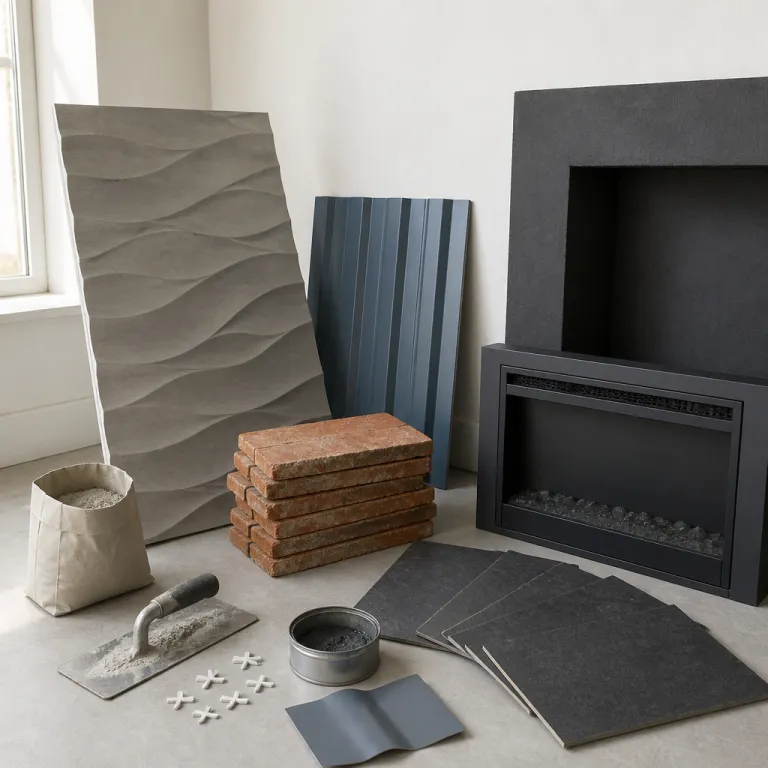
Why 3D fireplace accent wall design is suddenly everywhere
Scroll any design feed and you will see the same move again and again. A long electric fireplace is buried in a media wall, wrapped in fluted wood panel cladding or a marble wall slab that runs floor to ceiling. The fireplace accent wall design has shifted from a simple mantel to a full feature wall that tries to carry the entire living room.
This 3D accent wall trend grew out of the television first mindset, where a wall mounted screen and a wall fireplace share one built surface. Designers started carving grooves into MDF walls, stacking fireplace stone panels, or running porcelain that mimics marble across the whole fireplace wall to visually tie the screen and flame together. Done well, that built fireplace composition turns a blank wall into a calm, modern anchor instead of a chaotic patchwork of decor and devices.
The problem is that a fireplace already acts as a focal point in any room. When you add deep fluting, heavy stone, or high contrast black accent stripes, the surround can start shouting louder than the flame itself. In a compact family room or small living room, that means the electric fireplace becomes background noise while the wall ideas and textures steal every glance.
Electric fireplaces changed the rules for surrounds
Traditional gas or wood units dictated thick non combustible fireplace stone, brick, or tile, which naturally limited how wild the accent wall could become. Modern electric fireplace models like the Dimplex Revillusion or Touchstone Sideline run cooler at the wall surface, so interior design teams feel free to add grooved wood, thin stone veneer, or even painted MDF as a wall fireplace surround. That flexibility unlocked a wave of diy fireplace projects and ambitious built ins that would never pass clearance rules around a gas insert.
Because the electric flame is generated by LEDs and a screen, the visual weight of the fireplace accent is different from a live fire. The flame pattern is flatter, the ember bed is shallower, and the glow is more directional, which means every ridge in a wood panel or every joint in a stone fireplace surround casts a visible shadow. In a kansas city townhouse renovation I reviewed, a slim electric fireplace sat inside a deeply fluted feature wall, and the grooves looked busier than the flame from across the room.
That is the core tension in current fireplace accent wall design. Texture can frame and amplify the electric flame, or it can fragment the wall into competing stripes of light and shadow. The more 3D the walls become, the more disciplined you need to be about scale, pattern, and how the room lighting hits every surface.
Scale first, texture second
On a long, uninterrupted wall in a generous living room, a wide linear electric fireplace often looks undersized on its own. Here, a tall feature wall in stone or a continuous marble wall slab can visually widen the fireplace and ground the television without overwhelming the space. The key is to keep the design language simple, using one dominant material and one accent so the eye still reads the flame as the brightest point.
In smaller rooms, especially a narrow family room or den, a thickly textured fireplace wall can feel like a wave pushing into the seating area. When the electric unit is only 90 to 120 centimetres wide, heavy fireplace stone or deep wood panel grooves on both sides can make the opening look pin sized by comparison. If you want 3D interest in that scenario, limit it to a single vertical band or a low relief pattern that does not compete with the firebox opening.
Think of the fireplace accent as a frame, not a second artwork. The frame can be bold, but it should never be more detailed than the image it surrounds. When you respect that hierarchy, even very modern walls with strong black accent lines or sculpted panels can feel calm rather than chaotic.
When 3D texture elevates the flame instead of fighting it
Texture earns its place when it solves a scale problem or a proportion problem. A long wall with a low ceiling, for example, can benefit from vertical wood panel ribs that pull the eye upward while a slim electric fireplace stretches horizontally. That combination turns an awkward wall into a balanced feature wall where the flame, not the grooves, still reads as the hero.
On very wide walls, a single material like smooth drywall often leaves the fireplace floating with no visual weight. Adding a band of fireplace stone around the opening, then continuing that stone up to the ceiling, can anchor the composition without clutter. The trick is to choose a stone fireplace finish with subtle variation rather than loud veining, so the texture reads as depth rather than pattern.
Large format porcelain that mimics marble can be powerful here, especially in a modern interior. A restrained Calacatta style marble wall around a wall mounted electric fireplace gives you the luxury signal without the maintenance of real marble. If you are considering a classic white frame, look at a detailed review of a Carrara white marble fireplace frame for a wall mounted surround to understand how slab joints and edge profiles change the final style.
Matching flame style to surround style
Not every electric fireplace plays nicely with every accent wall. Units like the Dimplex Revillusion, which simulate a deeper firebox with a holographic back panel, work best with quieter walls in matte paint or smooth stone. Highly reflective marble or glossy tile can mirror the internal components and break the illusion, especially when the room lights are dimmed.
By contrast, very linear models such as the Touchstone Sideline or some wall mounted media wall units have a more graphic flame pattern. These can stand up to stronger vertical wood panel ribs or a bold black accent stripe because the flame itself reads as a clean horizontal bar. In that case, the fireplace accent wall design becomes a deliberate play of lines, with the flame cutting through the texture like a horizon.
Gas units behave differently again, because their real flames throw more uneven light and heat onto nearby walls. If you are swapping a gas insert for an electric fireplace in the same opening, do not assume the old stone surround will flatter the new flame. Many homeowners in kansas city remodels have found that rough stacked fireplace stone that looked perfect with gas suddenly feels visually noisy once the flame becomes a consistent LED ribbon.
Material choices that complement, not compete
When you choose materials for a fireplace wall, think in terms of sheen, pattern, and depth. Matte finishes on stone, plaster, or painted walls absorb some of the electric glow and let the flame stay crisp, while high gloss marble or lacquered wood can scatter reflections and double the visual clutter. Subtle patterning, such as a honed limestone or a quiet marble, usually supports the flame better than busy veining or high contrast stripes.
Depth of relief matters just as much as material. Shallow fluting on a wood panel or MDF board, in the range of 5 to 10 millimetres, creates a soft play of light that frames the electric fireplace without stealing focus. Deep grooves, stacked ledgestone, or heavily chiseled fireplace stone can cast harsh shadows that compete with the ember bed, especially when the only light in the room comes from the unit itself.
There is also a practical side to all this texture. Every groove and ledge collects dust, and the warm air that rises from a built fireplace or wall mounted unit will highlight that dust in raking light. If you do not want to be up on a ladder with a vacuum every month, keep the most aggressive textures away from the hottest part of the surround and reserve them for higher, cooler sections of the walls.
When texture goes too far and steals the show
The most common failure I see in fireplace accent wall design is over layered detail. A compact electric fireplace is squeezed into a narrow wall, then wrapped in ornate wood trim, stacked stone, and a floating shelf full of decor. The result is a jittery fireplace wall where your eye bounces between objects and never settles on the flame.
In small living room layouts, especially in apartments or townhouses, the wall itself is often only three to four metres wide. If you cover that entire span with deep fluting, a bold black accent paint band, and a television plus a wall mounted soundbar, the flame becomes just another light source. The room feels busy even when the furniture is minimal, because the walls are doing too much work.
Traditional mantels can also clash with modern 3D textures. Detailed crown moulding, corbels, and carved wood paired with a heavily veined marble wall or aggressive fireplace stone surround create a style pileup. When you then add a contemporary electric fireplace insert with a sleek glass front, the mix of eras can feel more chaotic than eclectic.
The lighting trap around 3D walls
Lighting is where many otherwise beautiful fireplace accent walls fall apart. The glow from an electric fireplace is directional and often cooler in colour than a real fire, so it interacts with grooves and stone edges differently. Add downlights or LED strips in the wrong place and you get double shadows, hot spots, and a feature wall that looks harsh instead of warm.
Recessed downlights directly above a deeply textured fireplace wall can carve dark trenches between every wood panel rib or stone ledge. When the flame is on, those shadows fight with the ember bed, and the whole wall reads as a striped pattern rather than a calm backdrop. A better move is to wash the wall from a little farther out, using wide beam ceiling fixtures or concealed coves that soften the contrast.
Accent lighting on the mantel itself should be subtle and indirect. Small, dimmable sconces or a single picture light can highlight art or decor without throwing hard shadows onto the fireplace accent surface. If you want to layer in more glow, consider decorative fireplace screens or accessories that add texture in front of the opening rather than more depth on the walls, and look at curated guides to elegant decorative fireplace screens to see how different patterns interact with light.
When to simplify instead of adding more
If you already have a strong material, such as a full height marble wall or a dramatic fireplace stone surround, resist the urge to add fluted panels or extra trim. Let that one material be the star and keep the rest of the fireplace wall in a quiet, matte paint. The electric fireplace will read as a clean cutout in a monolithic surface, which feels intentional and calm.
In a busy family room full of toys, books, and everyday life, the fireplace accent should often be simpler than what you see on social media. A smooth painted wall with a single black accent frame around a wall mounted electric fireplace can feel more sophisticated than a diy fireplace project that layers shiplap, stone, and reclaimed wood. The more visual noise you already have in the room, the more your surround should act as a visual rest.
Sometimes the bravest design move is subtraction. Strip back extra ledges, unnecessary built ins, and fussy decor until the flame, the main material, and one or two supporting lines remain. That restraint is what separates a timeless interior design decision from a short lived trend pinned to a single season of wall ideas.
Practical rules for building a textured accent wall around an electric fireplace
Once you move from mood boards to construction, clearances and build quality matter more than any pin you saved. Electric fireplace units still generate heat at the front glass and sometimes at the top vent, even if the wall surface stays cooler than with gas. That means every diy fireplace or professional build must respect the manufacturer’s required distances to combustibles, especially when you are adding wood panel cladding or MDF ribs.
Most wall mounted and recessed electric models specify a minimum clearance above and around the opening, often in the range of 15 to 30 centimetres. If you run fluted wood or deep stone right up to the firebox edge, you risk heat damage, warping, or at least visible discoloration over time. In my testing, cheaper laminates and thin veneers around a built fireplace tend to yellow or delaminate first, while solid wood and high quality fireplace stone hold up better.
Attaching 3D panels to the wall also changes how the unit breathes. A recessed electric fireplace usually relies on airflow through the wall cavity or through front vents, so adding extra layers of furring strips, stone, or wood can choke that path if you are not careful. Always dry fit the surround, run the unit at full heat, and check for hot spots on the walls before committing to final decor and paint.
Maintenance, off season care, and long term thinking
Texture looks great on day one, but you live with it for years. Deep grooves in a wood panel or stacked fireplace stone will collect dust and soot like any other surface, and the warm air rising from the electric fireplace will highlight every speck. Plan for a cleaning routine and choose materials you can actually reach and wipe without special tools.
Long term reliability of the unit matters just as much as the fireplace accent wall design around it. Fan forced heaters can get noisy by year three, LEDs can dim, and thermostats can drift, which changes how the flame reads against your carefully chosen walls. A practical off season checklist for your electric fireplace, including cleaning intakes and checking connections, will keep both the unit and the surrounding materials performing well.
Think about replacement too. If the electric fireplace fails in ten years, can you slide a new model into the same opening without tearing apart the entire feature wall. Designing the surround with a slightly oversized cavity and removable trim pieces gives you flexibility, especially when future models may have different proportions or venting patterns.
Room specific strategies and regional realities
Different rooms call for different levels of drama. In a primary living room where you entertain, a taller feature wall with a restrained marble or stone field can justify the investment, while a basement family room might do better with a simpler painted wall and a durable electric insert. Bedrooms and small dens often benefit from the quietest possible fireplace accent, using flat walls and soft colours so the flame feels restful rather than theatrical.
Regional styles also shape what feels right. In kansas city and other Midwestern markets, I see a strong pull toward stone fireplace surrounds and rustic wood mantels, but the most successful projects now pair that warmth with cleaner lines and less ornate trim. Coastal interiors lean more toward smooth plaster, pale wood panel cladding, and slim black accent frames that echo window mullions rather than heavy beams.
Whatever your location, the same rule holds. Let the flame set the tone, then choose one main material and one supporting accent for the fireplace wall. The real test of any fireplace accent wall design is not the log pattern in the showroom, but the tenth winter in your living room.
Key figures shaping electric fireplace accent wall choices
- According to the Hearth, Patio & Barbecue Association, electric fireplaces account for roughly 40 % of all fireplace shipments in North America, a share that has grown steadily over the past decade as homeowners prioritize flexible wall fireplace installations and lower maintenance.
- Energy Star and U.S. Department of Energy guidance indicates that zone heating with electric units can reduce whole home heating use by around 10 % when homeowners lower central thermostats and rely on a living room or family room fireplace for occupied spaces.
- Large format porcelain tile, often used to create marble wall style surrounds, has seen double digit sales growth in the U.S. residential market, driven in part by media wall and fireplace accent projects that favour fewer grout lines and a more monolithic look.
- Surveys from major interior design platforms show that “feature wall” and “accent wall” searches related to fireplaces have increased several times over in recent years, reflecting the shift from simple mantels to full height walls with built ins and integrated decor.
- Manufacturer installation manuals for popular electric fireplace models typically require at least 15 to 30 centimetres of clearance from the heater outlet to combustible materials, a constraint that directly affects how close wood panel ribs, shelves, and other 3D elements can be placed.
References
- Hearth, Patio & Barbecue Association (HPBA) – industry shipment reports for fireplaces and stoves.
- U.S. Department of Energy – guidance on electric space heating and zone heating strategies.
- National Kitchen & Bath Association (NKBA) – design trend reports covering fireplace and feature wall materials.