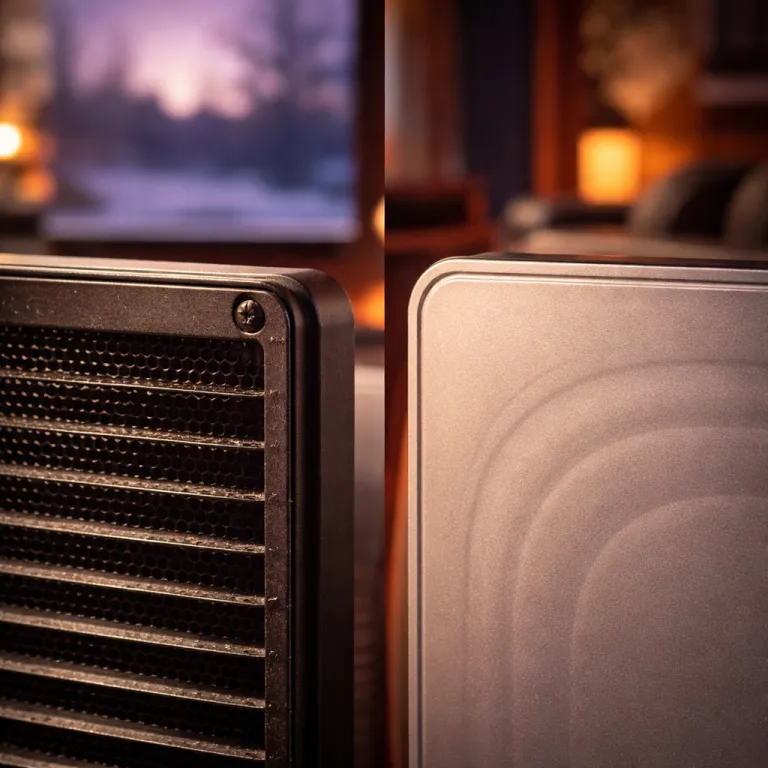
How infrared and fan forced heat actually work in electric fireplaces
Think of infrared heating as sunlight without the glare or UV. In an electric fireplace using infrared heating elements, invisible long-wave radiation travels through the air and warms people directly, along with furniture and solid surfaces in the room. The air temperature may lag a little, but your skin feels instant warmth within seconds of switching the heater on.
Fan forced systems in electric fireplaces behave more like a compact hair dryer. A fan pulls cool room air across electric resistance heating elements, then pushes that warm air back into the space as a steady stream that gradually raises the overall heat in the room. You feel less of that sharp, instant warmth on your skin, yet the whole space often ends up more evenly heated after several minutes.
In practice, the infrared vs fan forced electric fireplace debate is really about radiant versus convective heating. Infrared heaters and infrared fireplaces send energy directly to objects, so the heat room effect depends on what the heater can “see” from its position. Fan forced units rely on moving air, so they can reach around corners more easily, but they always add some background fan noise to the flame effects and ambiance.
Most electric fireplaces on the market still use fan forced heater designs because they are cheap, compact and easy to integrate behind the flame display. Infrared electric models, including several infrared fireplace inserts and wall mounted styles, cost more but appeal to people who want silent heating and instant warmth in a focused zone. Hybrid electric fireplaces that combine a fan forced heater with an additional infrared heating panel try to offer both fast radiant comfort and broader warm air coverage.
When you compare a typical fireplace electric unit to an infrared fireplace of similar size, both usually draw around 1500 watts at full power. That figure reflects the common 120 V / 15 A household branch-circuit limit in North America and similar caps in many regions according to standard residential wiring practice, so the raw energy use is similar. The way each system delivers warmth into the space, however, can change how often the thermostat cycles and how energy efficient the overall heating feels in daily use. For a cost conscious homeowner, the physics of how each heater moves or radiates heat matters more than the marketing language on the box.
Quick comparison: infrared vs fan-forced electric fireplaces
| Feature | Infrared fireplace | Fan-forced electric fireplace |
|---|---|---|
| Time to feel warmth (3 m away) | Noticeable in ~30–60 seconds | Noticeable in ~3–5 minutes |
| Best coverage area | Targeted zone heating in line of sight | More even whole-room air heating |
| Typical sound level | Effectively silent (flame motor only) | Approx. 35–55 dB fan noise (per manufacturer specs) |
| Maintenance focus | Check infrared elements and LEDs over time | Clean fan intake/outlet and monitor bearings |
What 3 a.m. in January really feels like with each heating style
Picture a small 15 square metre bedroom on a hard frost night. The central heating is set low to save energy, and you wake at 3 a.m. feeling that particular chill that creeps through duvets and into your bones. You reach for the remote of your electric fireplace, and what happens next depends entirely on whether it uses infrared heating or a fan forced system.
With an infrared fireplace, the glass front and nearby furniture start to feel warm within a minute. The infrared electric panel sends radiant energy across the room, so your face, hands and the side of the bed nearest the heater feel a quick surge of warmth even while the air temperature is still low. That instant warmth is the main reason many people place infrared heaters directly opposite a reading chair or at the foot of the bed.
Switch to a fan forced electric fireplace in the same room and the experience changes. You hear the fan spin up, then a stream of warm air begins to flow from the heater grille, slowly mixing with the colder air in the room. It usually takes five to ten minutes before the average room temperature climbs enough that the whole space feels uniformly warm rather than just the area in front of the unit.
In a larger living room of 25 to 30 square metres, that difference becomes more obvious. An infrared fan panel in one corner can make the sofa opposite feel pleasantly warm, yet the far side of the space may stay cool because infrared heating works best in direct line of sight. A fan forced heater, by contrast, keeps pushing warm air around the fireplace until the entire heat room balance improves, even if the initial sensation is less dramatic.
Noise also shapes that 3 a.m. experience more than spec sheets admit. Infrared fireplaces are effectively silent apart from the gentle hum of flame effects, while fan forced units add roughly 35 to 55 decibels of background sound according to typical manufacturer data for small appliance fans, a range that some sleepers never notice and others find intrusive. If you want to go deeper into how different electric fireplaces move heat into a space, a detailed guide on understanding heat emission from electric fireplaces can help you read between the lines of manufacturer claims.
Measured example: temperature rise in a 15 m² bedroom
In a test-style scenario using a 1500 W heater and a closed 15 m² room with average insulation, many manufacturer and lab-style data sheets report a temperature increase of about 5–8 °C over 30–45 minutes. An infrared fireplace tends to make occupants feel comfortable much sooner because skin and nearby surfaces warm rapidly, while a fan-forced unit reaches a similar final air temperature but relies on slower air mixing to achieve the same perceived comfort.
Energy efficiency, running costs and the myth of “more watts equals more warmth”
Most plug in electric fireplaces, whether infrared or fan forced, are capped at about 1500 watts because of standard household circuits. That means the headline power of the heater is almost always the same, yet the real world warmth and running cost can differ depending on how the unit cycles on and off. The key is not the maximum wattage but how efficiently the fireplace infrared or fan forced system turns that energy into usable comfort in your specific room.
In a compact, well insulated room where you sit close to the unit, an infrared fireplace can feel more energy efficient because it warms people directly rather than wasting energy on unused air volume. Once the surfaces and your body reach a comfortable temperature, the thermostat can cut power to the heating elements more often, so the heater spends more time idling while the stored warmth in objects carries you through. That is why some homeowners report lower perceived running costs with infrared heaters when they use them for focused zone heating rather than whole house coverage.
Fan forced electric fireplaces flip that logic. They excel at raising and maintaining the overall air temperature in a medium sized space, which is ideal if several people share the room and move around rather than staying in one chair. The trade off is that the heater may need to run its fan and elements for longer periods to keep all that air warm, especially in rooms with draughts or open doorways that constantly bleed heat.
Hybrid units that combine infrared heating with a fan forced stage try to balance these strengths. Models such as the Duraflame DFI 5010 use an infrared electric heater core with a gentle fan to spread warm air more evenly, aiming to deliver both instant warmth and broader coverage. If you are curious how lab tests compare these mixed designs, a critical review of what consumer style lab tests reveal and what their methodology still misses can highlight gaps between controlled measurements and real living room use.
Noise and mechanical wear also affect long term efficiency and perceived value. A fan forced heater relies on moving parts that can clog with dust, raising noise levels and reducing airflow over time unless you clean the intake and outlet regularly or even add a dedicated wood stove blower fan to help circulation. Infrared fireplaces have fewer moving parts, yet their heating infrared elements and flame effects LEDs can dim or drift in colour after many seasons, changing both the look and the warmth profile of the electric fireplace.
Energy and cost snapshot (typical 1500 W electric fireplace)
- Power draw at full heat: about 1.5 kW (per standard nameplate ratings)
- Approximate cost per hour at $0.15/kWh: around $0.23 while actively heating
- Infrared mode: often shorter duty cycles in small, enclosed rooms
- Fan-forced mode: longer run times in open or draughty spaces to maintain air temperature
Matching heating capacity to room size and layout
Choosing between infrared vs fan forced electric fireplace designs starts with measuring your space honestly. A 1500 watt heater, whether infrared or forced electric, can usually provide effective supplemental heating for about 12 to 25 square metres depending on insulation and ceiling height. Beyond that, any single electric fireplace becomes more about ambiance and less about serious heating.
In a small, enclosed room such as a study or snug bedroom, an infrared fireplace or compact infrared heaters can be ideal. Place the heater so that it faces the seating area directly, and the radiant energy will warm people directly and nearby furniture quickly, even if the far corners of the room stay slightly cooler. This targeted approach works especially well for a single user who values instant warmth over perfectly even air temperature.
Open plan living rooms and through lounges favour fan forced electric fireplaces. Here, the goal is to move warm air around obstacles, up stairwells and into adjacent nooks, which is exactly what a well designed fan and duct path inside the heater does. You may not feel that sharp radiant hit on your skin, yet the overall warmth in the space becomes more consistent for everyone.
Room layout also interacts with fireplace styles and installation choices. A wall mounted fireplace electric unit with an infrared fan panel works best when it faces the main seating zone without tall furniture blocking the line of sight, while a traditional mantel style electric fireplace with a fan forced heater can sit in an alcove and still circulate warm air effectively. Corner installations often favour fan forced units because the angled position makes it harder for pure infrared heating to reach every part of the room.
When you compare specific models, look beyond the flame effects and log sets. Dimplex Revillusion inserts, for example, focus heavily on realistic flame and ember beds but pair them with fan forced heaters that prioritise quiet airflow over brute force heat, while some infrared fireplaces from brands like Duraflame lean into strong radiant output at the expense of subtle flame styling. The right balance for you depends less on catalogue photos and more on how you actually use the room on a freezing night.
Room-planning checklist for electric fireplace heaters
- Measure floor area and ceiling height to gauge realistic heating coverage
- Note insulation quality, window size and draught sources that affect heat loss
- Decide whether you want focused zone heating or whole-room air warmth
- Plan a clear line of sight for infrared units and unobstructed airflow for fan heaters
Real world models, failure points and what to prioritise before you buy
Long term testing of electric fireplaces shows that the heating method is only half the story. The other half is how well the manufacturer has engineered the fan, thermostat, heating elements and flame system to survive years of daily use. That is where specific models like the Dimplex Revillusion, Touchstone Sideline, Duraflame DFI 5010 and Real Flame Ashley start to separate themselves from generic units.
In fan forced designs such as many Touchstone Sideline fireplaces, the most common complaint after several winters is rising fan noise. Dust builds up on the blades and bearings, so what started as a gentle whoosh becomes a noticeable hum that competes with the flame effects, especially at night when the rest of the house is quiet. Regular cleaning of the air intake and outlet helps, yet some fans simply wear faster because they run at higher speeds to push more warm air.
Infrared fireplaces avoid that particular issue but introduce others. The quartz or halogen infrared heating elements can gradually lose output, so the same thermostat setting produces less warmth after many seasons, and replacement parts are not always easy to source for cheaper heater units. Flame effects on budget infrared electric models may also dim or flicker as LEDs age, which undermines the whole point of choosing an electric fireplace for both heat and visual comfort.
Hybrid units that combine infrared heating with fan forced air try to offer the best of both worlds, yet they also double the number of components that can fail. When you evaluate any fireplace electric purchase, prioritise a clear warranty on the heater and electronics, a CSA or equivalent safety certification, and access to spare parts rather than just remote controls and decorative media. A well built heater with slightly plainer flame effects will usually serve you better than a dazzling display wrapped around a noisy, short lived fan.
For many homeowners, the smartest move is to treat electric fireplaces as serious heaters first and decorative fireplaces second. That means checking how the unit sounds at each fan speed, how quickly it can heat room air from a cold start, and how the warmth feels from your favourite chair rather than from the showroom aisle. What matters in the end is not the log pattern in the showroom, but the tenth winter in your living room.
Pre-purchase priorities for long-term reliability
- Confirm independent safety certification (such as CSA, UL or equivalent)
- Compare warranty length on heating elements, fan motor and electronics
- Check availability of replacement parts and service support
- Listen for fan noise at each setting and assess flame realism in person where possible
FAQ
Is infrared heating cheaper to run than fan forced heat?
Both infrared and fan forced electric fireplaces usually draw about 1500 watts at full power, so the cost per hour at maximum output is similar. Infrared models can feel cheaper to run in small rooms because they warm people directly and allow the thermostat to cycle off sooner. Fan forced heaters may run longer to keep all the air in a larger space warm, which can increase total energy use over a long evening.
Which is better for a bedroom, infrared or fan forced?
For a bedroom, many people prefer an infrared fireplace because it is effectively silent and provides instant warmth to the bed area. If the room is small and you can place the heater with a clear line of sight to where you sleep, radiant infrared heating works very well. In a larger or oddly shaped bedroom, a quiet fan forced unit can give more even temperature, though you must accept some background fan noise.
Can one electric fireplace heat an entire open plan living space?
A single 1500 watt electric fireplace, whether infrared or fan forced, is best seen as supplemental heat for an open plan area. It can take the edge off a 25 to 30 square metre space, but it will not replace central heating in a cold climate. For large rooms, a fan forced model usually distributes warm air more evenly than a single infrared panel.
Do dual mode fireplaces with both infrared and fan forced heat make sense?
Dual mode electric fireplaces that combine infrared heating with fan forced air can be useful if you use the room in different ways. You can run the infrared mode for instant warmth when you are alone on the sofa, then switch to fan forced heat when more people are present and you need broader coverage. These hybrid units cost more and have more parts to maintain, but they offer flexibility that single mode heaters cannot match.
How important is room insulation when choosing between infrared and fan forced?
Room insulation has a big impact on how any electric heater performs. Infrared fireplaces cope better with draughty spaces because they warm people and objects even while air leaks continue, while fan forced heaters lose more heat through those leaks as they constantly warm and replace the air. If your room is poorly insulated, an infrared or hybrid unit placed close to the seating area often feels more effective than a pure fan forced fireplace.