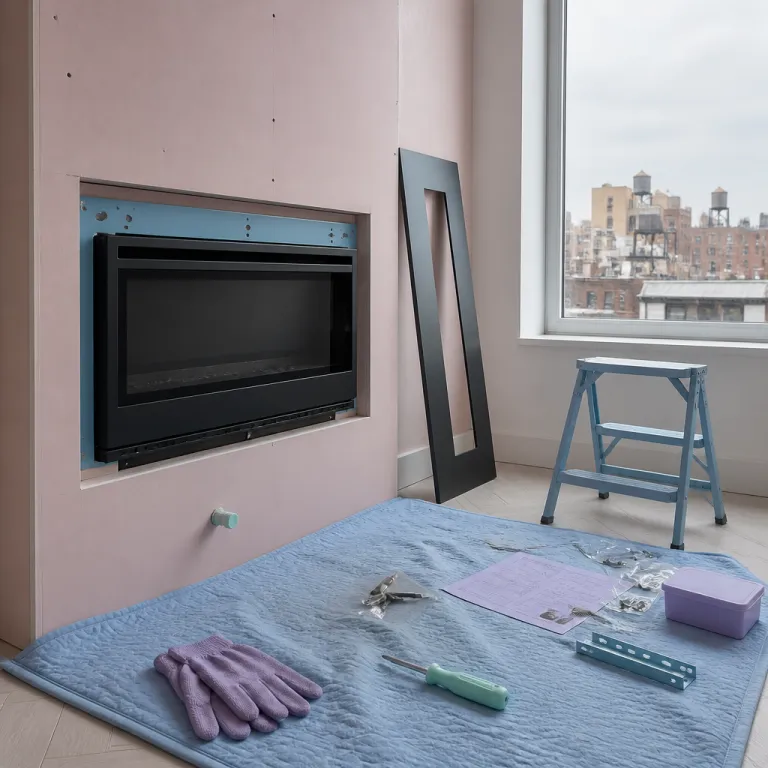
What the gas ban really changes for fireplaces in new homes
New York’s fossil fuel ban for low rise new buildings has turned the humble electric fireplace into a political symbol. Builders now pitch electric fireplaces and electric fireplaces inserts as a clean electric fireplace heating alternative gas ban solution, but the law never said these appliances should replace a full heating system. In practice, the rules simply remove natural gas lines and new gas fireplaces from the design toolkit for most apartments under seven storeys.
That nuance matters if you are the person who will actually heat the room and pay the bill. The law bans new on site combustion of natural gas or other fossil gas for space heating, water heating, cooking and gas fireplace installations, yet it does not require any specific type of fireplace electric unit or even mention ventless fireplaces by name. Developers are free to install electric fireplaces, leave you with no fireplace at all, or specify a high efficiency heat pump and skip any decorative fireplaces ventless features entirely.
In sales brochures though, the electric fireplace often becomes the headline comfort feature. Marketing language quietly blurs the line between ambiance and real heat, implying that an electric fireplace heating alternative gas ban policy magically turns a 1500 watt heater into a whole home system. When you see a glossy render of a wall mounted fireplace electric unit under a TV, remember that the primary heating load is still supposed to be carried by a central system, not by a vent free decorative appliance.
Traditional gas fireplaces and direct vent inserts used to play a dual role in many condos. A sealed direct vent gas fireplace could both decorate the living room and meaningfully heat room areas with 20 000 to 30 000 BTU, while exhausting carbon monoxide safely outdoors through a dedicated vent. With the gas ban, that direct vent option disappears in new construction, and so do indoor ventless gas fireplaces that burned natural gas or propane without a chimney, because they still emit combustion products into indoor air.
Some readers ask whether ethanol fireplaces or indoor ventless ethanol burners are a loophole. These ethanol fireplaces are technically ventless fireplace products, and they do not require a chimney or a vent gas pipe, but they still consume oxygen and release carbon dioxide and water vapor into the room. In a tight apartment, that extra water vapor and reduced oxygen can affect air quality, even if carbon monoxide levels stay within safe limits when the ethanol fireplace is used exactly as instructed.
Electric fireplaces avoid those combustion issues entirely. An electric fireplace does not burn gas, ethanol or wood, so it produces no on site carbon monoxide, no nitrogen oxides and no soot that could damage indoor air quality. That is why policymakers like to point to the electric fireplace heating alternative gas ban narrative, yet the absence of a chimney and the presence of a pretty flame effect say nothing about whether the unit can actually heat a 25 square metre room in January.
The BTU gap: why electric fireplaces are supplemental heat only
The hard limit for almost every plug in electric fireplace is 1500 watts. Converted to heat output, that is roughly 5100 BTU, which sounds technical but is tiny compared with a typical gas furnace or powerful gas fireplaces that deliver 40 000 to 80 000 BTU to the ductwork. When politicians frame the electric fireplace heating alternative gas ban story as a simple swap, they ignore this order of magnitude difference.
Think about what 5100 BTU can realistically do in a cold climate. In a well insulated flat, that output can comfortably heat room areas of about 15 to 20 square metres as zone heating, but only if the central system is already keeping the rest of the home at a reasonable baseline temperature. A gas fireplace with a direct vent design, by contrast, can push enough heat into a large open plan room that the central boiler barely runs, which is why many homeowners once used gas fireplaces as serious supplemental heaters.
Electric fireplaces are 100 percent efficient at point of use, meaning every watt becomes heat in the room. That sounds perfect on paper, yet the constraint is the standard 230 volt circuit and the 1500 watt cap that most fireplace electric units require to stay on a normal plug without special wiring. You can line a wall with three electric fireplaces and triple the price you paid, but you still cannot match the raw heat of one mid range direct vent gas fireplace without overloading circuits and turning your living room into a sauna.
Running cost is the other half of the equation. A detailed breakdown of the 1500 watt math for an electric fireplace shows that operating one unit on high for several hours a night all winter can still be cheaper than cranking central heating for the whole dwelling, especially if your tariff is moderate and you use the heater only when you occupy that room. However, if you try to use multiple electric fireplaces as a whole home replacement because of a gas ban, your electricity bill will climb quickly and any initial feeling of a free heat bonus from the fireplace will vanish.
By contrast, a modern condensing boiler or a well tuned heat pump spreads energy use more evenly. These systems are designed to match output to the building load, while a simple fan forced electric fireplace offers only a few fixed settings and no zoning beyond the single room it occupies. The result is that electric fireplaces work best as targeted options for comfort, not as the backbone of a heating strategy in a policy landscape shaped by an electric fireplace heating alternative gas ban narrative.
Even within the electric category, not all heaters behave the same way. Infrared units warm people and objects directly, while fan forced models warm the air and can feel drafty once the blower kicks in, and a careful comparison of infrared versus fan forced heat in electric fireplaces shows why some owners sleep better at 3 a.m. in January with one technology than the other. Whatever you choose, the BTU ceiling remains, and no amount of marketing about ventless fireplaces or sleek fireplace ventless designs can change the physics.
Why builders love electric fireplaces (and why you should be skeptical)
From a developer’s spreadsheet, the electric fireplace is a dream product. It is cheap to install, does not require a gas line, needs no chimney or direct vent, and slots neatly into the electric fireplace heating alternative gas ban story that sales teams now tell anxious buyers. For a few hundred euros in hardware and minimal labour, they can advertise “luxury fireplaces” in every brochure.
Compare that with the old model of specifying gas fireplaces or indoor ventless gas units. A direct vent gas fireplace needed a carefully routed vent gas pipe, combustion air intake, clearances to combustibles and coordination with the gas utility, while even ventless gas fireplaces demanded carbon monoxide sensors, room size calculations and warnings about oxygen depletion. Electric fireplaces avoid all of that, so the price to the builder is low and the perceived value to the buyer is high, at least on move in day.
There is also a regulatory incentive. Under a gas ban, every penetration for a chimney or a vent becomes a design headache, especially in tall multifamily buildings where outdoor facades are tightly controlled. A flush wall mounted fireplace electric insert that is fully vent free lets architects keep the envelope clean, while still ticking the marketing box that says “fireplace included” without triggering extra inspections for combustion safety or air quality.
For you as the occupant, the incentives are different. You care less about whether the fireplace is ventless or direct vent and more about whether it will actually heat room spaces where you sit, whether the fan noise will drown out conversation and whether the flames look real enough that you will still enjoy them after the first winter. That is where specific models matter, and long term owners of units like the Dimplex Revillusion or the Touchstone Sideline often report that the flame effect stays convincing while the blower and thermostat can drift or get noisy after a few seasons.
Some buyers also assume that a ventless fireplace, whether ethanol or electric, is automatically safe in any room because there is no chimney. The reality is more nuanced, because ethanol fireplaces still consume oxygen and release combustion by products, while electric fireplaces shift all safety concerns to electrical load, overheat protection and the quality of indoor air circulation around the heater. If you are sensitive to indoor air quality, you may prefer an electric fireplace precisely because it adds no carbon monoxide or water vapor to the room, but you still need to respect clearance guidelines and avoid blocking the vent on the heater body.
When you look beyond fireplaces to other portable heaters, the same pattern appears. Ceramic and oil filled radiators each have their place, and a careful guide to choosing between ceramic and oil heaters for your electric fireplace needs shows that sometimes a plain radiator in the corner will heat more effectively than the built in heater under a row of fake logs. Builders will not tell you that, because the fireplace sells the lifestyle, while the unglamorous heater actually keeps your feet warm.
How to buy an electric fireplace in a post gas ban world
If you are shopping for a new flat in a city that has restricted gas, assume you will get an electric fireplace whether you asked for one or not. Treat that electric fireplace as a bonus feature for ambiance and targeted comfort, not as the main pillar of an electric fireplace heating alternative gas ban strategy for your household. Then plan your real heating system around a properly sized heat pump or central electric boiler that can carry the load on the coldest nights.
Start by matching the fireplace to the room, not the brochure. Measure the floor area, ceiling height and insulation quality, then check the rated output of the fireplace electric heater and ask whether it can reasonably heat room spaces of that size as a supplement to the main system. In a small bedroom, a 1500 watt unit may be enough to let you lower the thermostat elsewhere, while in a large open plan living room you should think of the fireplace as a comfort zone for the sofa, not a replacement for radiators.
Next, pay attention to how the unit handles air. Fan forced electric fireplaces pull indoor air across a heating element and push it back into the room, which can stir up dust but also distribute heat quickly, while infrared models warm surfaces more gently and may feel more comfortable if your indoor air is already dry from central heating. Either way, the absence of combustion means no carbon monoxide, no depletion of oxygen and no added water vapor, which is a genuine safety advantage over any indoor ventless gas or ethanol fireplaces ventless design.
Safety certifications and controls matter more than log patterns. Look for CSA or equivalent marks, a cool touch glass front if children will be near the fireplace, and a thermostat that does not drift several degrees over time, a common complaint with budget electric fireplaces. Remember that even though these units are vent free and do not require a chimney, they still require clearances around the vent openings on the casing to avoid overheating and to maintain good indoor air circulation.
Finally, be realistic about price and expectations. A mid range electric fireplace with a solid heater, quiet fan and convincing flame effect will usually cost less upfront than a traditional gas fireplace installation, but it will never match the raw heat of a high output direct vent gas unit or a whole home heat pump. The smart move in a policy environment shaped by gas bans is to treat electric fireplaces as flexible options for comfort and style, while you invest your serious money in the system that will quietly, efficiently and safely heat your home long after the political slogans fade.
Key figures on electric fireplaces and gas bans
- Most plug in electric fireplaces are limited to 1500 watts, which equals about 5100 BTU of heat output, while typical residential gas furnaces range from 40 000 to 80 000 BTU, so a single electric fireplace delivers roughly one tenth of the heat of a central gas system.
- In many European cities, electricity prices between 0,20 and 0,30 euro per kilowatt hour mean that running a 1500 watt electric fireplace on high for four hours a day over a 90 day winter can cost between 108 and 162 euros, which is affordable as zone heating but expensive as a whole home solution.
- Market research on the hearth industry shows that electric fireplaces are the fastest growing segment, with annual growth around 7 percent, driven largely by building electrification policies and consumer concern about indoor air quality and carbon monoxide from combustion appliances.
- Direct vent gas fireplaces typically operate with combustion efficiencies above 70 percent and send exhaust outdoors through a sealed vent, while ventless gas units release all combustion products into indoor air and therefore face stricter room size and ventilation requirements in many building codes.
- Heat pumps used as primary systems in new all electric buildings can deliver two to three units of heat for every unit of electricity consumed, while electric fireplaces always deliver one unit of heat per unit of electricity, which is why policymakers view heat pumps as the backbone of decarbonised heating and fireplaces as optional comfort features.